Encouragement Scriptures (King James Version): Finding Strength and Building Others Up Through God’s Word

Life has a way of wearing us down. Bills pile up. Relationships get strained. Health concerns keep us awake at night. News headlines feel heavy. In those moments, a kind word or a timely reminder can make all the difference. For many believers, the King James Version of the Bible has long provided that steady voice of hope. Its rich language and faithful rendering of Scripture have comforted generations. This post gathers encouragement scriptures from the King James Version, explores their original setting, and shows how they speak into everyday struggles today. Along the way, we will look at practical, biblical ways to encourage one another so that faith does not remain private but becomes a shared gift.
The goal is simple. Whether you need a lift for yourself or want to strengthen someone else, these passages and practices point back to the God who never leaves His people alone.
Why the King James Version Still Matters for Encouragement
The King James Version, first published in 1611, remains one of the most widely read English Bibles. Its cadence and precision have shaped hymns, literature, and personal devotion for centuries. When people search for encouragement scriptures King James Version, they often want the familiar wording that feels both elevated and trustworthy. Sites such as King James Bible Online and Bible Gateway’s KJV text make these verses easy to find and share.
Encouragement in Scripture is never empty cheerleading. It rests on God’s character, His promises, and His presence. The Hebrew and Greek words behind our English “encourage” often carry the sense of strengthening, comforting, or calling someone alongside. In the King James text, that idea appears again and again.

Key Encouragement Scriptures in the King James Version
Let us walk through several well-loved passages. For each one I will note the setting in the Bible and then consider how the truth lands in modern life.
Joshua 1:9 – “Have not I commanded thee? Be strong and of a good courage; be not afraid, neither be thou dismayed: for the LORD thy God is with thee whithersoever thou goest.”
Joshua stood on the edge of the Promised Land after Moses’ death. The people faced fortified cities and uncertain battles. God’s command was clear: strength and courage flow from the certainty that He goes with them. Today the same promise meets the parent facing a difficult diagnosis, the student staring at an overwhelming exam, or the worker dealing with workplace tension. Courage is not the absence of fear. It is moving forward because God remains present.
Isaiah 41:10 – “Fear thou not; for I am with thee: be not dismayed; for I am thy God: I will strengthen thee; yea, I will help thee; yea, I will uphold thee with the right hand of my righteousness.”
Spoken to a people facing exile and displacement, this verse piles promise upon promise. God identifies Himself as their God. He pledges strength, help, and upholding. In a season of job loss or family conflict, the words still hold. The right hand of God’s righteousness is not distant. It is active. Many have found that repeating this verse aloud shifts the focus from the size of the problem to the reliability of the One who holds them.
Isaiah 40:31 – “But they that wait upon the LORD shall renew their strength; they shall mount up with wings as eagles; they shall run, and not be weary; and they shall walk, and not faint.”
This chapter comforts a weary nation. Waiting is not passive resignation. It is expectant trust. The image of eagles soaring speaks of renewed energy that comes from God rather than self-effort. Modern readers often feel depleted by constant demands. The verse invites a pause: wait on the Lord through prayer, Scripture, and quiet trust, and strength returns in ways human effort cannot manufacture.
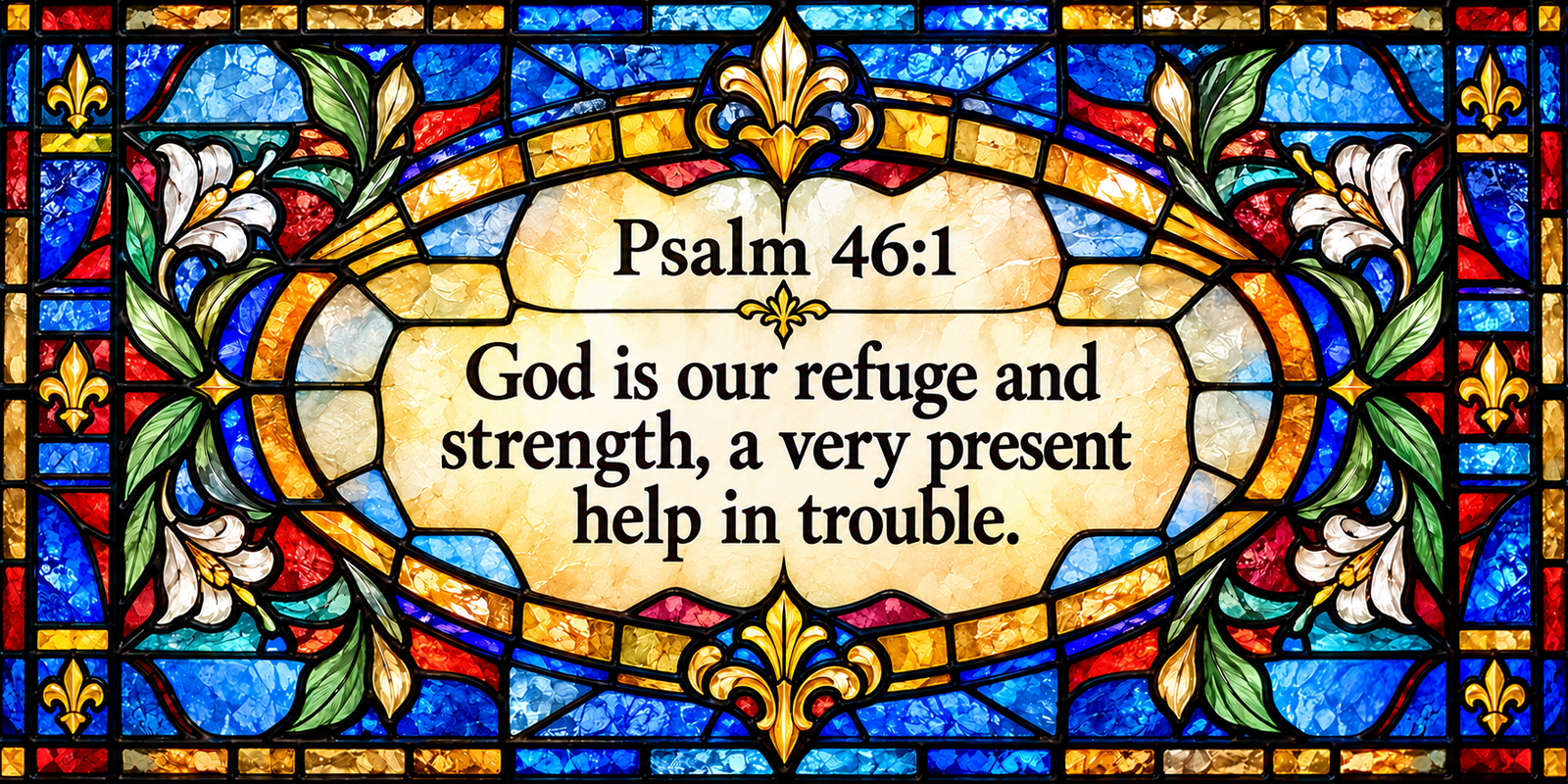
Psalm 46:1 – “God is our refuge and strength, a very present help in trouble.”
Written in a time of national threat, the psalm declares God as both shelter and power. “Very present” means He is found readily, not delayed. When anxiety spikes or sudden bad news arrives, this short sentence becomes an anchor. Refuge is available now.
Philippians 4:13 – “I can do all things through Christ which strengtheneth me.”
Paul wrote these words from prison. He had learned contentment in both abundance and need. The “all things” refers to living faithfully in whatever circumstance Christ places him. Today the verse is sometimes misused as a blank check for personal ambition. In context it is far richer: Christ supplies strength for the actual path set before us, whether that path includes hardship or quiet endurance.

Deuteronomy 31:6 – “Be strong and of a good courage, fear not, nor be afraid of them: for the LORD thy God, he it is that doth go with thee; he will not fail thee, nor forsake thee.”
Moses spoke to Israel as he prepared to leave leadership. The assurance is that God Himself goes with the people. The same truth steadies anyone stepping into a new role, a move, or an unknown future. God does not abandon His own.
Psalm 55:22 – “Cast thy burden upon the LORD, and he shall sustain thee: he shall never suffer the righteous to be moved.”
David faced betrayal and deep distress. Casting the burden is an active transfer of weight. God sustains. In practical terms this means bringing specific worries to Him in prayer rather than carrying them alone. Many find that the simple act of naming the burden before God lightens the load.
1 Thessalonians 5:11 – “Wherefore comfort yourselves together, and edify one another, even as also ye do.”
Paul urged the young church in Thessalonica to keep strengthening each other. Comfort and edify work together: speak words that build up. This verse shifts the focus from receiving encouragement to giving it. We will return to this idea shortly.
Hebrews 10:24-25 – “And let us consider one another to provoke unto love and to good works: Not forsaking the assembling of ourselves together, as the manner of some is; but exhorting one another: and so much the more, as ye see the day approaching.”
The writer calls believers to intentional thought about how to stir one another toward love and action. Gathering matters. Exhorting matters. Isolation weakens. Community strengthens.
2 Corinthians 1:3-4 – “Blessed be God, even the Father of our Lord Jesus Christ, the Father of mercies, and the God of all comfort; Who comforteth us in all our tribulation, that we may be able to comfort them which are in any trouble, by the comfort wherewith we ourselves are comforted of God.”
Comfort received becomes comfort given. The pattern is clear. God meets us in hardship so that we can meet others in theirs. This turns personal pain into a channel of ministry.
These verses form a solid foundation. You can find the full King James text of each on reliable sites such as Bible Gateway or King James Bible Online. Reading them slowly, perhaps aloud, often lets the words settle deeper.

Biblical Methods for Encouraging One Another
Scripture does more than offer comfort for the individual. It shows patterns for building up the body of Christ. A helpful overview appears in the article 9 Biblical Methods for Encouraging One Another from For the Church. Drawing from that careful study of New Testament examples, here are nine practical ways rooted in the text itself.
Tell others how God is working through them.
Paul told the Thessalonians they had become an example and that the word of the Lord had sounded forth from them (1 Thessalonians 1:7-8). People often miss the impact of their quiet faithfulness. Naming specific ways God is using someone’s service or testimony can renew their energy to continue.
Show others how God is working in their life.
In 1 Corinthians 1:4-9 Paul pointed to the confirmation of the gospel among the believers and the spiritual gifts present among them. He reminded them that God would strengthen them to the end. Looking for evidence of God’s activity and pointing it out counters the tendency to focus only on what is hard.
Tell people how you see God growing and changing them.
The Thessalonians had turned from idols to serve the living God (1 Thessalonians 1:8-10). Progress can feel invisible day to day. An outside voice that notices growth in patience, kindness, or steadfastness can combat discouragement.
Praise the good you see people doing.
Paul thanked God for Philemon’s love and faith and noted how the hearts of the saints had been refreshed through him (Philemon 4-7). Much good goes unnoticed. Specific praise for concrete acts of love or service carries weight.
Remind people that God sees the good they are doing.
Hebrews 6:10 declares that God is not unjust to forget the work and love shown toward His name. Volunteer hours, late-night care for children, quiet intercession, and quiet generosity are all seen by the Lord. Saying so out loud strengthens weary hands.
Declare to others the truth of who they are.
Jude addresses believers as those who are called, loved by God the Father, and kept for Jesus Christ (Jude 1-2). Identity struggles are common. Rooting identity in God’s action rather than performance or failure brings stability.
Thank people for being a blessing to you.
Paul repeatedly expressed gratitude for the Philippians and called the Thessalonians his joy and crown (Philippians 1:3-6; 1 Thessalonians 2:19-20). People rarely tire of hearing that they matter. Expressing it clearly builds connection.
Highlight the character of God you see in others.
In 1 Thessalonians 4:9-10 Paul noted that the believers were taught by God to love one another and were already doing so. Pointing out reflections of divine kindness, faithfulness, or generosity helps others see how the Spirit is forming Christ in them.
Publicly recognize the contribution of others.
Paul commended Phoebe as a servant of the church and a benefactor of many, including himself (Romans 16:1-2). Private encouragement is good. Public recognition multiplies the effect and models honor within the community.
These methods move beyond vague compliments. They attach encouragement to specific observations and to Scripture. Practicing even one or two regularly can change the tone of a home, a small group, or a church.

Putting Encouragement into Daily Practice
Knowing the verses and the methods is one step. Living them is another. Here are a few simple habits that help.
Keep a short list of key encouragement scriptures King James Version on your phone or in a notebook. When someone shares a struggle, you already have language ready. A text that simply quotes Isaiah 41:10 with a brief personal note can arrive at exactly the right moment.
Pray before you speak. Ask God to show you what the other person needs to hear. Sometimes it is a reminder of His presence. Sometimes it is recognition of growth. Sometimes it is simply presence without many words.
Gather regularly. Hebrews 10:25 is not a suggestion for those who feel like it. Meeting together creates the setting where exhortation happens naturally. In an age of digital connection, physical presence still carries unique power.
Share your own story carefully. 2 Corinthians 1 shows that the comfort we receive equips us to comfort others. Telling how God met you in a similar place can open a door without centering the conversation on yourself.
Watch for the quiet faithful. The people who serve behind the scenes, who pray consistently, or who show up week after week often receive the least recognition. Applying methods 4, 5, and 9 to them can bring surprising refreshment.

More Encouragement Scriptures for Specific Seasons
When fear presses in:
2 Timothy 1:7 – “For God hath not given us the spirit of fear; but of power, and of love, and of a sound mind.”
Paul wrote to Timothy in a time of potential intimidation. God supplies power, love, and clear thinking instead of fear. The verse is a direct counter to anxiety that paralyzes.
When strength feels gone:
Nehemiah 8:10 – “The joy of the LORD is your strength.”
Spoken as the people wept over the reading of the Law, the call redirected them to joy in God as the source of strength. Celebration and strength often travel together.
When care feels heavy:
1 Peter 5:7 – “Casting all your care upon him; for he careth for you.”
Peter wrote to believers under pressure. The invitation is comprehensive: all your care. The reason is personal: He cares for you.
When the future looks uncertain:
Jeremiah 29:11 – “For I know the thoughts that I think toward you, saith the LORD, thoughts of peace, and not of evil, to give you an expected end.”
Addressed originally to exiles, the verse assures that God’s plans are for welfare. It does not promise an easy path, but it does promise purposeful direction.
When weariness settles in:
Matthew 11:28 – “Come unto me, all ye that labour and are heavy laden, and I will give you rest.”
Jesus issued the invitation to the burdened. Rest is found in coming to Him. The verse remains one of the most direct offers of relief in all of Scripture.
Each of these can be paired with one of the nine methods. For example, when you see someone laboring under a heavy load, you might quote Matthew 11:28 and then thank them for the specific ways they have been a blessing (method 7).

The Long View of Encouragement
Encouragement is not a one-time event. It is a sustained practice. Hebrews 3:13 calls believers to exhort one another daily so that none become hardened by the deceitfulness of sin. Daily. That rhythm requires intention. It also produces deep roots.
Over time, a culture of encouragement changes a community. People feel safer to admit struggle. They grow more willing to serve. They look for God’s hand in ordinary places. The nine methods listed earlier, drawn carefully from the New Testament patterns, provide a practical roadmap. You can read the full discussion at For the Church.
The King James Version continues to serve as a trusted companion for this work. Its language carries weight and beauty. When you quote it, you join a long line of believers who have found the same words steadying.

A Closing Invitation
If you are reading this while feeling low, start with one verse. Read Joshua 1:9 or Isaiah 41:10 slowly. Let the truth that God is with you settle. Then consider who around you might need a word of strength. Use one of the nine methods. Keep it specific. Keep it true. Keep it rooted in Scripture.
God has not left His people without resources. The encouragement scriptures in the King James Version, taken in their biblical context and applied with care, still speak with power. And the call to encourage one another remains as urgent today as it was in the first-century churches.
May the God of all comfort meet you where you are, and may He use you to meet someone else.
See More Bible Scripture Guides on the Blog: