Biblical Verses of Encouragement: 32 Scriptures for Hard Days and How to Use Them
Most people go looking for Biblical verses of encouragement on a day when something has gone wrong. A diagnosis came back, a job ended, a relationship cracked, or nothing dramatic happened at all and the weight just would not lift. If that is where you are, this page was written with you in mind.
Below you will find 32 verses grouped by what you may be facing: fear and anxiety, weakness, hope, grief, and the long haul of perseverance. Each one includes the text, a short explanation of what it meant when it was written, and what it can mean for you now. After the verses, there is a practical section on how to bring Scripture into your daily worship so these words do more than sit on a screen.
A quick note on sources. Every verse here is quoted from the King James Version, which is in the public domain in the United States. The language is older, but it is still one of the most widely quoted translations. If you prefer a modern wording, each reference links to Bible Gateway, where you can switch translations with one click and read the verse in its surrounding chapter. That habit of checking the surrounding chapter is worth building, and I will come back to it.
Why Scripture Encourages People (and Why Context Matters)
The Bible was not written as a collection of inspirational quotes. It is a library of history, poetry, letters, law, and prophecy, written over many centuries to real people in real trouble. Exiles, slaves, widows, soldiers, prisoners, and ordinary families wrote and received these words while they were hungry, afraid, or grieving.
That is exactly why the encouragement carries weight. When Paul talks about contentment, he is sitting in a Roman prison. When the author of Lamentations talks about mercies that are new every morning, he is looking at a ruined city. These are not comments from people who had it easy.
So as you read, try to ask two questions of every verse. What was happening when this was written? And what does this say about who God is? The first question keeps you honest. The second keeps you anchored. A verse that is only about how you feel will fade by Thursday. A verse that tells you something true about God will still be standing next year.
If you want help with historical background, the free study tools at Blue Letter Bible and Bible Hub let you see the original Hebrew and Greek words, cross references, and classic commentaries. The BibleProject also offers short videos that walk through whole books of the Bible, which helps a great deal when you want the big picture behind a single verse.
Biblical Verses of Encouragement for Fear and Anxiety
Anxiety has a way of making the future feel certain and terrible. These six verses push back on that by pointing to God’s presence in the present moment.
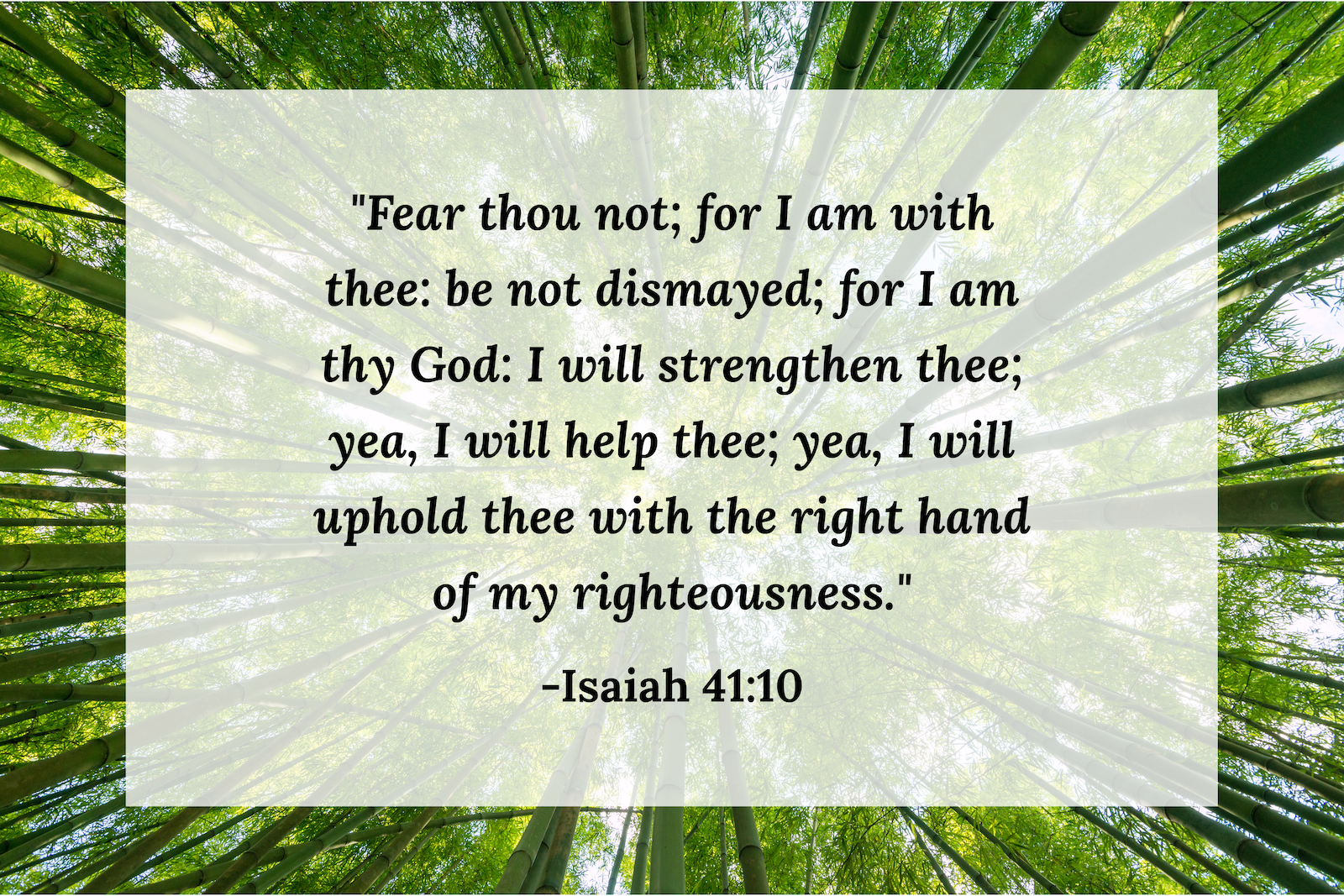
1. Isaiah 41:10
“Fear thou not; for I am with thee: be not dismayed; for I am thy God: I will strengthen thee; yea, I will help thee; yea, I will uphold thee with the right hand of my righteousness.” (Isaiah 41:10)
What it means today: God spoke this to Israel while foreign empires were reshaping the known world, and the people had good reason to be afraid. Notice that the command to stop fearing comes with a reason attached: I am with you. The verse does not say the threat is imaginary. It says you will not face it alone. When your stomach drops at a phone call or a bank statement, this verse gives you something solid to hold, which is presence rather than a promise that nothing will hurt.
2. Philippians 4:6-7
“Be careful for nothing; but in every thing by prayer and supplication with thanksgiving let your requests be made known unto God. And the peace of God, which passeth all understanding, shall keep your hearts and minds through Christ Jesus.” (Philippians 4:6-7)
What it means today: “Careful” in older English means full of care, or anxious. Paul wrote this from prison, which makes the advice hard to dismiss. His method is simple and specific: tell God the actual request, and include thanks in the same breath. Many people find that naming the worry out loud in prayer shrinks it a little. The peace he describes guards your heart like a sentry, which is a different thing from feeling calm on command.
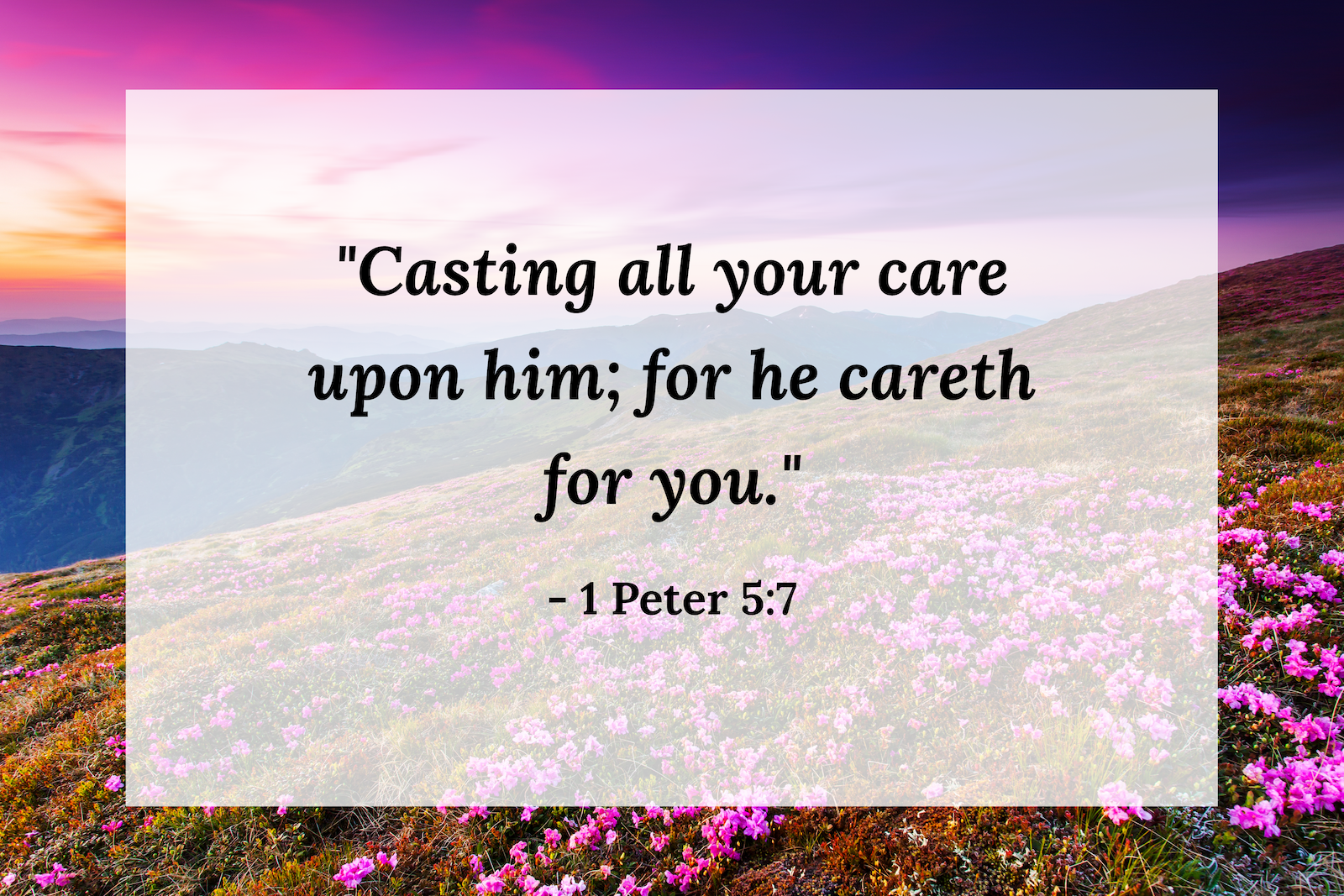
3. 1 Peter 5:7
“Casting all your care upon him; for he careth for you.” (1 Peter 5:7)
What it means today: The picture is of throwing something heavy off your shoulders. The reason given is short and personal: he cares for you. Modern life gives us endless things to carry, from work pressure to news cycles to family stress. This verse gives you permission to set some of it down in prayer, and to keep setting it down when you catch yourself picking it back up.
4. Matthew 6:34
“Take therefore no thought for the morrow: for the morrow shall take thought for the things of itself. Sufficient unto the day is the evil thereof.” (Matthew 6:34)
What it means today: Jesus is not telling people to skip planning. He is telling them to stop borrowing tomorrow’s trouble. Anyone who has lain awake at 2 a.m. rehearsing a conversation that has not happened yet knows what he means. Try this: when your mind runs ahead, ask what is actually yours to handle today, handle that, and hand the rest to God.
5. Psalm 56:3
“What time I am afraid, I will trust in thee.” (Psalm 56:3)
What it means today: David wrote this when he was captured by enemies. He does not pretend to be fearless. He says “what time I am afraid,” which admits the fear is real and expected. Trust here is a decision made while afraid, and you do not have to wait until the feeling passes. It is one of the shortest verses on this list and one of the easiest to memorize for a bad moment.
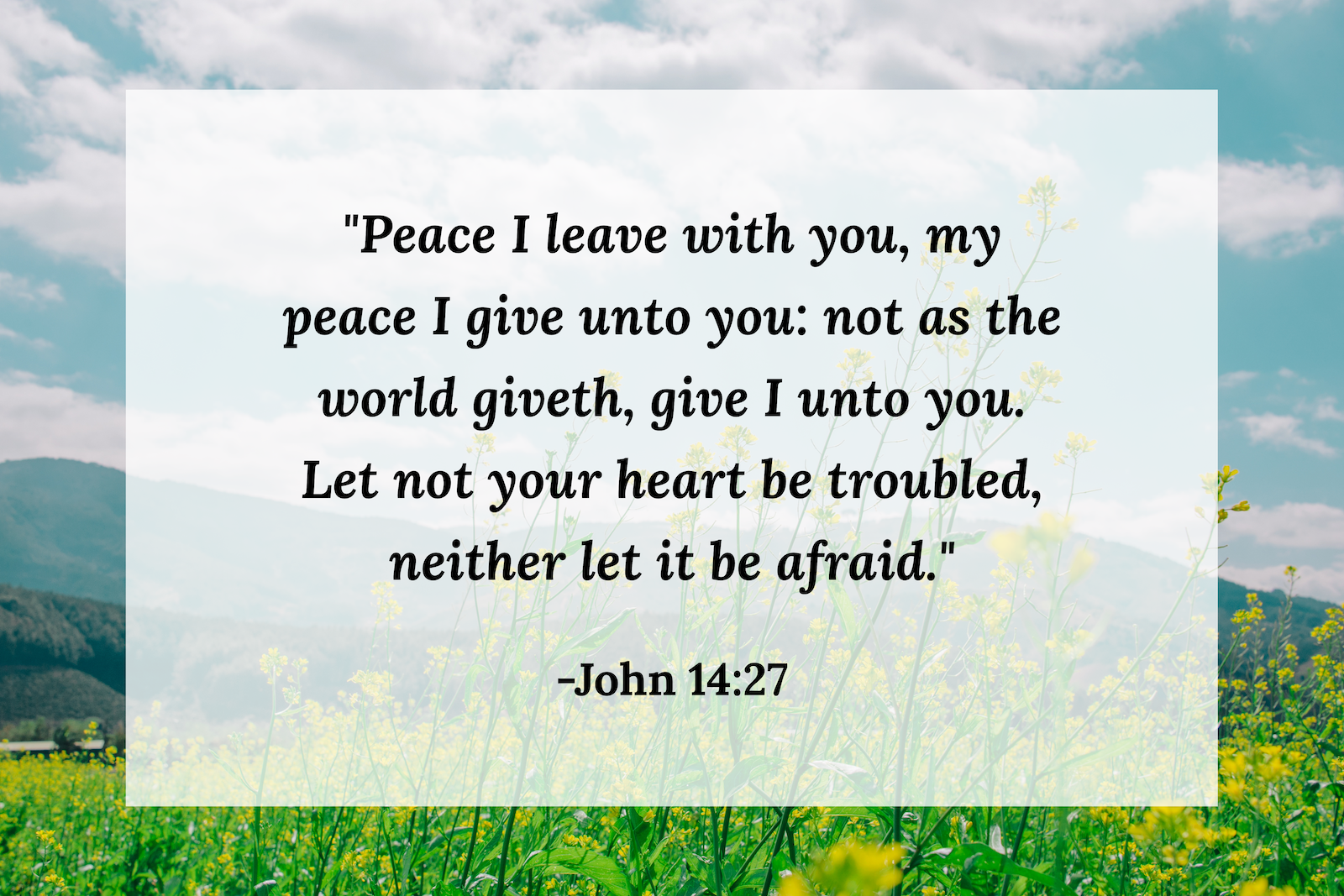
6. John 14:27
“Peace I leave with you, my peace I give unto you: not as the world giveth, give I unto you. Let not your heart be troubled, neither let it be afraid.” (John 14:27)
What it means today: Jesus said this the night before his arrest, to friends who were about to scatter. The peace he offers is not the kind the world sells, where everything is quiet because nothing is wrong. It is peace that can sit in the same room as trouble. If you have ever noticed that a new phone, a vacation, or a clean inbox did not fix the unrest underneath, you already understand the difference.
Biblical Verses of Encouragement for Strength
Some days you do not need comfort so much as fuel. These verses speak to exhaustion, weakness, and the feeling that you are running on empty.
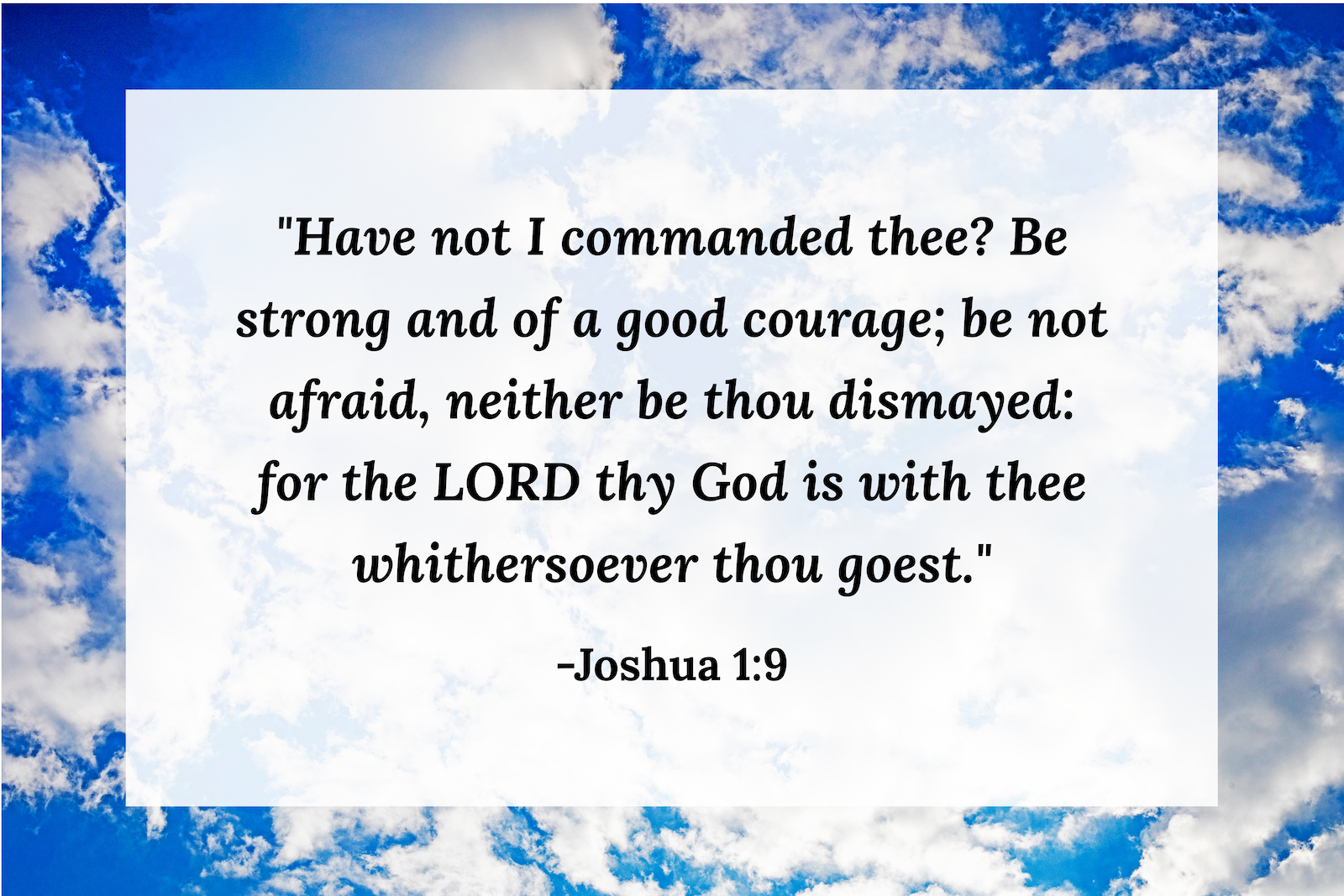
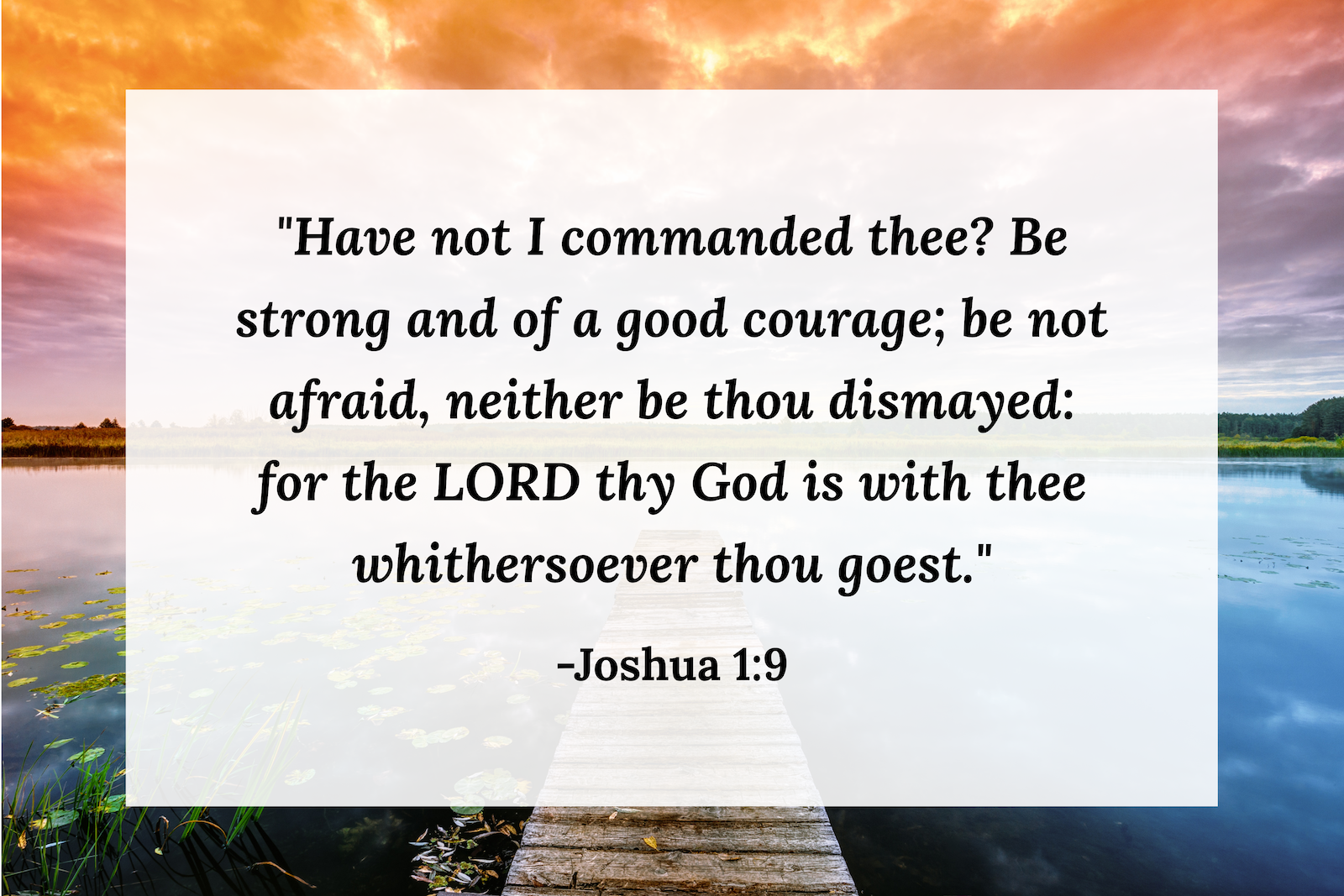
7. Joshua 1:9
“Have not I commanded thee? Be strong and of a good courage; be not afraid, neither be thou dismayed: for the LORD thy God is with thee whithersoever thou goest.” (Joshua 1:9)
What it means today: Joshua had just inherited leadership after Moses died, with a nation to lead into unfamiliar land. God repeats the call to courage several times in that chapter, which suggests Joshua needed to hear it more than once. If you have stepped into a role that feels bigger than you, whether a new job, a new baby, or a caregiving season, the promise is the same: wherever you are sent, God goes there too.
8. Philippians 4:13
“I can do all things through Christ which strengtheneth me.” (Philippians 4:13)
What it means today: This verse gets printed on gym shirts and sports posters, but read the two verses before it. Paul says he has learned to be content whether he has plenty or nothing. The “all things” is about enduring every circumstance, including hunger and prison, with Christ’s help. It is less a slogan for winning and more a promise for surviving, and that makes it more useful, not less.
9. Isaiah 40:31
“But they that wait upon the LORD shall renew their strength; they shall mount up with wings as eagles; they shall run, and not be weary; and they shall walk, and not faint.” (Isaiah 40:31)
What it means today: The original audience was exiled and worn out. The order of the last line is interesting: soaring, then running, then just walking without fainting. Most of life is the walking part. Waiting on the Lord means leaning your weight on him and staying put in prayer, which is hard for people who are used to fixing things. Rest is not a waste of time here. It is where the strength comes from.
10. 2 Corinthians 12:9
“And he said unto me, My grace is sufficient for thee: for my strength is made perfect in weakness. Most gladly therefore will I rather glory in my infirmities, that the power of Christ may rest upon me.” (2 Corinthians 12:9)
What it means today: Paul had asked God three times to remove a painful “thorn,” and the answer was no, with this promise instead. In a culture that rewards looking capable at all times, this is a relief. Your limits are not a disqualification. If you are dealing with chronic pain, a struggle you cannot fix, or a season where you simply cannot do what you used to, this verse says grace is enough for that too.
11. Psalm 46:1
“God is our refuge and strength, a very present help in trouble.” (Psalm 46:1)
What it means today: The word “present” matters. Help is not on its way or scheduled for later. It is already in the room. The rest of the psalm imagines mountains falling into the sea, so the writer has thought about worst cases and still lands here. This is a good verse to read aloud when the news is heavy and you need to remember that the world’s instability does not change God’s.
12. Nehemiah 8:10
“…for the joy of the LORD is your strength.” (Nehemiah 8:10)
What it means today: The people of Jerusalem were weeping as the law was read to them after years of exile, and Nehemiah told them to eat, celebrate, and not grieve, because joy in God would hold them up. It is not forced cheerfulness. It is the steadiness that comes from knowing you belong to God. On days when you have no energy of your own, joy rooted in him can carry you further than willpower.
Biblical Verses of Encouragement for Hope
Hope in the Bible is not wishful thinking. It is confidence in a God who has kept his word before. These verses are for seasons of waiting and uncertainty.
13. Jeremiah 29:11
“For I know the thoughts that I think toward you, saith the LORD, thoughts of peace, and not of evil, to give you an expected end.” (Jeremiah 29:11)
What it means today: This is one of the most quoted verses in Christian life, and it is often misread. Jeremiah wrote to people carried off to Babylon and told them to settle in, build houses, and plant gardens, because the exile would last seventy years. The hope was real, but it was long-range. For us, the lesson is that God’s good plans can run on a timeline much slower than we want, and that faithfulness in the waiting room counts.
14. Romans 8:28
“And we know that all things work together for good to them that love God, to them who are the called according to his purpose.” (Romans 8:28)
What it means today: This does not say everything that happens is good. Loss is loss. It says God weaves even painful things into a larger good for people who love him. Many believers can look back and see how a closed door, a failure, or a hard year turned out to shape them in ways comfort never could. Be gentle with yourself if you cannot see the good yet. The verse is about where the story ends up, and you may still be in the middle chapters.
15. Romans 15:13
“Now the God of hope fill you with all joy and peace in believing, that ye may abound in hope, through the power of the Holy Ghost.” (Romans 15:13)
What it means today: Paul writes this as a prayer, not a command, which tells you something. Hope is received rather than manufactured. If you feel out of hope, you can ask for it the way you would ask for bread. This verse works well as a prayer you pray for other people too, such as a friend who is struggling or a family member far from faith.
16. Lamentations 3:22-23
“It is of the LORD’s mercies that we are not consumed, because his compassions fail not. They are new every morning: great is thy faithfulness.” (Lamentations 3:22-23)
What it means today: These lines sit in the middle of a book of grief written after Jerusalem was destroyed. The writer has been listing his pain in detail, and then he remembers who God is. That is a useful pattern: you can be honest about how bad things are and still make room for faithfulness. Each morning is a fresh start with fresh mercy, which is a real comfort if yesterday went badly.
17. Proverbs 3:5-6
“Trust in the LORD with all thine heart; and lean not unto thine own understanding. In all thy ways acknowledge him, and he shall direct thy paths.” (Proverbs 3:5-6)
What it means today: We live in an age of information, and we still cannot see around the next corner. This proverb does not tell you to stop thinking. It tells you not to rest your full weight on your own reading of things. When you face a big decision like a move, a job change, or a hard conversation, this verse invites you to bring it to God first and then act, trusting that he can straighten a path you cannot see.
18. Romans 8:38-39
“For I am persuaded, that neither death, nor life, nor angels, nor principalities, nor powers, nor things present, nor things to come, Nor height, nor depth, nor any other creature, shall be able to separate us from the love of God, which is in Christ Jesus our Lord.” (Romans 8:38-39)
What it means today: Paul builds a list of everything that could possibly threaten a person and then rules out the whole set. Your worst decision, your worst diagnosis, and your worst day are all on that list. If shame tells you that you have gone too far for God’s love to reach you, this passage is the direct answer. Read it slowly and let each item on the list sink in.
Biblical Verses of Encouragement for Grief and Brokenness
Scripture does not rush past sorrow. Many of the Psalms are outright laments. These verses meet you in grief and loss without pretending it is small.
19. Psalm 34:18
“The LORD is nigh unto them that are of a broken heart; and saveth such as be of a contrite spirit.” (Psalm 34:18)
What it means today: “Nigh” means near. The verse says God moves toward people who are hurting rather than away from them. If you have felt like your grief was making you a burden, or that you should be further along by now, this is a corrective. The brokenhearted are not an embarrassment to God. They are exactly the people he says he draws close to.
20. Psalm 23:4
“Yea, though I walk through the valley of the shadow of death, I will fear no evil: for thou art with me; thy rod and thy staff they comfort me.” (Psalm 23:4)
What it means today: Look at the preposition. David walks through the valley, which means it is not where he stays. A shepherd’s rod defended the flock and his staff guided it, so both images are about protection and direction. This psalm is often read at funerals for good reason, but it also fits hospital waiting rooms, job losses, and any long dark stretch. The valley is real, and the company in it is real too.
21. Matthew 11:28
“Come unto me, all ye that labour and are heavy laden, and I will give you rest.” (Matthew 11:28)
What it means today: Jesus said this to people crushed by religious burdens and hard physical labor. The invitation is open to anyone who is tired. Nothing in it requires you to clean up first. If burnout, caregiving, or years of trying to hold everything together have worn you thin, this verse is a direct invitation to stop pretending and come.
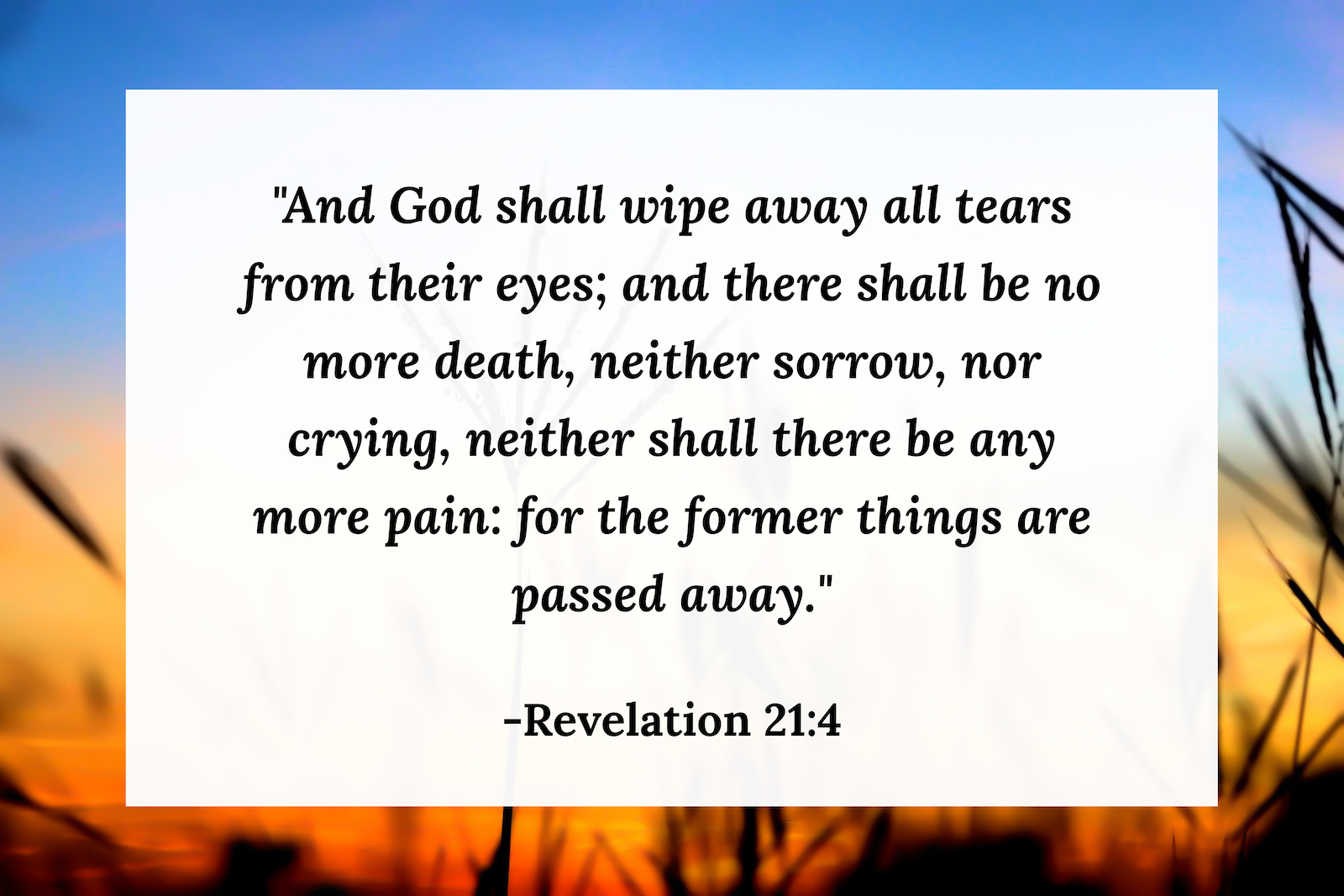
22. Revelation 21:4
“And God shall wipe away all tears from their eyes; and there shall be no more death, neither sorrow, nor crying, neither shall there be any more pain: for the former things are passed away.” (Revelation 21:4)
What it means today: John was an old man exiled on the island of Patmos when he saw this vision of the end. It is a promise that grief will not have the last word. For anyone who has lost a spouse, a child, a parent, or a friend, this verse holds a future where the loss is undone. It does not erase the pain today, but it tells you the pain has an expiration date.
23. Psalm 147:3
“He healeth the broken in heart, and bindeth up their wounds.” (Psalm 147:3)
What it means today: The image is of a doctor wrapping a wound with care. Healing is slow and physical in that picture, the way real recovery is. Emotional wounds often take longer than we expect, and this verse gives you a patient healer rather than a deadline. It pairs well with honest help from counselors and trusted friends, since God often works through people.
24. 2 Corinthians 1:3-4
“Blessed be God, even the Father of our Lord Jesus Christ, the Father of mercies, and the God of all comfort; Who comforteth us in all our tribulation, that we may be able to comfort them which are in any trouble, by the comfort wherewith we ourselves are comforted of God.” (2 Corinthians 1:3-4)
What it means today: Paul says comfort is meant to be passed along. What you receive in your worst season may later become the thing you offer to someone else who is walking the same road. Few people are more helpful to a grieving friend than someone who has grieved and can sit with them without rushing to fix it. Your pain is not wasted if it makes you a gentler presence for others.
Biblical Verses of Encouragement for Perseverance and Purpose
Some of the hardest stretches are the long, ordinary ones where nothing changes quickly. These verses are for the marathon.
25. Galatians 6:9
“And let us not be weary in well doing: for in due season we shall reap, if we faint not.” (Galatians 6:9)
What it means today: Anyone who has served in a ministry, raised kids, cared for an aging parent, or stayed faithful in a difficult marriage knows how tiring good work can be. Paul does not say you will not get tired. He says the harvest comes “in due season,” meaning on God’s schedule and not yours. Keep sowing, and keep resting when you need to.
26. James 1:2-3
“My brethren, count it all joy when ye fall into divers temptations; Knowing this, that the trying of your faith worketh patience.” (James 1:2-3)
What it means today: “Divers temptations” here means various trials. James is not asking you to enjoy suffering. He is asking you to see what it produces. Patience is built the way muscle is built, through resistance. That does not make hardship pleasant, but it can make it meaningful, which is often what people need most while they are in it.
27. Romans 5:3-4
“And not only so, but we glory in tribulations also: knowing that tribulation worketh patience; And patience, experience; and experience, hope.” (Romans 5:3-4)
What it means today: This is a chain: suffering, endurance, character, hope. Paul is describing something he watched happen in real people. A person who has come through a hard year and found God faithful in it carries a quieter, sturdier hope than someone who has never been tested. Read this one when you are tempted to think your struggle has no purpose.
28. Hebrews 12:1
“Wherefore seeing we also are compassed about with so great a cloud of witnesses, let us lay aside every weight, and the sin which doth so easily beset us, and let us run with patience the race that is set before us.” (Hebrews 12:1)
What it means today: The “cloud of witnesses” refers to the faithful people listed in the previous chapter, many of whom suffered greatly. The verse invites you to drop what slows you down, both sinful habits and just plain heavy things, and keep going at a steady pace. The word “patience” also means endurance. You are not asked to sprint. You are asked to keep running.
29. Psalm 121:1-2
“I will lift up mine eyes unto the hills, from whence cometh my help. My help cometh from the LORD, which made heaven and earth.” (Psalm 121:1-2)
What it means today: This is a song pilgrims sang while traveling up to Jerusalem, so it was written on the road. The writer looks toward the hills and answers his own question by turning to the Maker of those hills. When you are overwhelmed, looking up literally can help: step outside, find the sky, and remember that the God who made all of it is not stretched thin by your problem.
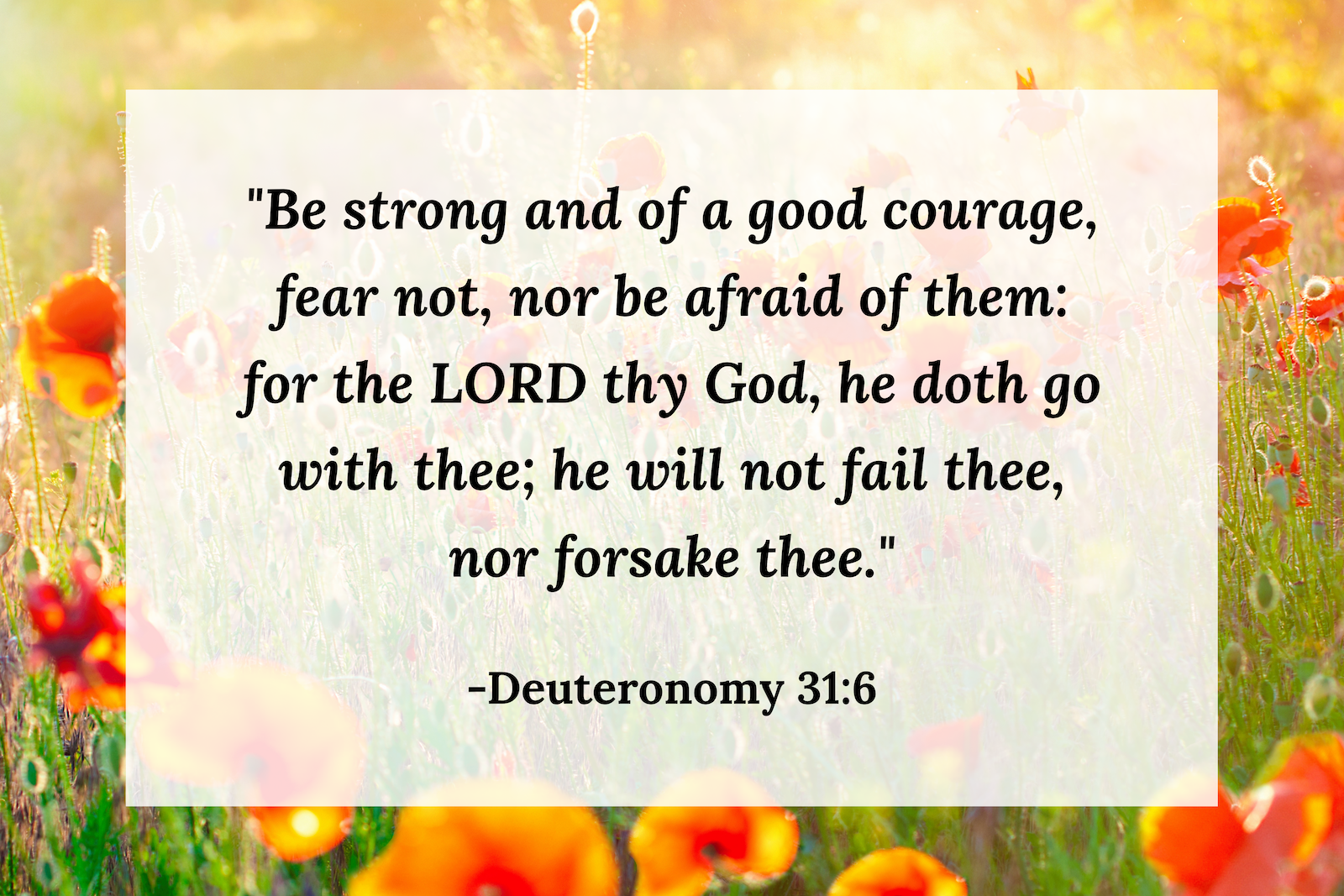
30. Deuteronomy 31:6
“Be strong and of a good courage, fear not, nor be afraid of them: for the LORD thy God, he doth go with thee; he will not fail thee, nor forsake thee.” (Deuteronomy 31:6)
What it means today: Moses said this to the whole nation just before he died and just before they entered the land without him. The promise is that leaders come and go but God does not. If you are facing a transition where someone you relied on is gone or leaving, whether through a move, a retirement, or a death, this verse tells you the one who matters most stays.
31. Psalm 118:24
“This is the day which the LORD hath made; we will rejoice and be glad in it.” (Psalm 118:24)
What it means today: It is a good verse to say out loud in the morning before checking your phone. It does not require you to feel cheerful. It is a decision to receive the day as a gift, with all its ordinary tasks, and to look for something to be glad about in it. Even on a rough day, you can usually find one small thing, a warm coffee or a text from a friend, and start there.
32. Zephaniah 3:17
“The LORD thy God in the midst of thee is mighty; he will save, he will rejoice over thee with joy; he will rest in his love, he will joy over thee with singing.” (Zephaniah 3:17)
What it means today: Most of us picture God as serious or disappointed. This verse pictures him singing over his people. If you have spent years believing you are a problem to be managed, sit with that image for a while. Encouragement does not get much more personal than being sung over by the one who made you.
How to Use Bible Verses in Your Daily Worship
Reading a list of verses can lift your spirits for an afternoon. Building a habit around them changes how you move through the week. Here are practical ways to do that, starting small.
Pick one verse and stay with it for a week. Choose from the list above based on what you are facing right now. Write it on an index card, a sticky note, or the notes app on your phone. Read it in the morning, at lunch, and before bed. By Friday you will know it without trying.
Read the verse in its chapter. Before you settle on a favorite, read the paragraph before and after it. Context protects you from misusing a verse and often makes it richer. Bible Gateway and YouVersion both let you tap through to the full chapter in seconds.
Turn the verse into a prayer. This is one of the simplest forms of worship. Take Isaiah 41:10 and say it back to God in your own words: “You say you are with me, so I am going to act like it today. Strengthen me for this meeting.” Praying Scripture keeps your prayers from circling your own fears, and it gives you words when you have none.
Memorize a little at a time. Short verses like Psalm 56:3 or 1 Peter 5:7 take a few days to learn. Longer passages like Psalm 23 are worth the effort. Memorized Scripture comes back to you in traffic, in waiting rooms, and in the middle of the night, when you cannot reach for a book.
Write it out by hand. Copying a verse slowly forces you to notice each word. Many people keep a small notebook for this and add a line or two about what stood out. Over months, it becomes a record of how God met you in specific seasons, which is a strong encouragement on its own.
Use a simple reading method. If you want a structure, try the one many pastors teach: observe what the text says, interpret what it meant to the original readers, then apply it to one concrete thing in your day. Ministries like Desiring God and The Gospel Coalition publish free guides for reading Scripture this way, and both are trusted by pastors across many denominations.
Sing it. Many of the Psalms were written to be sung, and plenty of modern worship songs are lifted almost word for word from the verses on this page. Putting a verse to music can lodge it in your memory faster than repetition.
Share it. Text a verse to a friend who is going through something, or read one aloud at the dinner table. Encouragement grows when it passes between people, which is exactly what 2 Corinthians 1:3-4 describes.
Pair it with a daily devotional. If you want a bit of guidance, a short daily reading from a source like Our Daily Bread can give you a passage and a few paragraphs of reflection to start from.
Be patient with dry seasons. Some mornings the words will feel flat. That is normal and does not mean you are doing it wrong. Keep showing up. Faithfulness in small daily habits is a kind of worship in itself.
How to Choose the Right Verse for What You Are Facing
Different seasons call for different passages. Here is a rough guide, using verses from above.
- If you are anxious about the future, start with Philippians 4:6-7, Matthew 6:34, or Proverbs 3:5-6.
- If you are worn out, try Isaiah 40:31, Matthew 11:28, or 2 Corinthians 12:9.
- If you are grieving, Psalm 34:18, Psalm 23:4, and Revelation 21:4 are gentle places to rest.
- If you are in the middle of a long, slow trial, Galatians 6:9, Romans 5:3-4, and Hebrews 12:1 will keep you moving.
- If you feel unlovable or far from God, go straight to Romans 8:38-39 and Zephaniah 3:17.
Know When It’s Time to Call a Mental Health Professional
Two cautions are worth naming. First, encouragement from Scripture is not a substitute for professional help. If you are dealing with depression, thoughts of self-harm, or a crisis, please reach out to a doctor, a counselor, or a crisis line in your country, and let a trusted pastor or friend know as well. Faith and professional care work together well. Second, do not treat a verse like a slot machine, opening the Bible at random and expecting a personal message. Read steadily, and let the whole book shape you.
Frequently Asked Questions About Biblical Verses of Encouragement
What is the most encouraging Bible verse?
It depends on the person and the season. Many people name Isaiah 41:10, Philippians 4:13, Jeremiah 29:11, or Romans 8:38-39. The best verse for you is usually the one that speaks to what you are facing today.
What Bible verse is good for a hard day?
Psalm 46:1 is a strong choice because it is short and direct: God is a present help in trouble. Matthew 11:28 also works well if you are simply exhausted.
Which Bible verses help with anxiety?
Philippians 4:6-7, 1 Peter 5:7, Matthew 6:34, and Psalm 56:3 are the ones most often used. Each one gives you something to do, whether that is praying, casting your cares, or trusting in the moment of fear.
Is Jeremiah 29:11 a promise for everyone?
It was written to Israelites in exile, so its first meaning is about them. Still, it reveals God’s character, and believers have long drawn hope from it. Read it with the surrounding chapter, which includes a call to seek the good of the place you are living and to wait faithfully.
How many Bible verses should I read a day?
There is no rule. One verse read slowly and prayed over often does more good than a chapter skimmed in a hurry. Many people read a short passage in the morning and revisit one verse through the day.
Which Bible translation is best for encouragement?
The best translation is one you will actually read and understand. The King James Version used here has beautiful language. Others like the ESV, NIV, NLT, and CSB are more modern. You can compare them side by side on Bible Gateway.
A Closing Word
Encouragement from Scripture works slowly, like water on stone. A single verse rarely rearranges a hard season overnight, but a life soaked in these words develops a different kind of steadiness. You start to hear God’s voice in your own thoughts. You remember, in the middle of a bad afternoon, that you are not alone.
So pick one verse from this page today. Read it in its chapter, pray it back to God, and carry it with you. Then come back tomorrow and do it again. That small, repeated practice is what daily worship looks like for most people, and it is enough.