Prayer Wall Prayer Request: How to Create a Prayer Wall That Brings People Together
A prayer wall is one of the simplest ways to turn private worry into shared hope. Someone writes a prayer request on a card, a sticky note, or a paper ribbon, adds it to the wall, and a burden that felt heavy and lonely suddenly has a whole community standing beside it.
If you are searching for a prayer wall prayer request idea, you are probably in one of three places. Maybe you lead a church, small group, school, or ministry and want to start a prayer wall. Maybe you already have one and it has gone quiet. Or maybe you simply want a place to leave a prayer request and know that someone, somewhere, will lift it up.
This guide covers all three. You will learn what a prayer wall is, the purpose behind it, and the occasions when people build one. You will also find a list of suggested prayers you can post or pray, creative display ideas, themes for every season, and practical ways to keep your wall meaningful long after the first week.
What Is a Prayer Wall?
A prayer wall is a dedicated space where people share prayer requests, prayers, and words of thanks so others can see them and pray alongside. Most are physical: a bulletin board in a church lobby, a wall of sticky notes at a retreat, a tree branch hung with paper leaves. Others live online as a digital prayer wall, where visitors post a prayer request and others tap a button or leave a comment to say they have prayed.
The idea is old. People have been leaving written prayers in sacred places for centuries. Pilgrims still tuck folded notes into the cracks of the Western Wall in Jerusalem, and visitors to cathedrals around the world have long written their intentions in prayer books or lit a candle for a specific need. The modern prayer wall borrows that tradition and makes it easy for anyone to join in.
A good prayer wall usually has four parts:
- A place to write. Cards, sticky notes, paper strips, or an online form.
- A clear invitation. A short sign that explains how to submit a prayer request and who will see it.
- A visible spot. Somewhere people naturally pass, pause, and read.
- A habit of praying. A person, team, or weekly rhythm that actually prays over what is posted.
That last part matters most. A wall that nobody prays over is only decoration.
What Is the Point of a Prayer Wall?
The point is not the wall. It is the people. A prayer wall exists to remind us that nobody has to carry a hard season alone.
It makes prayer visible.
Most prayer happens privately, which means many people assume they are the only one struggling. When someone sees dozens of notes on a wall, they realize that fear, grief, and hope are shared experiences. Jesus spoke about this kind of togetherness in Matthew 18:20, when he said that where two or three gather in his name, he is there among them.
It helps people carry each other’s burdens.
Galatians 6:2 encourages believers to bear one another’s burdens. A prayer wall gives that command a practical shape. You read a stranger’s request for a sick parent, and for a moment their need becomes yours.
It gives quiet people a voice.
Not everyone is comfortable standing up in a service and asking for prayer out loud. A card dropped on a wall, with or without a name, lowers the barrier. Some of the most honest prayer requests come from people who would never raise a hand.
It builds a record of faithfulness.
When a prayer wall includes a place for answered prayers, it becomes a living testimony. Psalm 77:11 talks about remembering the deeds of the Lord, and an answered prayer note does exactly that in a way people can see.
It opens the door to people on the edge of faith.
A neighbor, a new visitor, or a skeptical friend may never attend a Bible study. But many will write a prayer request when the invitation is gentle and no one is watching. That small act can be the start of a bigger conversation.
In short, a prayer wall turns the instruction in James 5:16 to pray for one another into something you can walk up to, touch, and join.
When and Where People Use Prayer Walls
Prayer walls are not just for Sunday mornings. They show up wherever people gather and want to bring their hopes to God together. Here are the most common occasions.
- Church lobbies and sanctuaries. The classic setup. A permanent board near the entrance lets members and visitors drop off a prayer request any week of the year.
- Advent and Christmas. Many churches hang prayer cards on a tree or a wreath, so the season of waiting becomes a season of intentional praying.
- Lent and Easter. A bare wall in early Lent that slowly fills with prayers, then bursts into color on Easter morning, tells the story in a way people remember.
- Thanksgiving and gratitude seasons. Instead of requests, the wall holds notes of thanks. It balances a space that can otherwise lean heavy.
- New Year gatherings. People write prayers for the year ahead, a word of the year, or one thing they are trusting God for.
- Retreats, conferences, and youth camps. Away from daily noise, people are more willing to write something honest. A wall at a retreat often becomes the emotional center of the weekend.
- Weddings. Guests write short blessings and prayers for the couple, which the newlyweds can read on their first anniversary.
- Baby showers and dedications. Friends and family write prayers over the child. Parents often keep the cards in a keepsake box.
- Memorials and funerals. A remembrance wall lets people share a memory and a prayer for the family left behind.
- Graduations and send-offs. Prayers for students, missionaries, and anyone heading into a new chapter.
- Schools and campus ministries. Student groups often set up a wall around events like See You at the Pole in September or the National Day of Prayer in May.
- Hospitals, chapels, and care centers. A small prayer request board gives patients and families a quiet way to ask for support.
- Community moments of crisis. After a wildfire, flood, or tragedy, a public wall gives neighbors a way to grieve and hope together.
- At home. Families use a corkboard in the kitchen or hallway so kids can see prayers being offered and answered in real time.
The common thread is simple. Any time people share a moment, a milestone, or a hardship, a prayer wall can help them share the prayer too.
How to Write a Prayer Request for a Prayer Wall
Many people stare at a blank card and freeze. The good news is that a prayer request does not need to sound polished. It only needs to be honest.
Keep it short.
A sentence or two is enough. The wall is not the place for a full life story, and short notes are easier for others to pray over.
Be specific when you can.
“Please pray for my dad’s heart surgery on Thursday” gives people something real to hold. “Pray for my family” is welcome too, but details help others pray with focus.
Protect other people’s privacy.
If your request involves someone else’s health, marriage, or struggle, use a first name or initials, or ask their permission first. A prayer wall should never become a place for gossip dressed up as concern.
Say what you need.
Peace, wisdom, healing, provision, patience, courage. Naming the need makes it easier to pray.
Include thanks if you have it.
A line of gratitude reminds you, and everyone reading, that God is at work in both the waiting and the answers.
Here are a few examples of simple prayer wall requests you can adapt:
- “Pray for my mom’s surgery on Thursday. Calm for all of us in the waiting room.”
- “I start a new job Monday and I am nervous. Pray for confidence and kindness.”
- “Our family is grieving. Please pray for comfort during the holidays.”
- “Pray for my marriage. We are tired and need hope.”
- “Thankful for a clean scan today. Praising God and asking you to keep praying for others still waiting.”
A note for leaders.
Post a short guideline next to your wall. Tell people who will read the requests, whether names are optional, and how long notes stay up. A sentence like “Requests are prayed over by our prayer team and are never shared outside this church” builds trust quickly.
Top Suggested Prayers for Your Prayer Wall
Sometimes people want to leave a prayer, not just a request. Others do not know what to say at all. These original prayers are meant to be written on cards, printed as a handout, read aloud at a prayer gathering, or placed beside your wall as a starting point. Feel free to shorten them or make them your own.
1. A Prayer for Healing
Lord, you see every body that is tired and every heart that is worried. Bring healing where it is needed, comfort where healing is slow, and peace for the families waiting beside hospital beds. Remind us that we are never alone in the waiting room. Amen.
2. A Prayer for Peace in Anxious Times
God of calm, my thoughts are racing and I cannot quiet them. Meet me here. Replace my what-ifs with your presence, and help me take one step at a time. Give me rest tonight and strength tomorrow. Amen.
3. A Prayer for Guidance
Father, I am standing at a crossroads and I cannot see the road ahead. Give me wisdom to choose well, patience to wait when I need to, and courage to follow even when it is hard. Close the doors that should be closed and open the ones that should be open. Amen.
4. A Prayer for Family and Marriage
Lord, bless the homes represented on this wall. Where there is tension, bring gentleness. Where there is distance, bring understanding. Teach us to forgive quickly, listen well, and love the people closest to us with patience. Amen.
5. A Prayer for Those Who Are Grieving
God of comfort, some of us are carrying a loss too heavy for words. Sit with us in the quiet moments. Hold the memories that make us smile and the ones that make us cry. Let us feel your nearness today, even if we cannot feel anything else. Amen.
6. A Prayer for Provision
Provider, you know what our households need before we ask. Bless those who are worried about rent, bills, work, or groceries. Open doors for jobs, send help through unexpected places, and make us generous toward each other. Amen.
7. A Prayer for Strength in a Hard Season
Lord, I am tired. Give me enough strength for today, not for the whole year. Lift my head when I want to give up, and surround me with people who will walk with me. Thank you for being faithful when I am not. Amen.
8. A Prayer for Loved Ones Who Are Far From God
Father, you love the people I love even more than I do. Soften hearts, send kind voices into their lives, and keep drawing them toward you. Help me trust you with the ones I cannot fix. Amen.
9. A Prayer of Gratitude
God, thank you for the answers we have seen and the ones we are still waiting for. Thank you for small mercies that we almost missed. Teach us to notice your goodness every day, and to say thank you out loud. Amen.
10. A Prayer for Our Community
Lord, bless our neighborhood, our schools, our workplaces, and the people who serve here. Protect the vulnerable, encourage the weary, and help us be good neighbors. Make this place a little kinder because we prayed. Amen.
11. A Prayer for Travelers and New Beginnings
God, go with everyone who is traveling, moving, graduating, or starting something new. Keep them safe, give them courage, and help them find friends along the way. Be near to the ones they leave behind. Amen.
12. A Short Prayer Anyone Can Pray
Lord, you know what is on this wall and what is in this heart. I trust you with all of it. Amen.
If you want a scripture to pair with these prayers, Philippians 4:6-7 and Psalm 34:17-18 are two gentle, widely loved choices for a prayer wall header.
Creative Ways to Display a Prayer Wall
The best prayer wall is one people actually want to walk up to. These display ideas work for churches, small groups, classrooms, retreats, and homes, and most can be built on a small budget.
- The prayer tree. Hang paper leaves, tags, or cut-out fruit from a branch in a pot or a painted tree on the wall. People write a prayer request on a leaf and tie it on. It looks beautiful in every season, and it fills in as the community participates.
- Sticky note mosaic. Give each week a color. Notes stack into a quilt of prayers that grows over time. This is the cheapest option and works well for youth groups.
- String and clothespin line. Stretch twine across a wall or window and clip prayer cards along it. It is easy to refresh, and cards can be taken down and prayed over without damaging the wall.
- Window prayer wall. Use washable markers or removable paper on a glass window or sliding door. Sunlight shining through paper prayers feels surprisingly sacred.
- Prayer jar wall. Mount small mason jars or pocket pouches in rows, one for each category: healing, gratitude, family, guidance. People sort their requests as they drop them in.
- Ribbon wall. Tie fabric ribbons onto a trellis, fence, or wooden frame. Each ribbon holds a written prayer or a color that means something, such as blue for peace or green for provision.
- Chalkboard or whiteboard wall. Perfect for short prayers, one-word requests, and thank-you notes. Leave chalk or markers within reach, and wipe the board on a set day so the wall always feels fresh.
- Puzzle piece wall. Hand out blank puzzle pieces. As people write a prayer and place it on a large frame, the full picture comes together, which shows that every request belongs.
- Map prayer wall. Pin prayers to a map of your city, country, or the world. It works well for missions weeks and community outreach.
- Brick or stone wall. Draw bricks on a long paper wall or paint rocks and stack them in a corner. People add a brick for each prayer, and a lasting structure builds over time.
- Door prayer wall. An old door painted in a soft color becomes a freestanding prayer board. Hang it in a hallway or set it up outside for an event.
- Photo and frame wall. A grid of empty picture frames, each with a slip of paper inside, turns requests into something that looks like family photos on a hallway wall.
- Lantern or candle wall. Use battery-powered candles or paper lanterns, with a prayer card tucked beside each one. This is a lovely choice for evening services and vigils.
- Digital screen wall. Display submitted prayer requests on a lobby screen in a slow rotation, using first names only and the person’s permission.
Design tips that make a prayer wall work
- Place it where people pause, such as near coffee, seating areas, or entrances.
- Keep pens, cards, and tape or clips in a basket right beside it.
- Add a clear sign that explains how to share a prayer request and who will pray.
- Use good lighting. A dim corner feels hidden, and a bright wall feels welcoming.
- Think about accessibility. Keep the wall at a height that a child or a person in a wheelchair can reach.
Prayer Wall Themes and Inspiration
A theme gives your wall a story. It also gives people a reason to come back, because the wall looks different each season. Use these ideas as a starting point.
Seasonal themes
- Advent: Waiting with Hope. A wall of paper stars or candle flames, with a short prayer for each week of Advent.
- Lent: From Dust to Dawn. Start with a plain, muted wall and add color each week. Move toward light by Easter.
- Easter: New Life. Paper butterflies, flowers, or open-door shapes carry prayers of renewal.
- Summer: Wind and Fire. Pinwheels and bright ribbons create a joyful, lively wall for outdoor events and camps.
- Fall: A Harvest of Gratitude. Paper leaves in warm colors, each one carrying a note of thanks.
- Back to School: Lift Them Up. Prayers for students, teachers, bus drivers, and parents, written on paper pencils or apples.
- New Year: One Word. Invite people to write one word they are praying over for the year ahead.
Scripture-inspired themes
- Cast Your Cares. Based on 1 Peter 5:7, with worries written on paper stones and hung on a branch.
- Be Still. Drawn from Psalm 46:10. Use soft blues and a simple, uncluttered layout for a calm space.
- Pray Without Ceasing. Inspired by 1 Thessalonians 5:17. Create a long, never-ending paper chain where each link is a prayer.
- Anchor of Hope. From Hebrews 6:19, with a painted anchor or rope and cards tied along it.
Visual and craft themes
- Lighthouse. A tall painted lighthouse with paper beams of light carrying prayers outward.
- Garden. “Plant a prayer” with seed packets, paper flowers, and a painted trellis. Add an “answered” section where flowers bloom.
- Night sky. A dark backdrop with gold or silver paper stars. Great for evening events and youth groups.
- Wildflower field. Dozens of tiny paper blooms in mixed colors, a good fit for a spring wall or a memorial.
- Neutral and modern. White cards, black pens, and wooden clips for a minimalist space that fits a contemporary church or a home entryway.
Short signs that invite people in
The words next to your wall matter as much as the decor. A few lines that work well:
- “Write it. Post it. We will pray it.”
- “No prayer is too small.”
- “You do not have to carry this alone.”
- “Leave a prayer. Lift someone else’s.”
- “Pray for the request in front of you.”
10 Example Prayers People Write on a Prayer Wall
The prayers above are polished and ready to read aloud. Real prayer wall cards look different. They are short, personal, and written in the moment. Here are ten examples of the kind of prayer request a person might pin to a wall, each on a different topic. Use them as inspiration for your own wall, or print a few as sample cards to help first-time visitors feel comfortable writing.
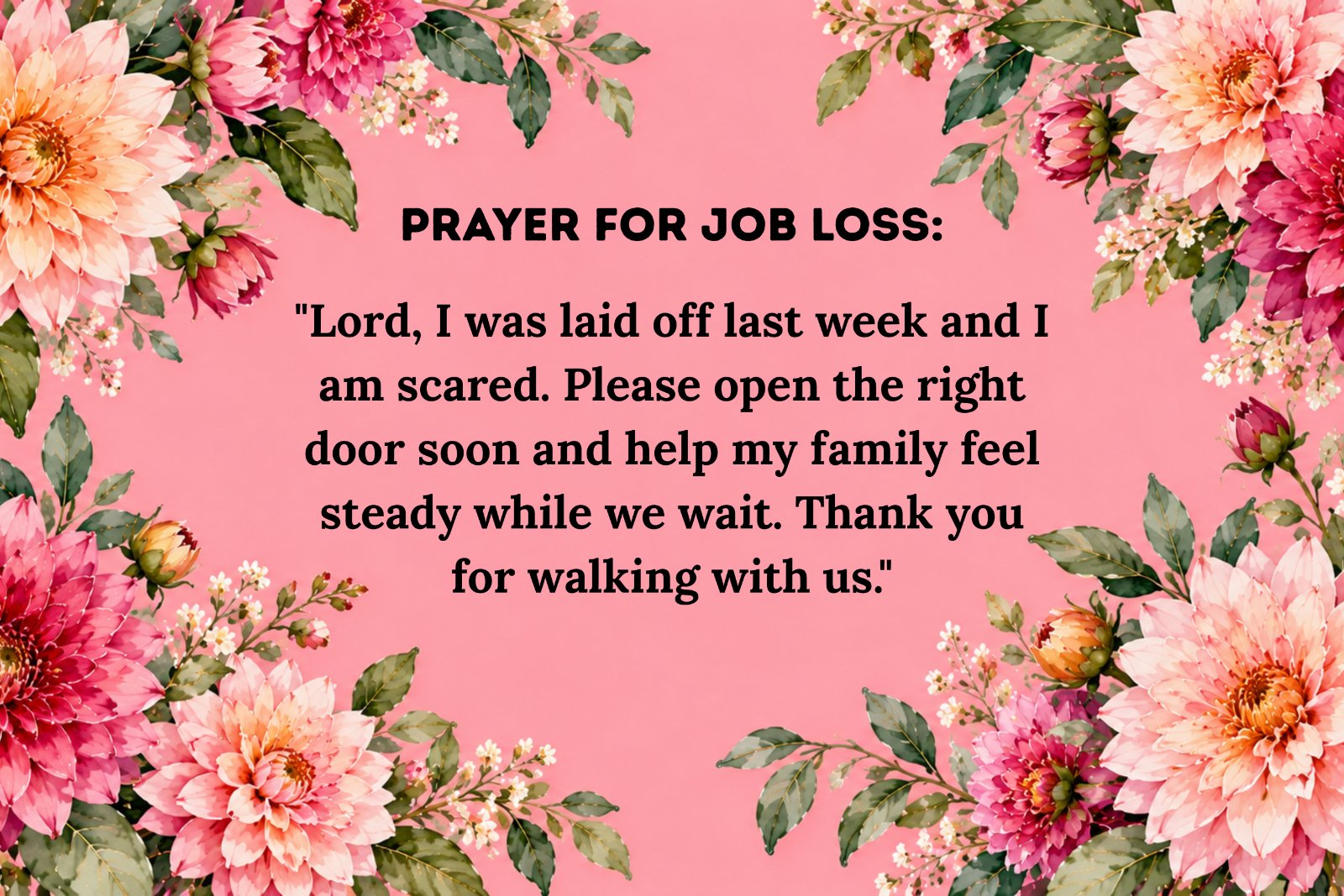
- Job loss. “Lord, I was laid off last week and I am scared. Please open the right door soon and help my family feel steady while we wait. Thank you for walking with us.”
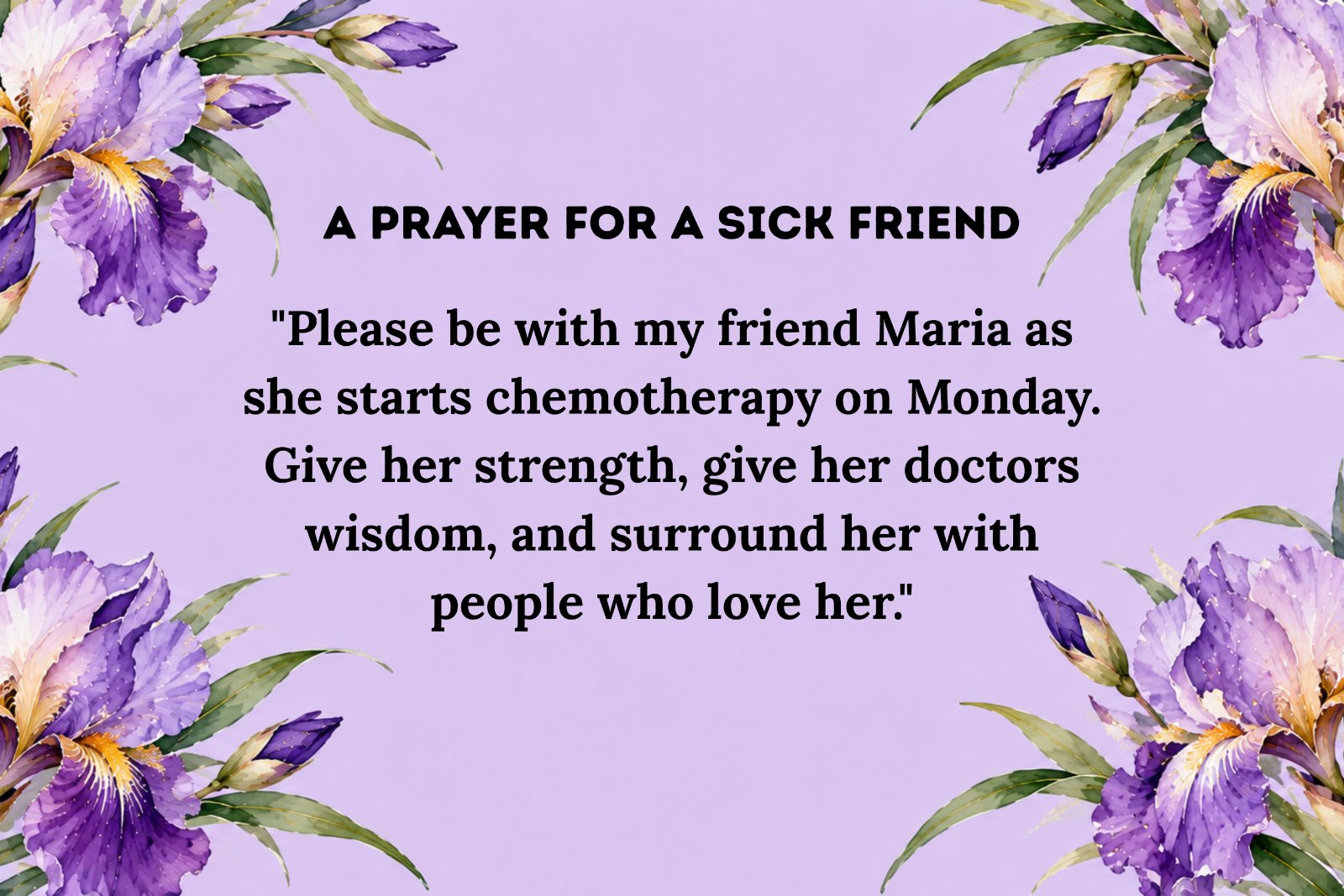
- A sick friend. “Please be with my friend Maria as she starts chemotherapy on Monday. Give her strength, give her doctors wisdom, and surround her with people who love her.”
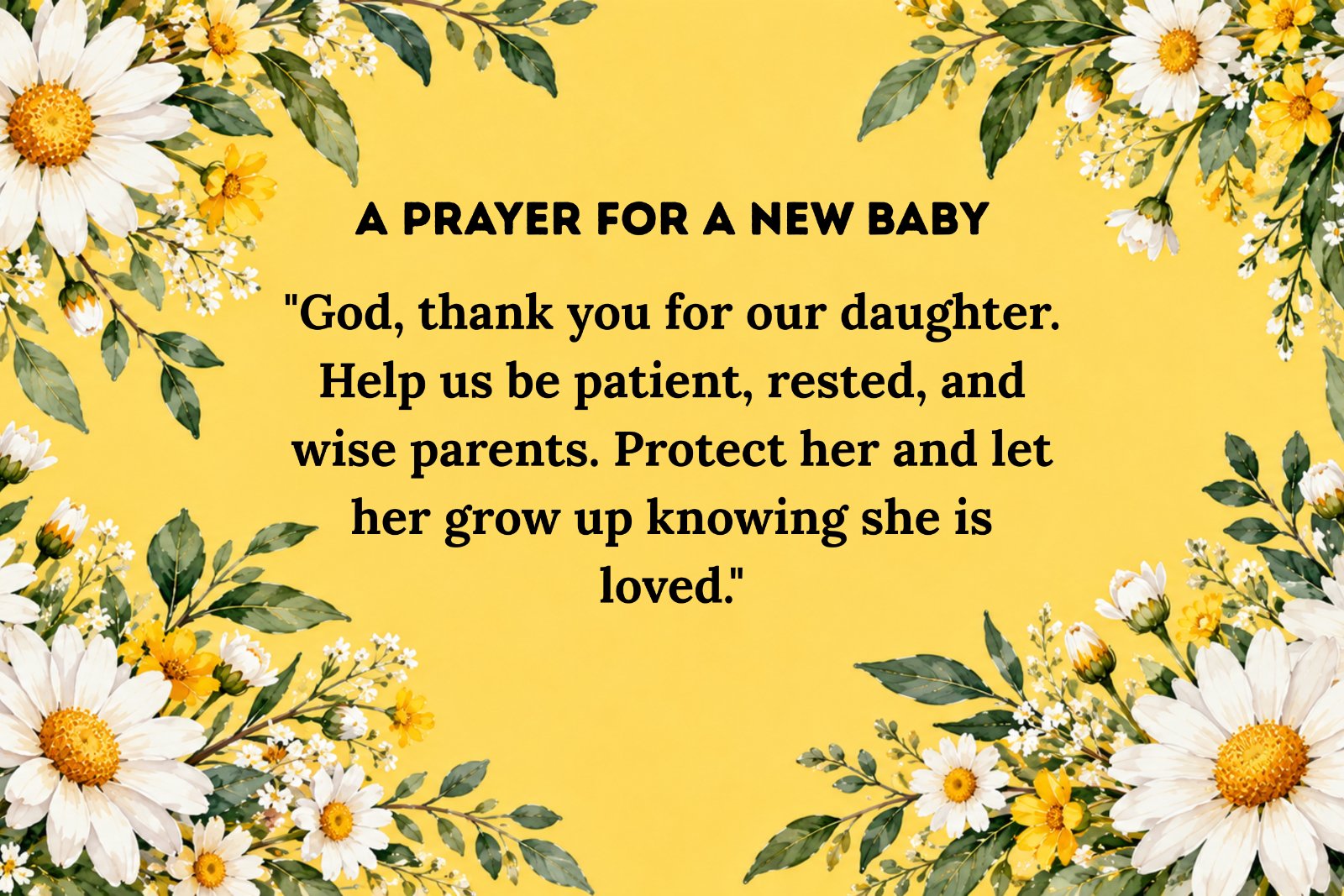
- A new baby. “God, thank you for our daughter. Help us be patient, rested, and wise parents. Protect her and let her grow up knowing she is loved.”
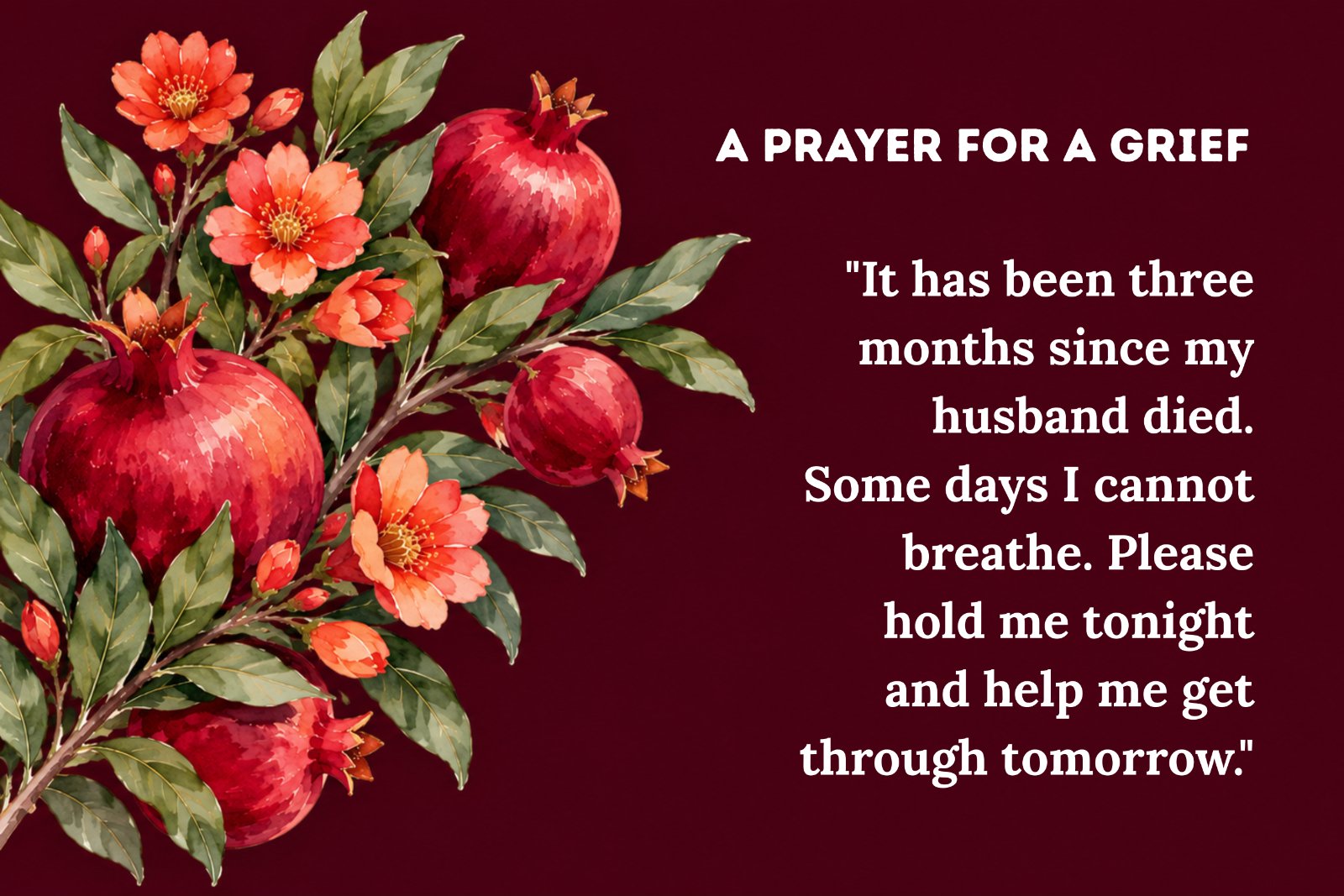
- Grief. “It has been three months since my husband died. Some days I cannot breathe. Please hold me tonight and help me get through tomorrow.”
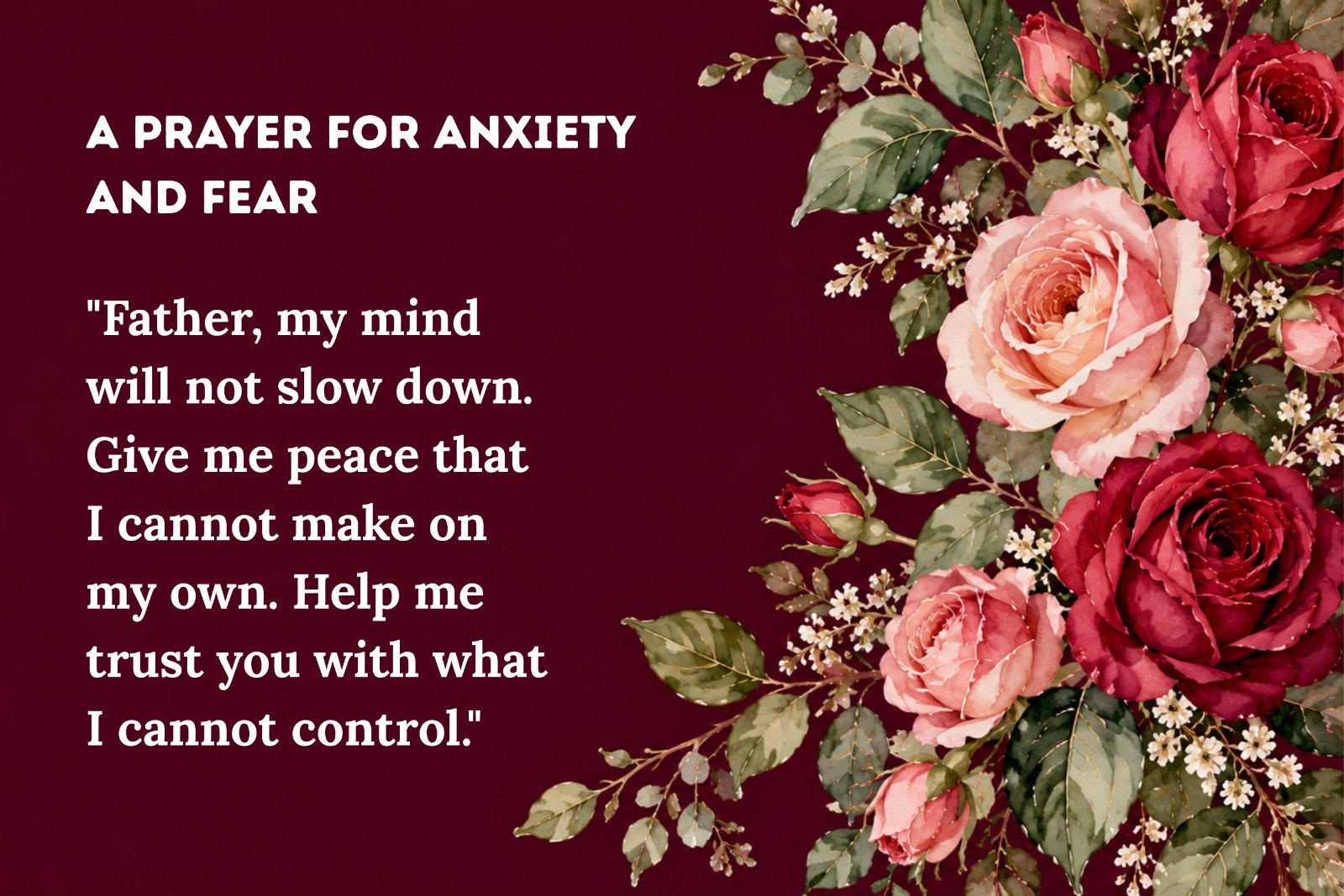
- Anxiety and fear. “Father, my mind will not slow down. Give me peace that I cannot make on my own. Help me trust you with what I cannot control.”
- A strained relationship. “Lord, my brother and I have not spoken in two years. Soften both of our hearts and show us how to forgive. Bring us back together.”
- Students and exams. “God, I have finals this week and I feel unprepared. Calm my nerves, help me remember what I studied, and remind me that my worth is not a grade.”
- A loved one far from home. “Please keep my son safe during his deployment. Watch over him on the hardest days and bring him home. Give me peace while I wait.”
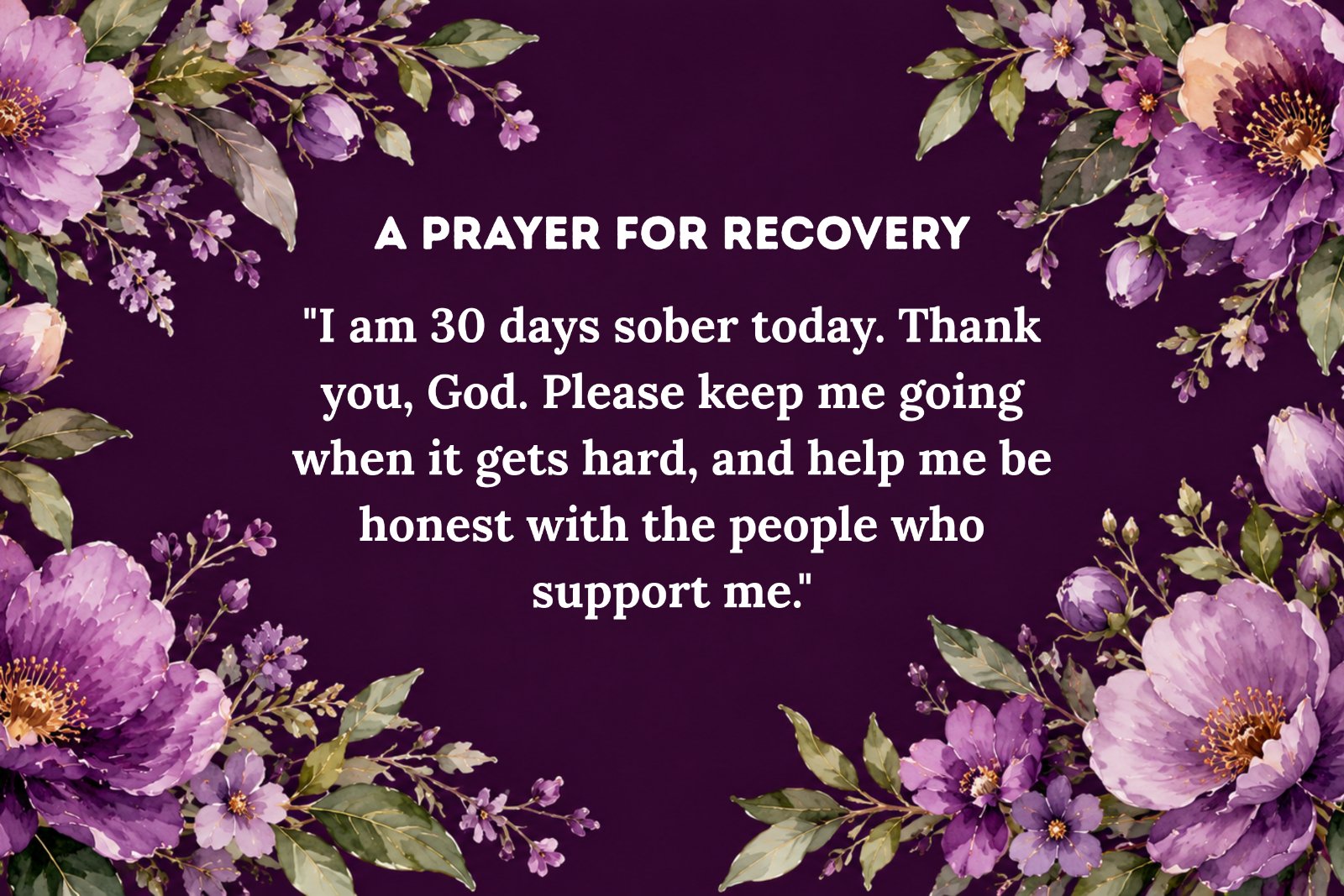
- Recovery and a fresh start. “I am 30 days sober today. Thank you, God. Please keep me going when it gets hard, and help me be honest with the people who support me.”
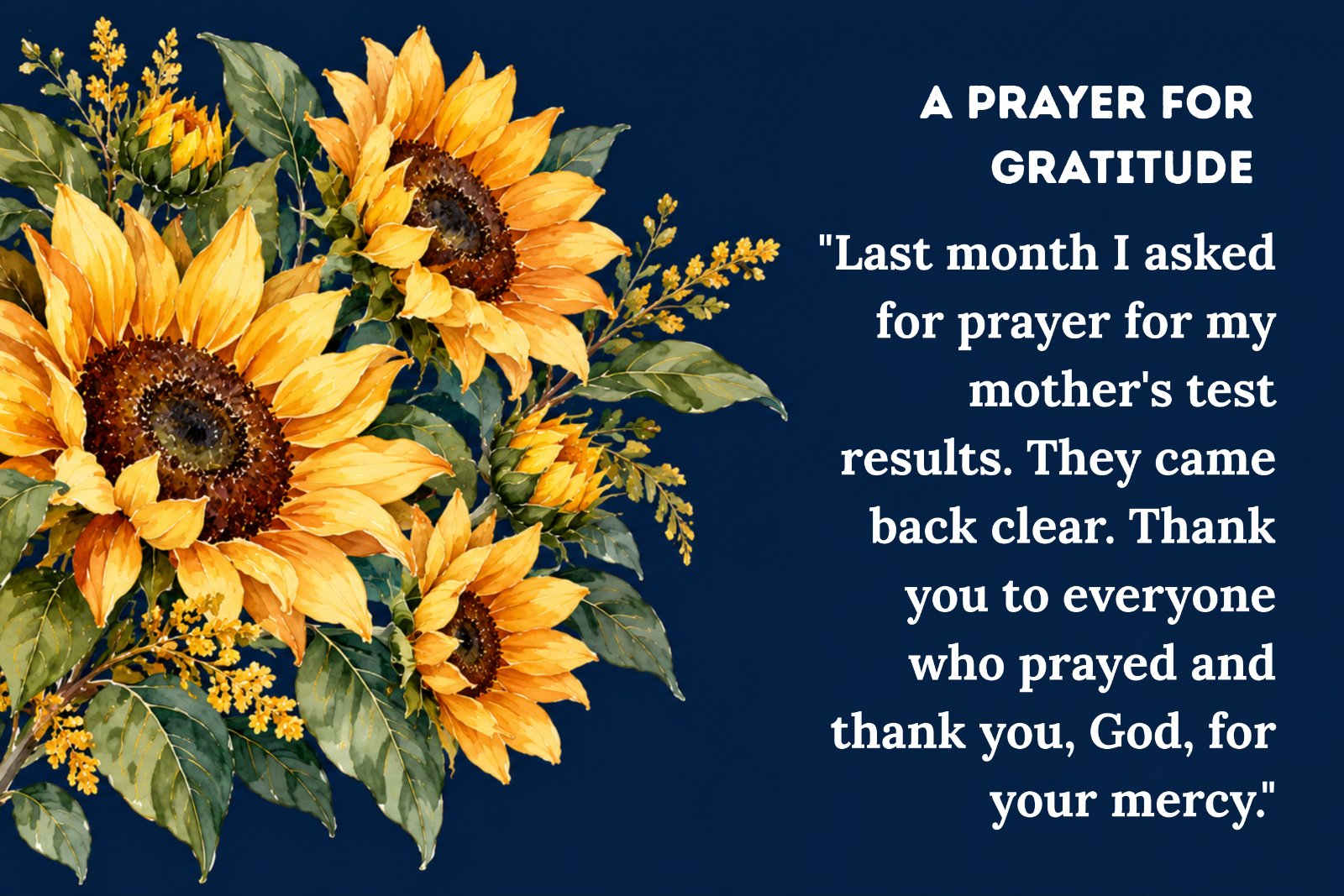
- Gratitude for an answered prayer. “Last month I asked for prayer for my mother’s test results. They came back clear. Thank you to everyone who prayed and thank you, God, for your mercy.”
Notice what these cards have in common. Each one is short, names a real need, and speaks plainly. None of them try to sound religious or perfect. That honesty is exactly what makes a prayer wall feel safe, and it is what moves other people to stop, read, and pray.
How to Keep a Prayer Wall Alive
Most prayer walls do not fail because people stop caring. They fail because nobody tends them. A few simple habits keep yours meaningful.
Assign a caretaker or team.
One person or a small group should own the wall. They restock cards, check the wall weekly, and make sure someone is praying over what is posted.
Set a prayer rhythm.
Pick a regular time, such as Wednesday mornings or the first Sunday of the month, when a team reads the requests aloud or silently prays through them. Mention the rhythm on your sign so people know their note will be read.
Add an answered prayers section.
This is the most encouraging part of any wall. Give people a green or gold card color for updates and celebrations, and place those notes where everyone can see them. Seeing a prayer answered gives others courage to ask.
Rotate requests with respect.
Notes cannot stay up forever. Decide how long they stay, perhaps four to six weeks, and what happens next. Many churches collect old cards in a prayer box, bury them in a garden, or keep them in a binder. Avoid tossing them in the trash in front of people.
Share updates.
A short mention in your newsletter, service announcements, or group chat keeps the wall present in people’s minds. You do not need to share personal details. A line like “We prayed over 42 requests this month and heard four answered prayers” is encouraging.
Protect confidentiality.
Make it clear what is private and what is visible to everyone. Offer a separate box for requests that should only be read by your prayer team.
Keep it fresh.
Change the theme with the seasons, swap out colors, and refresh the sign. A wall that looks new invites new participation.
Involve kids.
Provide child-sized cards and crayons. Children pray with a simplicity that adults often envy, and their notes are often the ones people remember.
Digital Prayer Walls and Online Prayer Requests
Not everyone can walk up to a wall in a church lobby. Some people are homebound, live far away, work odd hours, or simply feel safer typing a prayer request from their phone. That is why many churches and ministries now run a digital prayer wall alongside the physical one.
An online prayer wall can be as simple as a shared form or as full-featured as a dedicated prayer app. Whatever you choose, a few principles keep it healthy:
- Make it easy. One short form, a clear button, and no required account. Every extra step costs you requests.
- Offer privacy choices. Let people choose between a public post, a prayer-team-only request, or an anonymous one.
- Moderate with care. Review submissions before they go public so personal details, spam, and unkind comments do not appear.
- Let people respond. A simple “I prayed” button or a short comment gives the person who posted real encouragement.
- Follow up. Invite people to mark a request as answered, and share those updates.
- Connect it to your physical wall. Print select online requests for the wall with permission, or display a QR code next to the wall so visitors can submit a request from their phone.
A digital wall and a physical wall do not compete. Together they reach more people and make it easier for a prayer request to find its way to someone who will pray.
Prayer Wall FAQ
What is a prayer wall?
A prayer wall is a space, physical or digital, where people post prayer requests, prayers, or thanks so a community can see them and pray together.
What is the purpose of a prayer wall?
The purpose is to help people share burdens, pray for one another, and celebrate answered prayers. It makes private needs visible and invites others into the prayer.
How do I write a prayer request for a prayer wall?
Keep it short and honest, name the need, and protect other people’s privacy. One or two sentences are enough, such as “Please pray for peace as my family goes through a move.”
Should I include my name on a prayer request?
That is up to you. Many prayer walls allow anonymous notes. If you want follow-up or support, add a first name or initials.
Who reads the prayer requests on a prayer wall?
It depends on the wall. Some are public and anyone can read them. Others are only read by a prayer team. A good prayer wall tells you clearly which one it is.
What do you do with prayer requests after they come down?
Common choices include keeping them in a prayer box, filing them in a binder, burying them in a garden, or shredding them respectfully after a set period.
How long should prayer requests stay on a prayer wall?
Most groups leave them up for four to six weeks, then rotate them out. Seasonal events may have a shorter window.
Can a prayer wall be used outside of church?
Yes. Schools, retreats, hospitals, workplaces, homes, and community events all use prayer walls. It works anywhere people want to share hope.
What materials do I need to start a prayer wall?
You need a wall or board, cards or sticky notes, pens, tape or clips, and a sign with simple instructions. Add a theme and decor if you like.
Do I have to be religious to leave a prayer request?
No one is checking. Prayer walls are often places where people exploring faith feel welcome to leave a request without pressure. Leaders should keep the invitation warm and open.
Start Your Prayer Wall Today
A prayer wall does not need a big budget, a design team, or a perfect plan. It needs a wall, a stack of cards, a clear invitation, and a few people willing to pray. Start small, pay attention to what your community responds to, and let the wall grow.
If you are leading one, pick a theme, set a weekly prayer rhythm, and add a place for answered prayers. If you are looking for a place to leave a prayer request, write one honest sentence and trust that it will be heard. Either way, you are joining something that people of faith have done for generations: bringing our needs and our thanks into the open and praying them together.
Ready to begin? Choose one display idea from this guide, gather your supplies this week, and invite your first prayer request.