What Is an ESV Journaling Bible? A Complete Guide to Bible Journaling and Choosing the Right One
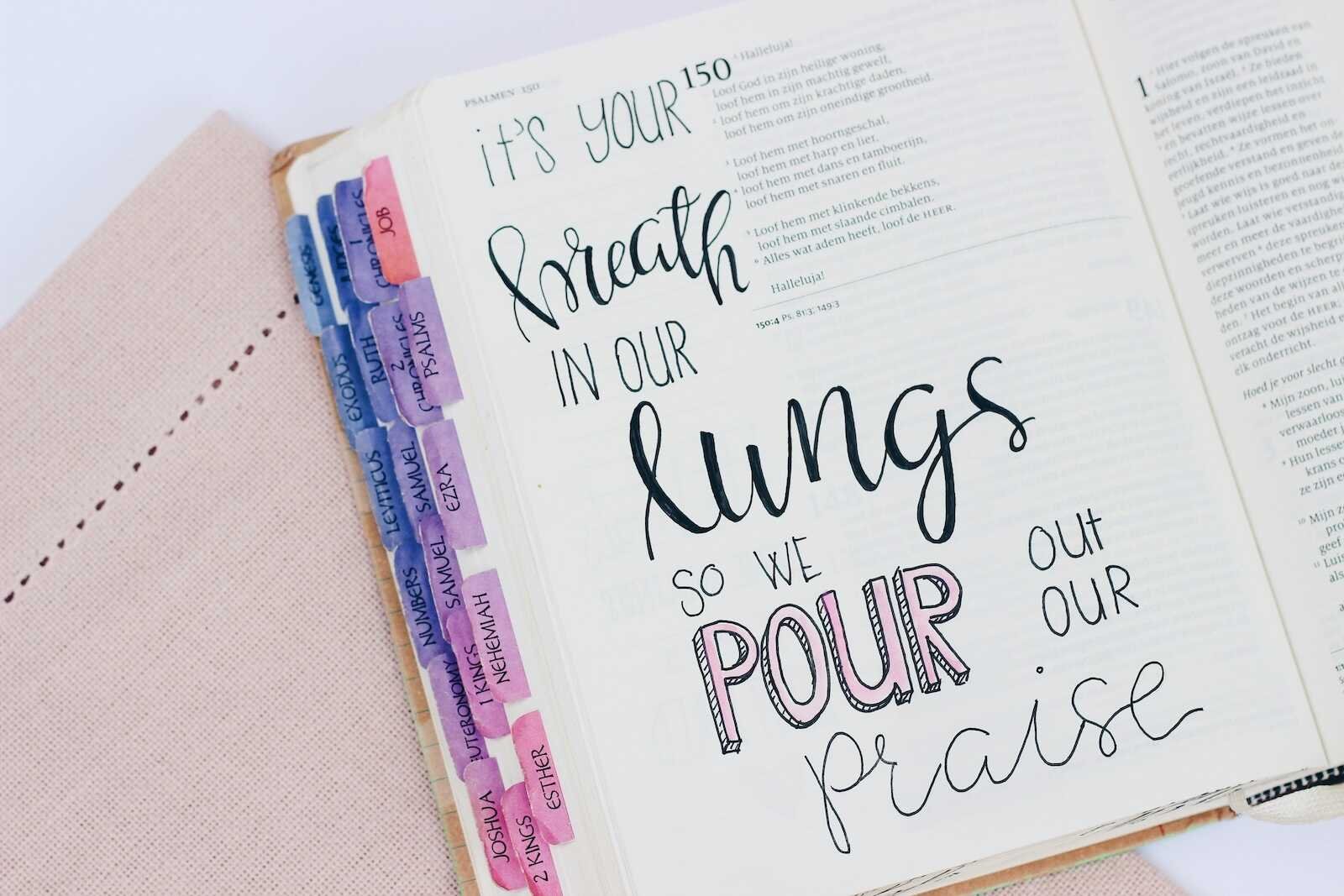
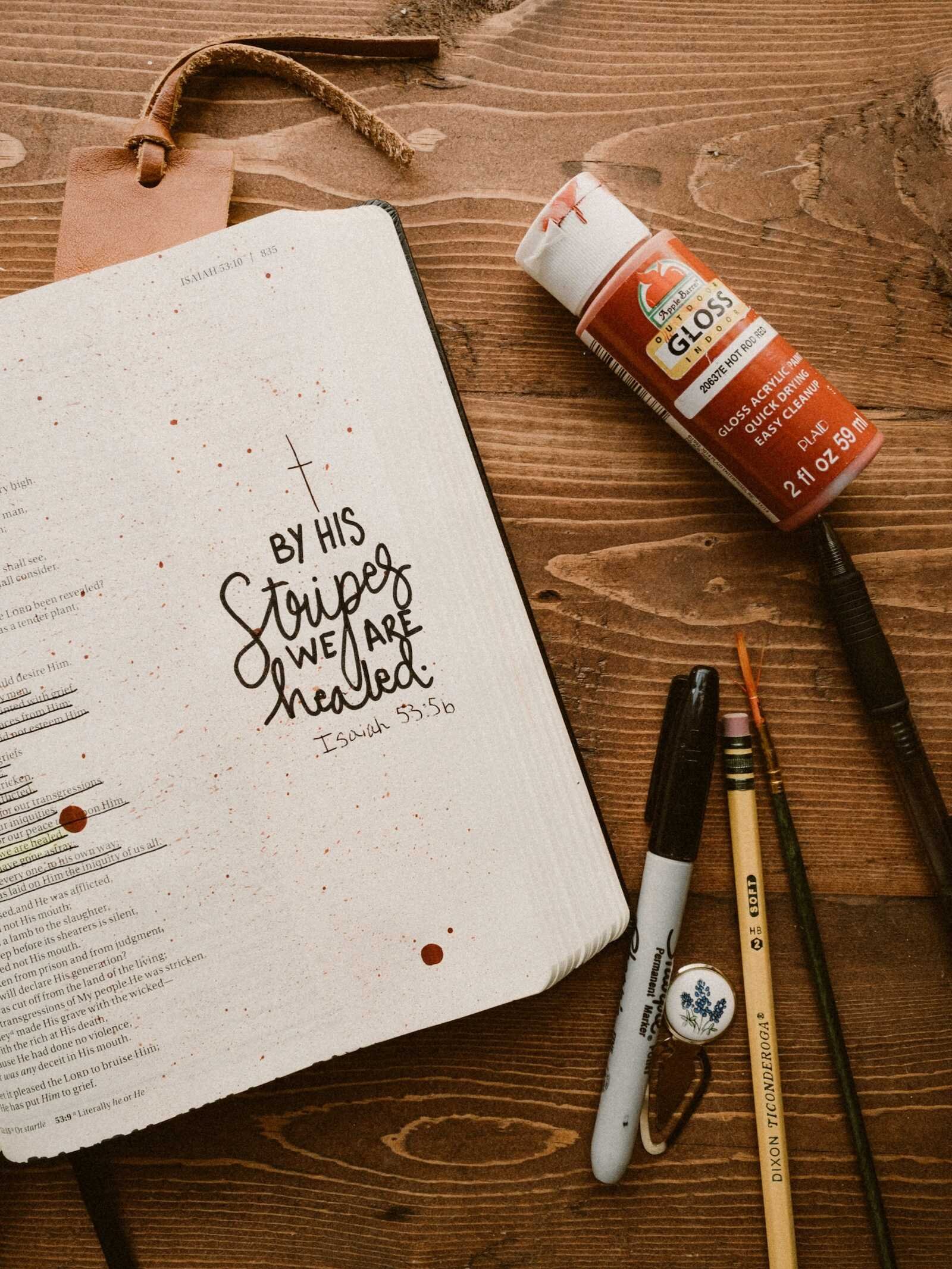
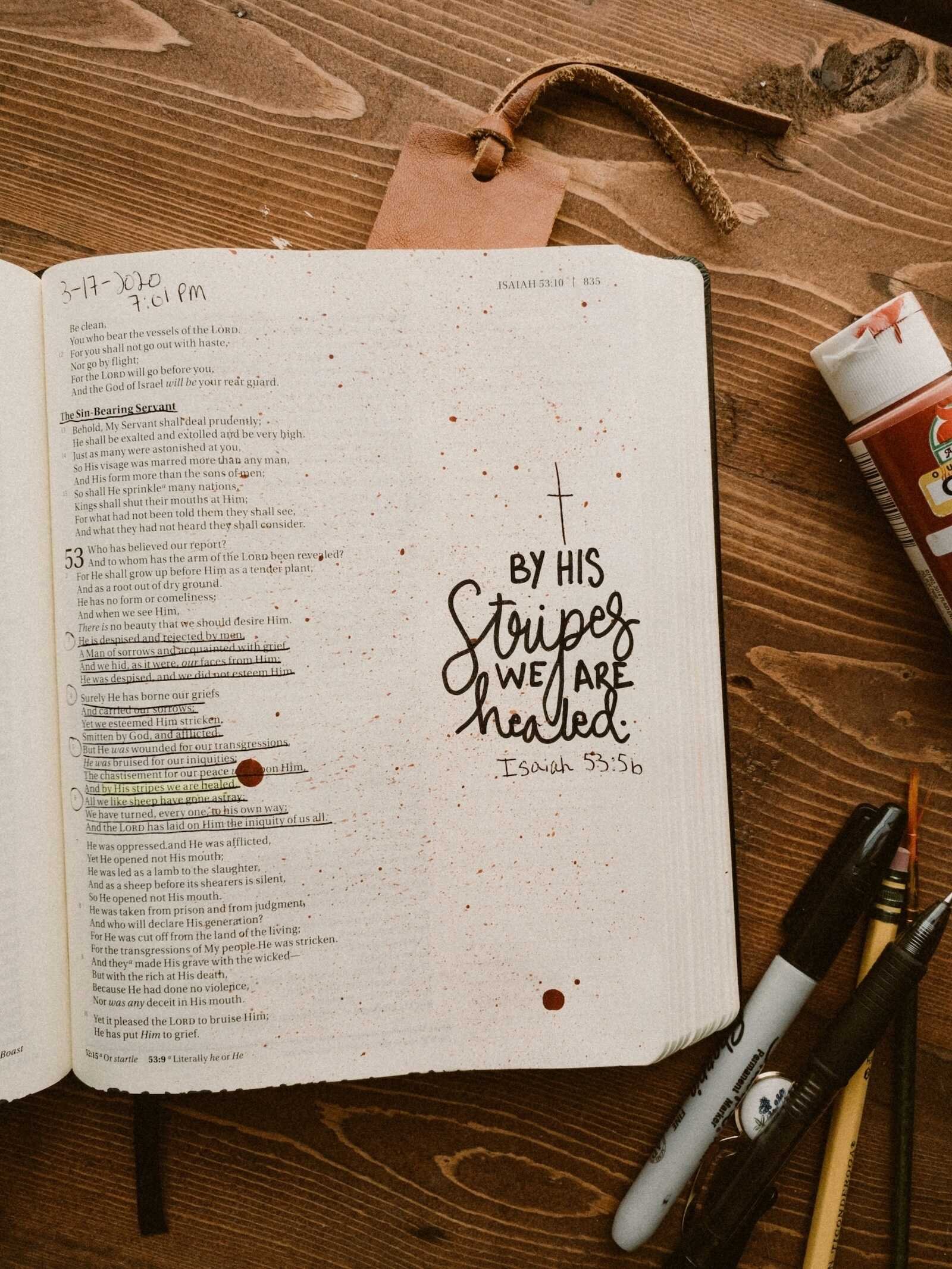
If you’ve spent any time on Pinterest or Instagram looking at hand-lettered Scripture verses surrounded by watercolor flowers, you’ve already seen what an ESV Journaling Bible makes possible. But this guide goes beyond the pretty pictures. It covers what these Bibles actually are, why so many readers have switched to them, and how to pick one that fits the way you actually study and create.
What Is an ESV Journaling Bible?
An ESV Journaling Bible is a full copy of the English Standard Version translation printed with extra-wide margins, usually around 2 inches, on one or both sides of every page. Those margins give you room to write notes, draw, paste in washi tape, or paint directly next to the verse that inspired you.
Most editions use a single column of text instead of the traditional two-column layout you’ll find in a standard pew Bible. That single column pushes the text toward the center or one side of the page, leaving a clean, ruled or unruled strip of white space for your own additions.
The paper matters here more than people expect. Regular Bible paper is thin enough that ink bleeds through almost immediately. Journaling editions typically use a heavier, more opaque paper (often in the 28-32 GSM range or higher) specifically so pens and light watercolor won’t soak through to the next page.
Learn the difference between NLT Journaling Bible and ESV Journaling Bible
The NLT (New Living Translation) Journaling Bible and ESV (English Standard Version) Journaling Bible differ mainly in translation philosophy and reading style, though both share the wide-margin format designed for note-taking, sketching, and reflection alongside the biblical text.
The NLT uses a “dynamic equivalence” or thought-for-thought approach, rendering the original Hebrew, Greek, and Aramaic texts into contemporary, easy-to-read English that prioritizes clarity and natural phrasing—making it popular with newer readers or those who want a more conversational tone.
The ESV, by contrast, follows an “essentially literal” or word-for-word translation philosophy, staying closer to the sentence structure and vocabulary of the original languages, which appeals to readers who want precision for study purposes even if the language feels more formal.
Beyond translation style, the two journaling editions may also vary in publisher, page layout, margin width, paper quality, and available cover designs, so it’s worth comparing specific editions if those physical details matter to you alongside the translation choice.
The Practice of Bible Journaling
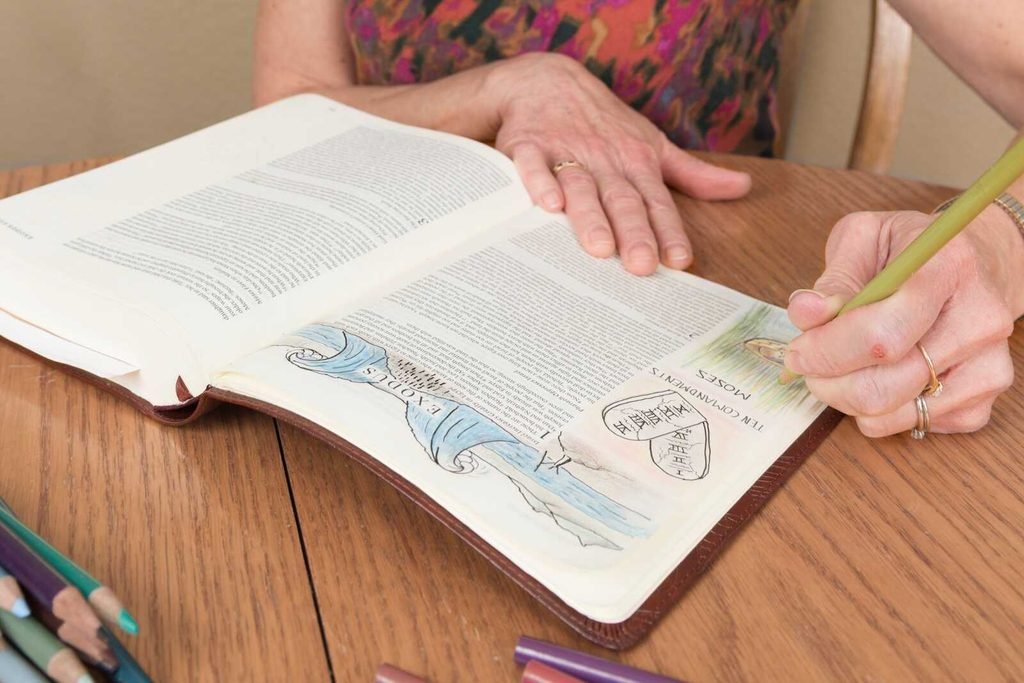
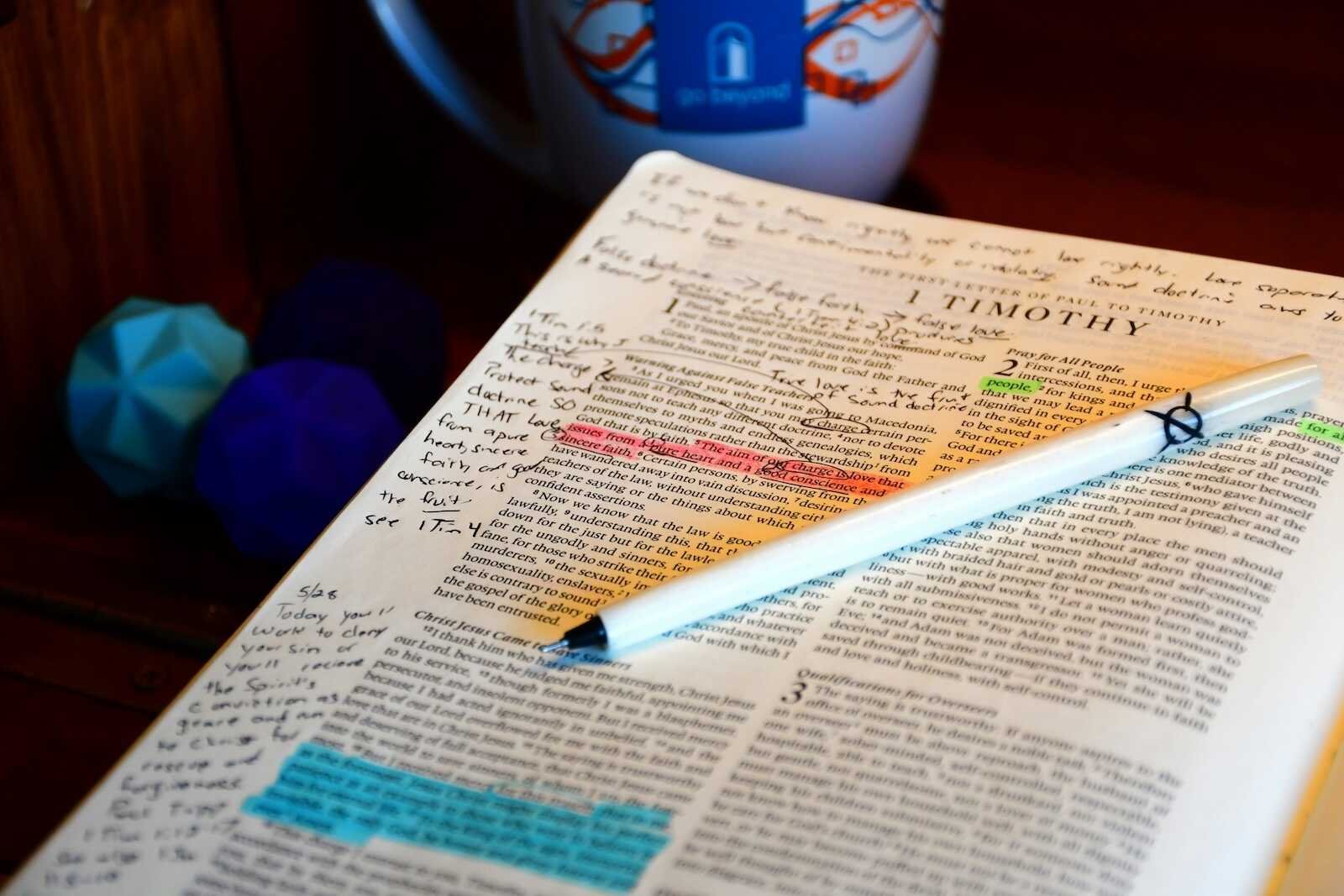
Bible journaling is the act of responding to Scripture creatively and in writing, directly inside the pages of your Bible. It grew out of a much older habit: writing notes in the margins of a well-loved Bible. What’s changed is the intention behind it and the tools people now use.
A typical journaling session might involve:
- Reading a passage slowly, sometimes more than once
- Writing down a word or phrase that stands out
- Adding a personal reflection, prayer, or question in the margin
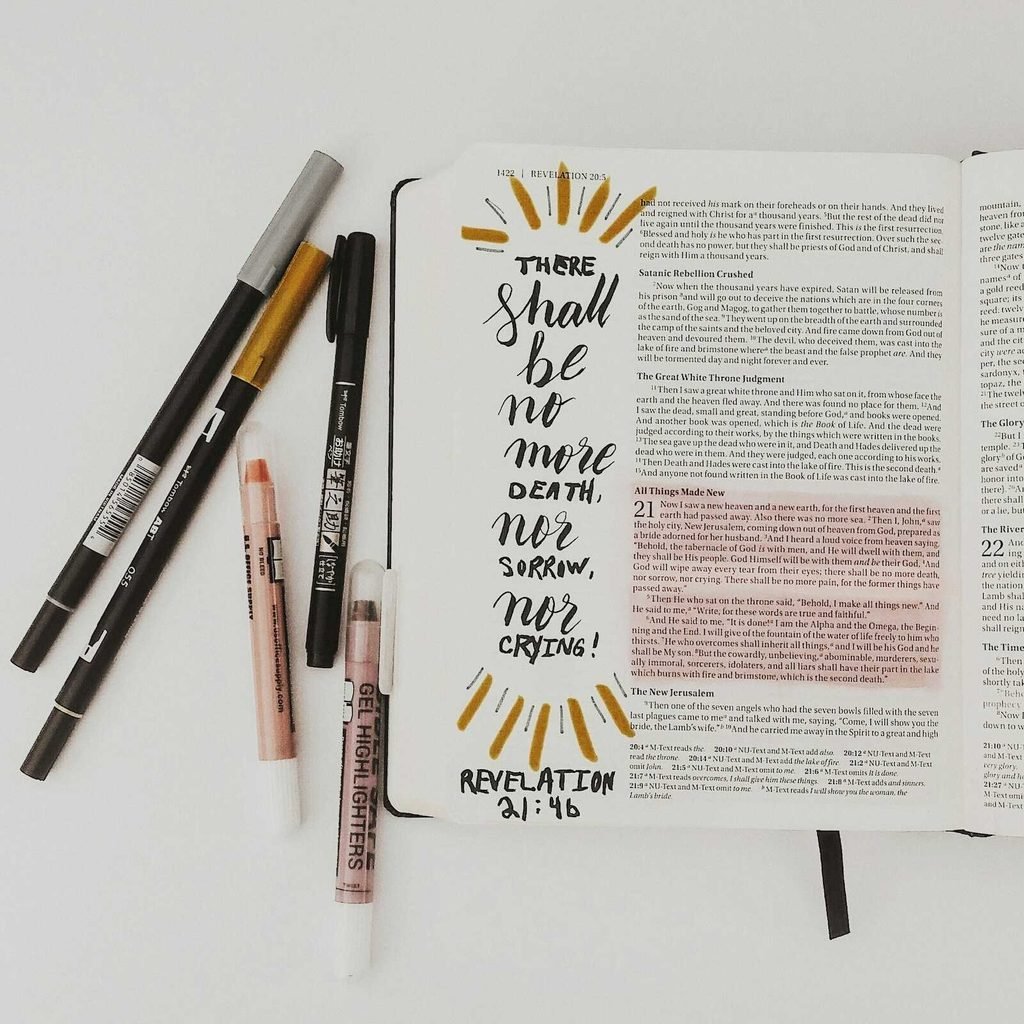
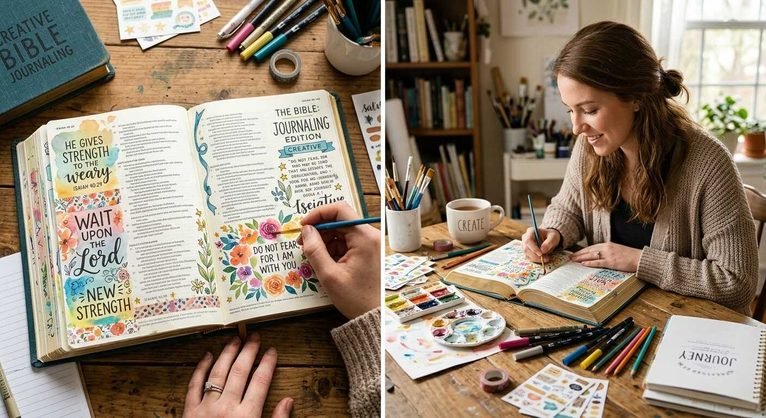
- Illustrating the verse with lettering, doodles, or watercolor
- Cross-referencing other passages that connect to what you just read
Some people journal daily as part of a devotional routine. Others use it for specific studies, working through one book of the Bible at a time and filling the margins as they go. There’s no required method. The Bible itself is designed to accommodate whatever approach helps you engage with the text.
It’s worth saying plainly: Bible journaling is not about producing Instagram-worthy art. Plenty of people who journal never share a single page publicly. The visual side is optional. What matters is the slower, more attentive reading that the practice tends to encourage.
Why People Journal in Their Bibles
The purpose behind Bible journaling comes down to a few consistent reasons readers give.
It slows down reading.
Skimming a chapter takes minutes. Journaling forces you to sit with a passage long enough to write about it, which naturally leads to closer attention to specific words and phrases.
It creates a personal record.
A journaling Bible becomes a kind of spiritual diary. Years later, you can flip back and see exactly what you were thinking or praying about during a particular season of life, right next to the verse that prompted it.
It helps memory and retention.
Writing something down, even briefly, tends to help people remember it. Combining a verse with a personal note or a small illustration gives your brain more than one way to recall it later.
It makes room for creativity in worship.
For visually or artistically minded people, journaling turns Bible study into something that also uses their hands and their eye for design, rather than treating study as a purely intellectual exercise.
It builds a habit.
Having a dedicated space to fill in can be motivating in the same way a habit tracker or a blank notebook is. The empty margin is an invitation to keep showing up.
ESV Journaling Bible Shopping Guide
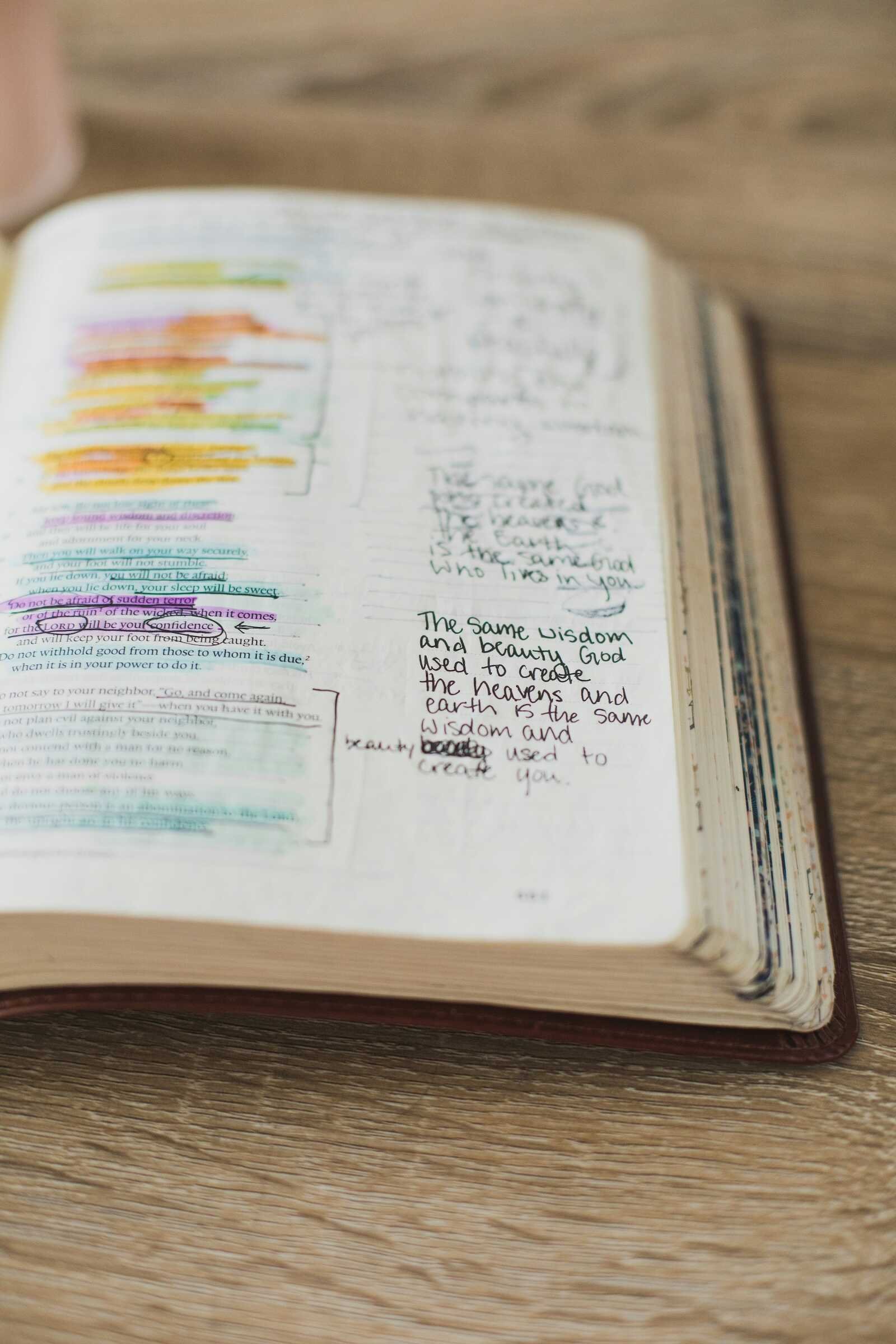
Not every journaling Bible is built the same way, and the differences matter once you start actually using one. Here’s what to look at before buying.
1. Check the Margin Size and Placement
Margins typically run from about 1.5 to 2.5 inches. Wider isn’t automatically better. If you write large or plan to do full illustrations, go wider. If you mostly jot short notes, a smaller margin keeps the Bible from feeling bulky.
Also check whether the margin is on the outer edge of every page or split down the center of a two-column spread. Outer margins tend to be easier to write in because you’re not fighting the binding.
2. Look Closely at the Paper Weight
This is the single most important spec for anyone planning to use pens heavier than a fine-tip gel pen. Look for product descriptions that mention paper weight or “bleed-resistant” or “watercolor-friendly” language. Reviews are often more reliable than marketing copy here, since actual users will mention whether their favorite pen bled through.
3. Decide on Ruled, Unruled, or Dot-Grid Margins
- Ruled margins help keep handwritten notes straight and are easiest for people who journal mostly with text.
- Unruled (blank) margins give full freedom for illustration and lettering but can be harder to write in neatly.
- Dot-grid margins are a middle ground, offering light structure without heavy lines that compete with artwork.
4. Consider Binding and Durability
A Bible you plan to fill with ink and use for years needs a binding that can take it. Look for smyth-sewn or Smyth-sewn hardcover bindings if you want the pages to lie flatter and hold up to repeated use. Cheaper glued bindings can crack over time, especially once the pages get thicker from added ink and tape.
5. Font Size and Readability
Because journaling editions dedicate so much page space to margins, the text column is often narrower, which sometimes means a smaller font. If eye strain is a concern, check the point size before buying, and look for large-print journaling editions, which several publishers now offer.
Top ESV Journaling Bible Brands and Editions
Crossway ESV Journaling Bible is the most widely available line, since Crossway holds the publishing rights to the ESV translation itself. Within this line you’ll find several formats worth knowing about:
- The original ESV Journaling Bible with a single column of text and a ruled margin on the outer edge of each page.
- The ESV Illuminated Bible, Art Journaling Edition, which includes hand-lettered illustrations printed throughout as a starting point for coloring or as inspiration.
- The ESV Single Column Journaling Bible, a simpler, less decorated format for people who want the wide margin without extra artwork on the page.
- Various cover options, ranging from cloth-over-board to leather-look TruTone covers to interchangeable cover systems that let you swap the outer cover while keeping the same page block.
Because Crossway licenses the ESV text, most other publishers selling “ESV journaling Bibles” are actually reselling or repackaging Crossway’s printed text with different cover designs, so brand comparisons often come down to cover style, price, and where you’re buying from rather than differences in the Bible content itself.
The ESV Spiral Journaling Bible
One specific format worth calling out is the spiral-bound ESV journaling Bible. Instead of a traditional bound spine, these editions use a wire or plastic coil binding, which lets the book lie completely flat when opened, even to the very first or last page.
This matters a lot for journaling because a Bible that won’t lie flat fights you the entire time you’re writing or painting. A spiral binding removes that problem entirely and also makes it easier to work near the center margin without the page curving away from your pen.
The tradeoff is durability and appearance. Spiral bindings are more prone to bending or catching on things in a bag, and some readers feel they look less like a traditional Bible and more like a workbook. If you journal often and portability or flat-lying pages matter more to you than a classic look, the spiral option is worth serious consideration.
Things to Avoid When Choosing an ESV Journaling Bible
Avoid buying based on cover photos alone.
A beautiful floral cover says nothing about paper quality or margin size. Read the product specifications, not just the images.
Avoid ultra-thin Bible paper if you plan to use markers or watercolor.
Standard Bible paper, even in a journaling edition, can still bleed with heavier wet media. If you’re a dedicated mixed-media artist, look specifically for editions marketed as watercolor-resistant, or plan to test a single page first with your actual supplies.
Avoid committing to a full leather or premium cover before you’ve journaled in a cheaper edition.
Bible journaling styles vary a lot from person to person. Some people write small and neat; others fill every inch of margin with large lettering and tape. Try a basic hardcover edition first so you don’t invest heavily in a size or layout that doesn’t match how you actually work.
Avoid glued paperback bindings for long-term use.
These are fine for a short trial but tend to fall apart once pages get thicker from ink, stickers, or tape.
Avoid assuming every “ESV” Bible allows reprinting or reuse of the text for public sharing without checking licensing.
If you plan to photograph and publish full pages of journaled Scripture for a business, product, or wide public audience, it’s worth understanding Crossway’s guidelines for quoting and reproducing ESV text, since translation text itself is copyrighted even though your artwork and notes are your own.
Practical Tips for Getting Started
Test your pens on scrap Bible paper first.
Some publishers include a blank page or two at the back of the Bible specifically for this. Use it before committing ink to a page you care about.
Use pens made for thin paper.
Micron pens, gel pens, and colored pencils tend to perform better than markers or heavy watercolor unless your Bible’s paper is specifically rated for wet media.
Start small.
A single underlined word or a short phrase in the margin is still Bible journaling. You don’t need a full illustration to make it worthwhile.
Keep a light touch with adhesives.
Washi tape and thin stickers work well. Bulky embellishments can warp pages or make the Bible hard to close.
Don’t feel pressured to fill every page.
Some pages might get a full illustration; others might stay blank for years. That unevenness is normal and reflects how reading and reflection actually happen over time.
Consider a companion notebook for longer reflections.
If you find yourself wanting to write more than the margin allows, keep a separate notebook alongside your Bible rather than cramming text or taping in extra pages, which can strain the binding.
Final Thoughts
An ESV journaling Bible is really just a full ESV translation given room to breathe, with wide margins, sturdy paper, and a layout built for interaction rather than passive reading. The right edition for you depends less on brand names and more on how you personally read, write, and create. Pay attention to paper weight, margin style, and binding before you buy, and don’t be afraid to start with a simple edition before investing in something more elaborate. The goal isn’t a perfectly decorated page. It’s a Bible that shows the marks of having actually been read.



3 Comments