
Motivational Scriptures From the Bible: 28 Verses for Strength, Courage and Hope

Some mornings you wake up already tired. The to-do list is long, the bank account is short, and the thing you prayed about last month still hasn’t moved. Those are the mornings when many people reach for a verse they half remember from childhood, or one a friend texted them, and hold onto it.
That habit is older than most people realize. The writers of Scripture were often in the middle of exile, illness, war, grief, or plain exhaustion when they wrote. The motivational scriptures from the Bible were rarely written from comfortable places. That is a large part of why they still work.
This guide gathers 28 verses that speak to strength, courage, perseverance, purpose, and hope. Each one comes with the setting it was written in and a look at how it applies to life today. Later you will find a section on how faith carries believers through every season, along with practical ways to make these verses part of your daily routine instead of a nice quote you scroll past.
Quotations here come from the King James Version, which is in the public domain. If a more modern wording helps you, every reference links to Bible Gateway, where you can read the same passage in many translations side by side.
Why Motivational Scriptures Still Matter
Encouragement from the Bible differs from a generic pep talk in one important way. A pep talk depends on you feeling capable. Scripture points outside of you. Again and again the message is that your strength is not the only strength in the room.
Researchers who study religion and daily life have noticed how many people turn to their faith in hard moments. The Pew Research Center’s religion research documents how central prayer and Scripture remain for millions of Americans, including many who rarely attend services. Reading a verse slowly and thinking it through also overlaps with what the Mayo Clinic describes about meditation, namely that quiet, focused attention can help with stress and emotional balance.
A verse does its best work when you understand where it came from. A line pulled out of its setting can end up meaning something the author never intended. So for each passage below, you will get a short look at who was speaking, what was going on, and what it means for a person reading it in a kitchen, a car, or a hospital waiting room today.
Motivational Bible Verses for Strength on Hard Days
1. Lamentations 3:22-23
“It is of the LORD’S mercies that we are not consumed, because his compassions fail not. They are new every morning: great is thy faithfulness.” (Read Lamentations 3:22-23)
Context: The book of Lamentations mourns the destruction of Jerusalem. The writer is surrounded by ruins and has just spent twenty-one verses describing his misery. Then he chooses to remember something else.
Today: Hope in this verse does not deny that things are bad. It sits right beside the pain. If your mornings feel heavy, the promise is that you do not have to carry yesterday’s failures into a fresh day. You get to start again without earning it first.
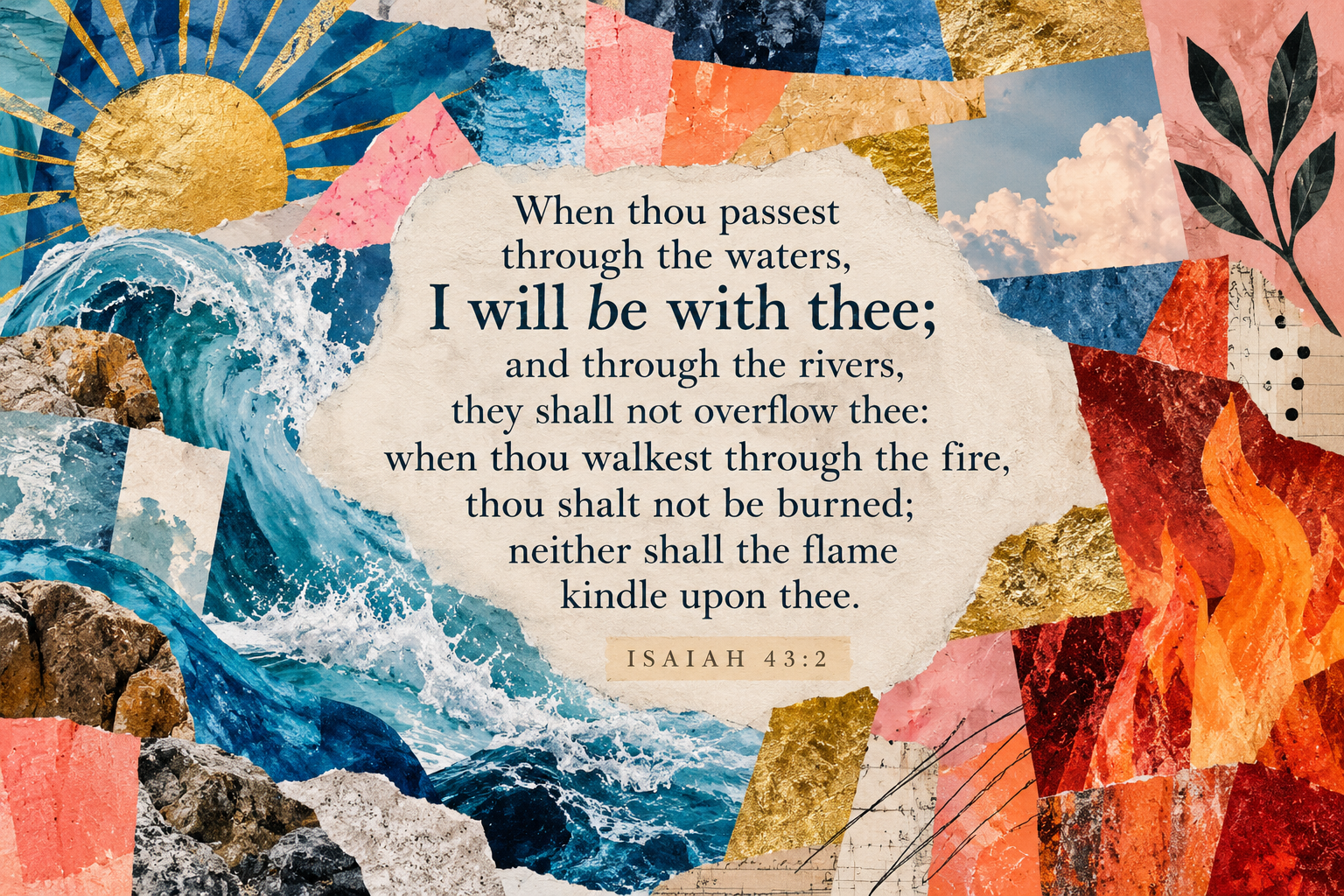
2. Isaiah 43:2
“When thou passest through the waters, I will be with thee; and through the rivers, they shall not overflow thee: when thou walkest through the fire, thou shalt not be burned; neither shall the flame kindle upon thee.” (Read Isaiah 43:2)
Context: God speaks to Israel during the years leading up to the exile. Notice the wording. It says “when,” not “if.” Trouble is assumed.
Today: The promise is presence, not the removal of hardship. A layoff, a diagnosis, or a broken relationship may still arrive. What the verse says is that you will not walk through it alone, and that the thing will not finish you.
3. Habakkuk 3:18
“Yet I will rejoice in the LORD, I will joy in the God of my salvation.” (Read Habakkuk 3:18)
Context: Habakkuk wrote as an invasion loomed. Just before this line, he lists a total agricultural failure: no figs, no grapes, no olives, no cattle. Everything his society ran on was gone.
Today: The word “yet” carries the whole verse. It is a decision made in the middle of loss, not a feeling that shows up on its own. Many people find that gratitude practiced during a bad season becomes the thing that keeps them steady.
4. Nehemiah 8:10
“…for the joy of the LORD is your strength.” (Read Nehemiah 8:10)
Context: The people of Jerusalem had just heard the law read aloud after years of exile, and they began to weep. Nehemiah told them not to grieve, because this was a holy day and a time to celebrate.
Today: Joy here is not a mood. It is something closer to a settled confidence that you belong to God. On days when you cannot manufacture cheerfulness, the verse invites you to draw on a joy that does not depend on your circumstances.
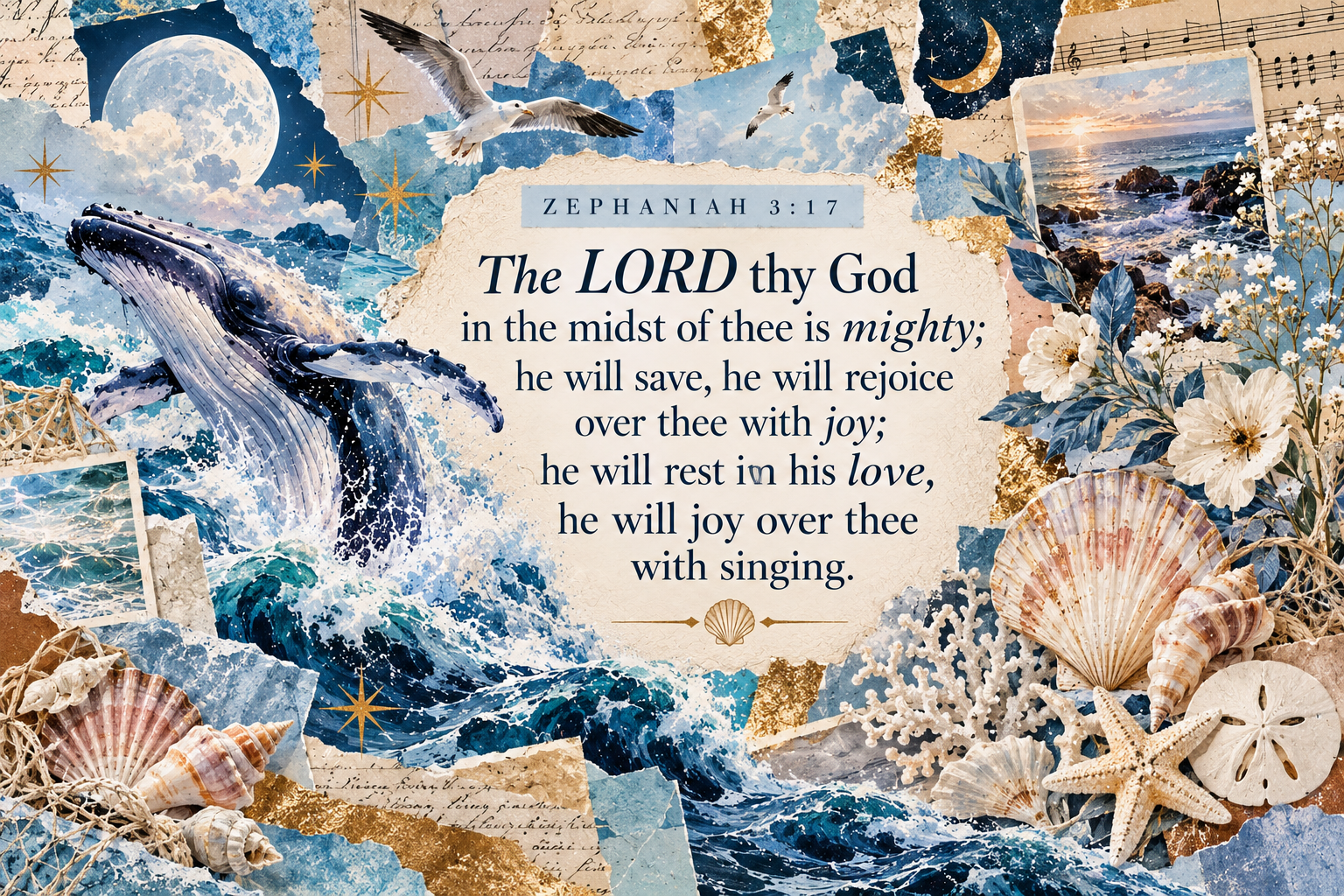
5. Zephaniah 3:17
“The LORD thy God in the midst of thee is mighty; he will save, he will rejoice over thee with joy; he will rest in his love, he will joy over thee with singing.” (Read Zephaniah 3:17)
Context: Zephaniah spends most of his short book warning of judgment. This verse arrives near the end and completely changes the tone, showing God as a delighted parent rather than a distant judge.
Today: A lot of motivation books tell you to work harder to earn approval. This verse says the approval is already there. For anyone who feels like they are always falling short, that changes what effort feels like.
6. 2 Corinthians 12:9
“And he said unto me, My grace is sufficient for thee: for my strength is made perfect in weakness.” (Read 2 Corinthians 12:9)
Context: Paul had begged God to remove a persistent difficulty he called a thorn in the flesh. The answer he got was not removal. It was this sentence.
Today: Most of us hide our limits. Paul says his became the place where God’s help was most visible. If you are burned out or stretched thin, admitting that honestly may be the first step toward real help instead of a sign of failure.

Bible Verses About Courage and Confidence
7. 2 Timothy 1:7
“For God hath not given us the spirit of fear; but of power, and of love, and of a sound mind.” (Read 2 Timothy 1:7)
Context: Paul wrote this letter near the end of his life, from prison, to a younger pastor named Timothy who seemed timid about leading and speaking up.
Today: Fear is normal, and the verse does not shame you for feeling it. It reminds you that fear is not the source you have to take direction from. Before a hard conversation or a big decision, this one is worth repeating slowly.
8. Deuteronomy 31:6
“Be strong and of a good courage, fear not, nor be afraid of them: for the LORD thy God, he it is that doth go with thee; he will not fail thee, nor forsake thee.” (Read Deuteronomy 31:6)
Context: Moses delivers this speech to Israel just before his death, as they prepare to enter the promised land without him. He is handing off leadership and trying to calm a nervous crowd.
Today: Transitions are frightening, whether it is a new job, a move, or life after a loss. The verse ties courage to companionship. You are told to be brave because you are not going in by yourself.
9. Exodus 14:14
“The LORD shall fight for you, and ye shall hold your peace.” (Read Exodus 14:14)
Context: The Israelites were trapped between the Egyptian army and the Red Sea, and they were panicking. Moses told them to stand still. What followed was the parting of the sea.
Today: Not every problem is solved by more frantic activity. Sometimes the wisest thing is to stop spinning, pray, and wait for the next step to become clear. This verse gives permission to rest while you wait.
10. Micah 7:8
“Rejoice not against me, O mine enemy: when I fall, I shall arise; when I sit in darkness, the LORD shall be a light unto me.” (Read Micah 7:8)
Context: Micah is speaking on behalf of a nation that has suffered real consequences, and he still expects to get back up.
Today: Failure is public these days. A lost job, a failed business, or a mistake that made the rounds online can feel permanent. The verse says a fall is an event, not an identity. You can be honest about being in the dark and still expect light.
11. Psalm 27:14
“Wait on the LORD: be of good courage, and he shall strengthen thine heart: wait, I say, on the LORD.” (Read Psalm 27:14)
Context: David wrote this psalm while under threat from enemies. Notice the repetition at the end. He is talking to himself, telling his own heart to hold on.
Today: Waiting is one of the hardest things to do well. Waiting on test results, on a job offer, on a prodigal child. The verse pairs waiting with courage, which suggests patience is not passive. It takes nerve.
12. Psalm 121:1-2
“I will lift up mine eyes unto the hills, from whence cometh my help. My help cometh from the LORD, which made heaven and earth.” (Read Psalm 121:1-2)
Context: This is one of the “songs of ascent,” sung by pilgrims traveling up to Jerusalem. Travel through those hills could be dangerous, so a reminder about where help comes from made practical sense.
Today: When you feel overwhelmed, the temptation is to look at your own resources and find them small. This verse redirects your gaze. It makes a good short prayer for the start of a stressful commute or workday.

Scriptures About Perseverance and Endurance
13. Galatians 6:9
“And let us not be weary in well doing: for in due season we shall reap, if we faint not.” (Read Galatians 6:9)
Context: Paul was writing to churches that were tired. Doing good for others, day after day, without seeing results, wears people out.
Today: Caregivers, teachers, parents, and volunteers know this feeling. The verse is honest that weariness is real, and it promises that the effort is not wasted. The words “due season” are a reminder that timing is not always up to us.
14. 1 Corinthians 15:58
“Therefore, my beloved brethren, be ye stedfast, unmoveable, always abounding in the work of the Lord, forasmuch as ye know that your labour is not in vain in the Lord.” (Read 1 Corinthians 15:58)
Context: This closes a long chapter on resurrection. Paul’s logic is that if death is not the end, then work done for God carries lasting weight.
Today: Much of what we do feels small or invisible. Answering emails, raising kids, serving in a church nursery. The verse says that faithful work has meaning beyond what you can measure in the moment.
15. Hebrews 12:1
“…let us run with patience the race that is set before us,” (Read Hebrews 12:1)
Context: The author had just listed heroes of faith in chapter 11. Then he compared the Christian life to a long-distance race, not a sprint.
Today: Most goals worth having take years. A degree, a recovery, a marriage, a career. The word “patience” matters, because it frames the whole thing as endurance. You can run your own race without comparing your pace to anyone else’s.
16. James 1:3-4
“Knowing this, that the trying of your faith worketh patience. But let patience have her perfect work, that ye may be perfect and entire, wanting nothing.” (Read James 1:3-4)
Context: James wrote to believers scattered by persecution and money troubles. He argued that trials were doing something constructive inside them.
Today: Nobody enjoys difficulty, but most people can name a hard season that made them more patient, more compassionate, or more capable. The verse does not call the pain good. It says the pain can be productive if you let it finish its work.
17. Romans 5:3-4
“And not only so, but we glory in tribulations also: knowing that tribulation worketh patience; And patience, experience; and experience, hope:” (Read Romans 5:3-4)
Context: Paul was explaining what life looks like for people who have been made right with God. He traces a chain reaction from suffering to hope.
Today: The chain is worth remembering when you are in the first link. Someone who has come through a hard stretch often develops a quiet kind of hope that is harder to shake than optimism, because it has been tested.
18. 2 Corinthians 4:8-9
“We are troubled on every side, yet not distressed; we are perplexed, but not in despair; persecuted, but not forsaken; cast down, but not destroyed;” (Read 2 Corinthians 4:8-9)
Context: Paul was describing his actual life, which included beatings, shipwrecks, and constant opposition. Each phrase pairs a real hardship with a real limit on it.
Today: This is a good verse for anyone who is confused, not sure what comes next, and still standing. You can be perplexed without being in despair. Both can be true in the same week.
19. Proverbs 24:16
“For a just man falleth seven times, and riseth up again:” (Read Proverbs 24:16)
Context: This proverb is part of a collection of wisdom sayings. Seven is often used in Scripture to mean completeness, so the idea is that repeated falls do not cancel a person’s character.
Today: Setbacks are part of the process, not proof that you are on the wrong path. Whether it is a relapse, a failed exam, or a business that didn’t work, the mark of a person of faith is getting back up.

Bible Verses About Purpose, Work, and Direction
20. Psalm 37:5
“Commit thy way unto the LORD; trust also in him; and he shall bring it to pass.” (Read Psalm 37:5)
Context: David wrote this psalm as advice about not being consumed by envy or worry when wicked people seem to prosper. The larger point is that God sees the long game.
Today: The Hebrew behind “commit” carries the idea of rolling a burden onto someone else. When you are anxious about a plan, this is a picture of setting it down and trusting that you are not the only one working on it.
21. Proverbs 16:3
“Commit thy works unto the LORD, and thy thoughts shall be established.” (Read Proverbs 16:3)
Context: This proverb sits among sayings about planning and the human heart. It suggests that plans made with God in mind tend to hold together better.
Today: Before you launch a project, take a job, or make a big purchase, this is a simple habit to practice. Pray over the plan first. Many people find that it slows them down enough to notice things they would have missed.
22. Colossians 3:23
“And whatsoever ye do, do it heartily, as to the Lord, and not unto men;” (Read Colossians 3:23)
Context: Paul was writing to a community that included slaves and masters, and he was telling everyone to reframe their daily work as service to God. That was a striking thing to say in the Roman world.
Today: It applies to every job, including the ones nobody notices. A difficult boss or a thankless task looks different when you are working for a higher audience. It is a strong verse for Monday mornings.
23. Ecclesiastes 3:1
“To every thing there is a season, and a time to every purpose under the heaven.” (Read Ecclesiastes 3:1)
Context: The writer, traditionally identified as Solomon, was reflecting on the rhythms of human life: birth and death, planting and harvest, weeping and laughing.
Today: If you are frustrated that something is not happening yet, or that a hard chapter has lasted too long, the verse offers some perspective. Seasons change. Not knowing when the next one starts is uncomfortable, but it does not mean it will never come.
24. Psalm 138:8
“The LORD will perfect that which concerneth me: thy mercy, O LORD, endureth for ever:” (Read Psalm 138:8)
Context: David wrote this psalm of thanks with confidence that God would finish what he started in his life.
Today: Many people feel like unfinished work. Your career, your character, your relationships. The verse says the story is not over and someone other than you is committed to the outcome. That takes pressure off perfection.

Scriptures for Peace, Comfort, and Hope
25. Isaiah 26:3
“Thou wilt keep him in perfect peace, whose mind is stayed on thee: because he trusteth in thee.” (Read Isaiah 26:3)
Context: This comes from a song of praise that Judah would sing in the future, after God’s deliverance. The phrase “perfect peace” comes from a Hebrew phrase that repeats the word for peace, so it reads as “peace, peace.”
Today: The verse ties peace to where your attention rests. If you spend your day scrolling headlines, your mind will not feel steady. Choosing to return to a trusted verse, again and again, trains your thoughts toward calm.
26. Psalm 46:10
“Be still, and know that I am God:” (Read Psalm 46:10)
Context: This psalm describes earthquakes, roaring seas, and nations in chaos. In the middle of that, God says to stop striving.
Today: Stillness is hard in a culture that rewards constant motion. Setting aside even five quiet minutes without your phone can be an act of trust. The verse is a good one to put on a sticky note where you will see it.
27. Psalm 34:18
“The LORD is nigh unto them that are of a broken heart; and saveth such as be of a contrite spirit.” (Read Psalm 34:18)
Context: David wrote this after escaping from a dangerous situation, and he had known fear and humiliation firsthand.
Today: For anyone grieving, this verse is a quiet comfort. It does not tell you to hurry up and feel better. It says God draws near when you are hurting. If you are walking through a loss, it is also a good reminder to lean on trusted people and, when needed, a counselor or pastor.
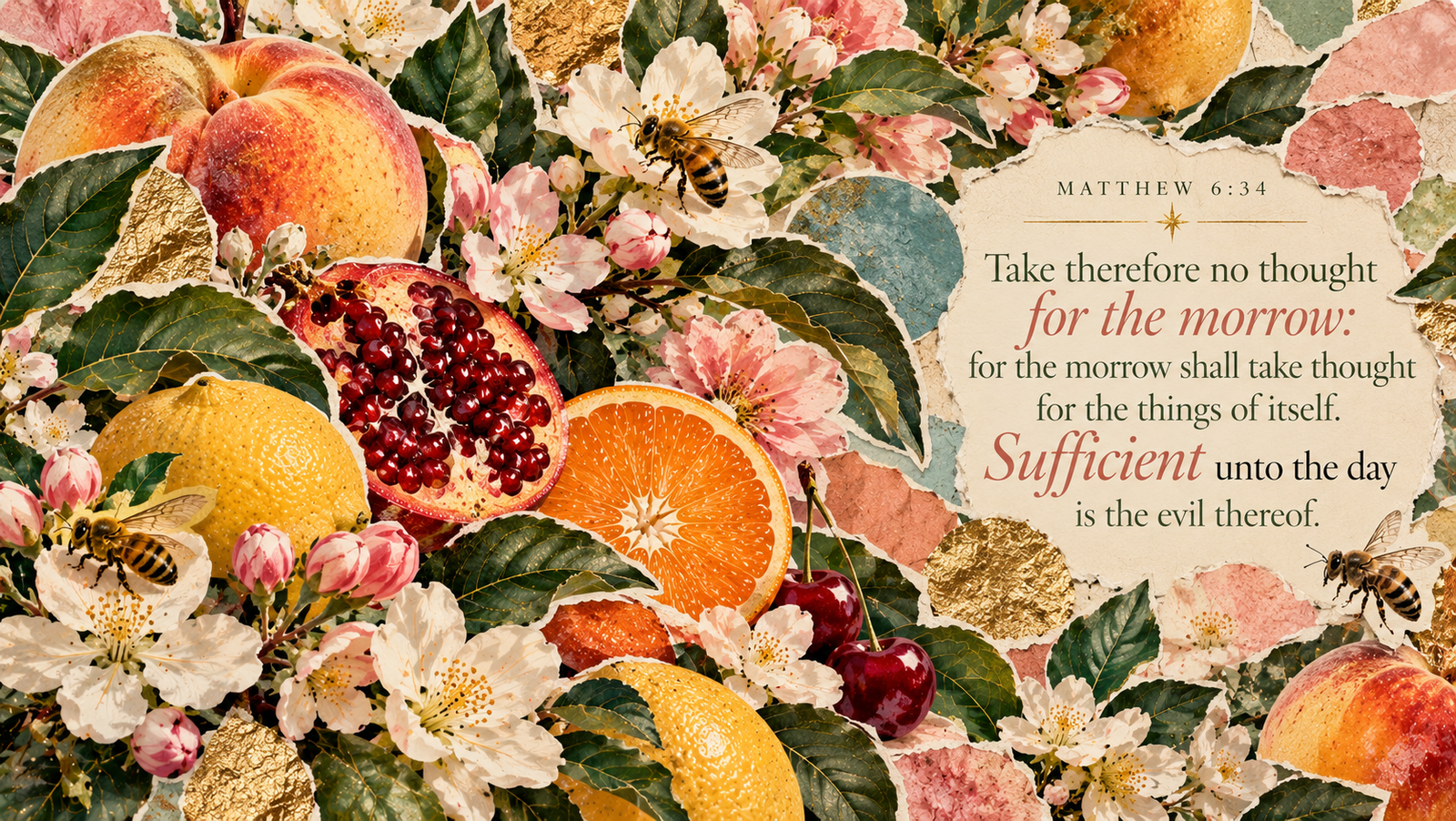
28. Matthew 6:34
“Take therefore no thought for the morrow: for the morrow shall take thought for the things of itself. Sufficient unto the day is the evil thereof.” (Read Matthew 6:34)
Context: Jesus says this in the Sermon on the Mount, right after teaching about how God feeds the birds and clothes the flowers. “Take no thought” is old English for “do not be anxious.”
Today: Anxiety often lives in the future. What if the money runs out, what if the test is bad, what if they leave? Jesus does not dismiss planning. He asks you to stop borrowing tomorrow’s trouble and deal with what is in front of you today.

How Faith Guides Us Through Every Chapter of Life
Human existence is rarely static. Across a lifetime, most of us will navigate distinct chapters—shifting from periods of deep joy and heavy loss to long stretches of waiting, sudden transitions, and simple everyday routines. The enduring appeal of Scripture is that it speaks directly to each phase, offering stability no matter what stage of the journey you are in.
1. Times of Grief and Loss
In periods of sorrow, abstract explanations rarely bring comfort; presence does. Passages like Psalm 34:18 (“The Lord is close to the brokenhearted”) and Isaiah 43:2 do not attempt to dismiss pain or minimize sadness. Instead, they offer assurance that you are not walking through the dark alone. The Book of Psalms is filled with raw, honest laments—proving that deep sorrow and genuine faith can inhabit the exact same space.
2. Stages of Waiting and Uncertainty
Whether awaiting news about a career move, a medical diagnosis, a relationship, or a child, waiting can feel exhausting. Verses like Psalm 27:14 and Ecclesiastes 3:1 address the discomfort of delayed outcomes. In these stretches, faith rarely looks like a dramatic emotional breakthrough; more often, it looks like quiet perseverance—showing up each day and simply taking the next right step.
3. Epochs of Success and Prosperity
Prosperity presents its own subtle challenge. When life goes smoothly, it is easy to become self-reliant and forget the need for prayer. Scriptural calls to humility and gratitude keep believers grounded during favorable times. Colossians 3:23 serves as a reminder that personal achievement is ultimately a call to service rather than self-aggrandizement.
4. Periods of Doubt and Searching
Doubt is not the opposite of faith, nor does it disqualify anyone from it. Figures throughout Scripture—from Habakkuk to various psalmists—questioned God directly during times of confusion. Approached openly within a supportive, non-judgmental community, a phase of questioning can refine spiritual understanding and lay the groundwork for a sturdier, more resilient trust.
5. Everyday Routines
The majority of life consists of unglamorous daily responsibilities: errands, household tasks, commutes, and work obligations. Faith provides meaning even in these quiet rhythms. Passages like 1 Corinthians 15:58 and Galatians 6:9 highlight the value of steady, daily diligence. Simple habits—like a brief morning prayer or evening reflection—can bring purpose to an otherwise uneventful week.
6. Major Transitions and Change
Significant shifts—moving, changing careers, entering retirement, or becoming a parent—often bring anxiety alongside new opportunities. Deuteronomy 31:6, originally spoken to a community stepping into an unfamiliar future, emphasizes that God’s presence remains constant regardless of your address, title, or circumstances.
The Role of Community
Faith is rarely meant to be practiced in complete isolation. An encouraging verse read in solitude often carries far greater weight when shared and discussed with others. Engaging with local small groups, church communities, or biblical resource platforms (such as The Gospel Coalition) can help individuals navigate these shifting circumstances in fellowship with others walking similar paths.

Practical Tips for Practicing Daily Devotionals
Reading a great verse once and forgetting it does not change much. The people who get the most out of Scripture tend to build it into ordinary routines. Here are approaches that work for real schedules.
1. Start small and pick one verse for the week. You do not need a big reading plan. Choose one verse from the list above and write it somewhere you will see it, such as the bathroom mirror, the car dashboard, or your phone lock screen. Repetition is what makes a verse stick.
2. Read the surrounding passage. Take two minutes and read the verses before and after. This is one of the simplest ways to avoid misusing a verse. Tools like Blue Letter Bible and Bible Hub let you look at the original Hebrew and Greek words, cross-references, and commentary if you want to dig deeper.
3. Memorize in small pieces. Say the reference and the first half of the verse, then add the second half the next day. Most people can learn a short verse in about a week of casual repetition. Memorized verses show up at the moments you need them most, like in traffic or in a hard conversation.
4. Pray the verse back. Turn the text into a prayer. If you are reading Isaiah 26:3, you might say, “Lord, my mind is all over the place today. Help me keep it on you.” This makes the verse personal and gives you words when you have none.
5. Journal a few lines. After reading, write down what stood out, what confused you, and one thing you plan to do about it. Over a few months, you will have a record of how your understanding grew and how prayers were answered, which is encouraging on discouraging days.
6. Pair a verse with a trigger. Tie your reading to something you already do, like your first cup of coffee or turning off the lights at night. Habit researchers call this stacking, and it makes a new routine much easier to keep.
7. Use an app or reading plan. The YouVersion Bible app and the reading plans on Bible Gateway offer guided plans by topic, including encouragement, anxiety, and perseverance. Audio options are great for commutes or workouts.
8. Share a verse with someone. Send a text, write it in a card, or read it aloud at dinner. Encouraging another person often encourages you as well, and it builds the kind of relationships where people can be honest about their struggles.
9. Match the verse to the moment. Keep a short list on your phone sorted by situation: anxiety, big decisions, grief, work stress, fatigue. When a hard moment hits, you will not have to search for something. You will already know where to look.
10. Be patient with yourself. Some days you will read and feel nothing. That is normal and does not mean it is failing. Consistency over months matters much more than any single reading. If you are dealing with heavy depression, anxiety, or thoughts of harming yourself, please also reach out to a doctor, counselor, or a crisis line. Faith and professional care work well together.
Common Questions About Motivational Bible Verses
What is the best Bible verse for motivation?
There is no single best one, since it depends on what you are facing. For weariness, many people turn to Galatians 6:9. For fear, 2 Timothy 1:7. For a hard season that feels endless, Lamentations 3:22-23 tends to resonate.
Where should a beginner start reading the Bible for encouragement?
The book of Psalms and the Gospel of John are both popular starting points. Psalms puts honest human emotion into words, and John introduces the life and teaching of Jesus in a clear way. A reading plan can help you stay on track.
How do I keep from taking verses out of context?
Read the whole paragraph or chapter, ask who the original audience was, and compare more than one translation. A good study Bible or a trusted commentary can help too.
Can I use Bible verses if I am not very religious?
Absolutely. Many people begin by reading Scripture out of curiosity or need. You do not have to have everything figured out to read a psalm and find that it says what you have been feeling.
How many Bible verses should I read each day?
Quality matters more than quantity. One verse read thoughtfully can be more helpful than a whole chapter read in a rush. Start with what you can realistically keep doing.
Final Thoughts
The motivational scriptures from the Bible endure because they were written by people who knew what hard days felt like. They were in prison, in exile, in the desert, in grief, and in uncertainty, and they wrote down what held them up.
You do not have to work through all 28 verses at once. Pick the one that spoke to you as you read, and stay with it for a week. Write it down, pray it, and see what changes. Faith tends to grow through steady, ordinary attention more than through big moments.
If you are in a hard season right now, the most honest summary of these passages might be this: you are not carrying it alone, and the story is not finished.