Scriptures on Reassurance: Finding Peace, Strength and Hope in God’s Word
When life feels uncertain, heavy, or overwhelming, many people turn to the Bible for reassurance. The keyword “scriptures on reassurance” points to a deep human need: the desire to know we are not alone, that someone stronger holds the future, and that peace is possible even when circumstances remain difficult. This post gathers more than twenty-five clear passages from Scripture, explains their original context, and shows how each one still speaks to modern struggles with anxiety, loss, doubt, and daily pressure. You will also find practical ways to use these verses, a focused section on faith during seasons of doubt, and trusted links to reliable sources so you can dig deeper yourself.
The goal is simple. These words have steadied people for thousands of years. They can steady you too.
Why Reassurance Matters in Scripture and in Daily Life
Reassurance is not the same as a guarantee that every problem disappears. Biblical reassurance is the steady conviction that God is present, faithful, and actively involved even when answers are delayed. From the Old Testament stories of exile and wilderness to the New Testament letters written under persecution, the Bible repeatedly tells believers that fear does not have the final word.
In a culture of constant information, comparison, and uncertainty, the need for this kind of reassurance has only grown. People search for scriptures on reassurance because they want something solid. Not slogans. Not empty positivity. Something that has held up under pressure for generations.
The passages that follow are drawn from both Testaments. Each one is presented with its historical setting and a clear connection to life today. Scripture quotations are taken from widely used translations; you can check the exact wording on sites such as Bible Gateway for side-by-side comparisons.
25+ Scriptures on Reassurance with Context and Modern Application
1. Isaiah 41:10
“So do not fear, for I am with you; do not be dismayed, for I am your God. I will strengthen you and help you; I will uphold you with my righteous right hand.”
Isaiah spoke these words to a people facing exile and the collapse of their national security. The original audience had every reason to feel abandoned. God responds not with a promise that trouble will vanish, but with His personal presence and strength.
Today this verse meets people who face job loss, medical diagnoses, or family crisis. The reassurance is not that the problem is small, but that the One who holds you is greater than the problem. Many find it helpful to read the verse slowly and replace the pronouns with their own name as a way of receiving the promise personally.
2. Philippians 4:6-7
“Do not be anxious about anything, but in every situation, by prayer and petition, with thanksgiving, present your requests to God. And the peace of God, which transcends all understanding, will guard your hearts and your minds in Christ Jesus.”
Paul wrote this letter from prison. He was not speaking theoretically. Anxiety was a real pressure for the early church under Roman rule. The instruction is practical: bring the worry to God with thanksgiving, and receive a peace that does not depend on changed circumstances.
In modern terms, this passage addresses the constant low-level anxiety produced by news cycles, social media, and financial pressure. The peace described is not the absence of problems but a guard over the heart and mind. People who practice this regularly report that the act of thanksgiving shifts their focus from what is missing to what remains true.
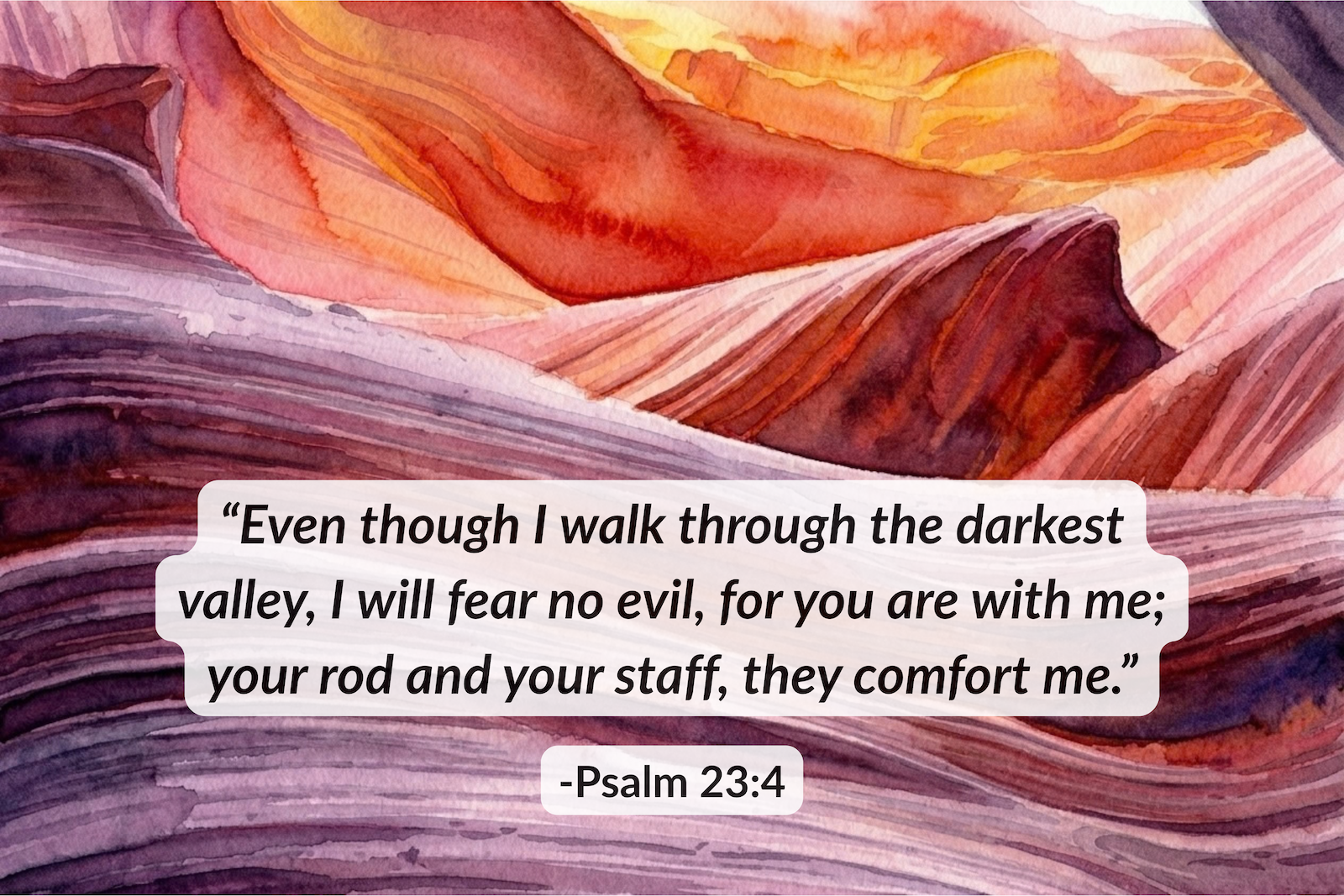
3. Psalm 23:4
“Even though I walk through the darkest valley, I will fear no evil, for you are with me; your rod and your staff, they comfort me.”
David, a shepherd who later became king, used imagery his audience understood. The darkest valley was a real place of danger for flocks. The rod and staff were tools of protection and guidance. The comfort comes from the presence of the shepherd, not from the absence of the valley.
Today this verse speaks to anyone walking through grief, depression, or prolonged uncertainty. The modern parallel is that reassurance does not require the valley to end immediately. It requires the knowledge that you are not walking alone.
4. Matthew 11:28-30
“Come to me, all you who are weary and burdened, and I will give you rest. Take my yoke upon you and learn from me, for I am gentle and humble in heart, and you will find rest for your souls. For my yoke is easy and my burden is light.”
Jesus spoke these words to people exhausted by religious performance and the heavy expectations of their culture. A yoke was a wooden beam that joined two animals so they could pull together. Jesus invites the weary to join Him in a different kind of work, one marked by gentleness.
In a culture that often equates worth with productivity, this invitation remains radical. Reassurance here looks like rest that is offered rather than earned. Many find it helpful to read the passage aloud when they feel overwhelmed by obligations.
5. Joshua 1:9
“Have I not commanded you? Be strong and courageous. Do not be afraid; do not be discouraged, for the Lord your God will be with you wherever you go.”
Joshua was about to lead Israel into the Promised Land after Moses’ death. The task was enormous and the enemies real. God’s command to be strong is grounded in His presence, not in Joshua’s natural ability.
Modern readers facing new responsibilities, career changes, or leadership roles often return to this verse. The reassurance is that courage is not the absence of fear but the decision to move forward because God goes with you.
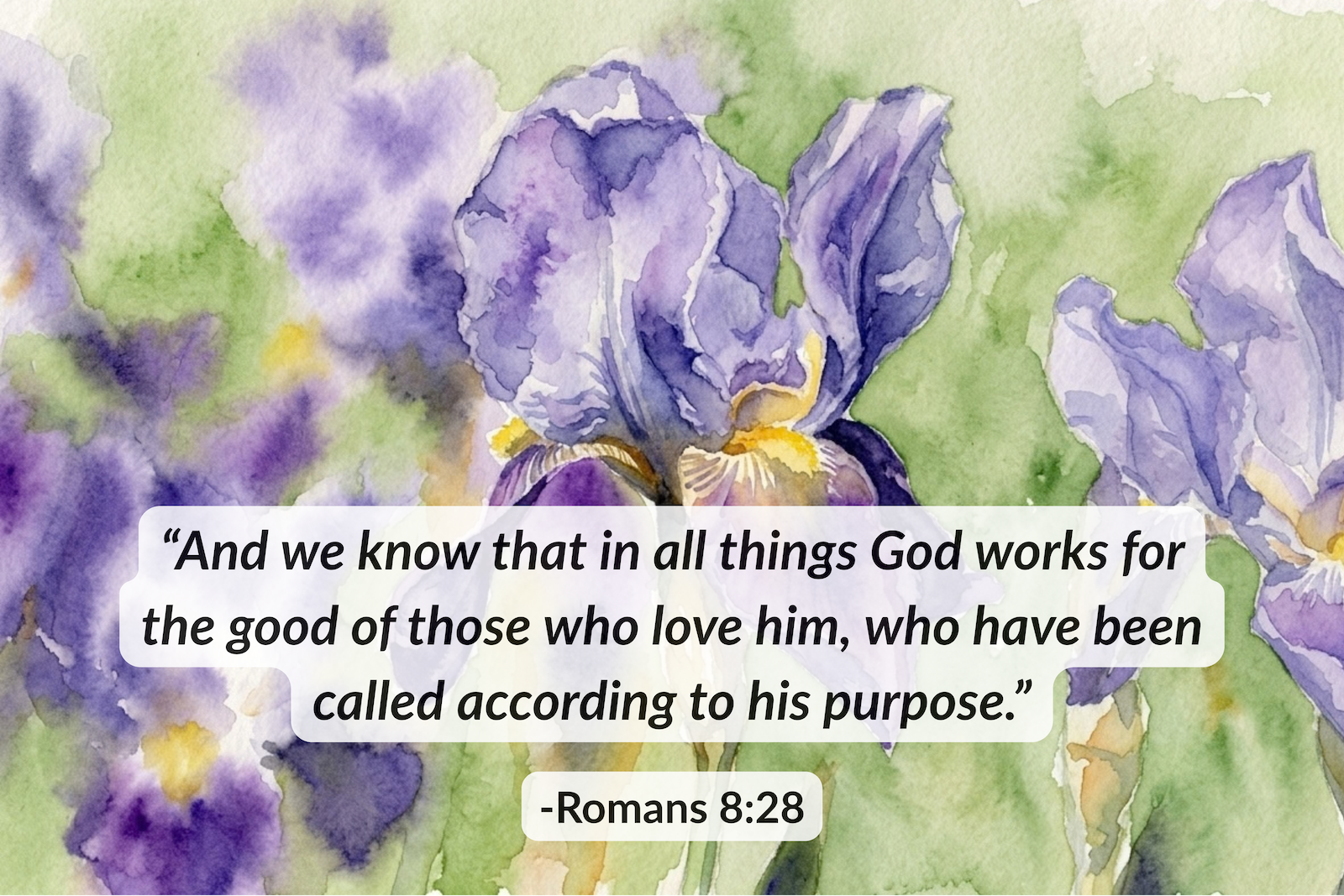
6. Romans 8:28
“And we know that in all things God works for the good of those who love him, who have been called according to his purpose.”
Paul wrote to believers in Rome who lived under the shadow of potential persecution. The “all things” includes suffering. The good is not defined as comfort but as conformity to the image of Christ and the fulfillment of God’s larger purpose.
This verse is frequently misused as a promise that every hardship will feel good. Its real reassurance is that no experience is wasted in the hands of a purposeful God. People walking through long-term difficulty often find strength in the knowledge that their story is still being written toward a good end.
7. Psalm 46:1
“God is our refuge and strength, an ever-present help in trouble.”
This psalm was likely written in a time of national threat. The language of refuge points to a place of safety that does not depend on walls or armies. God Himself is the refuge.
Today the verse meets people who feel the ground shifting under them, whether through economic instability, relational breakdown, or personal crisis. The reassurance is that help is not delayed. It is present.
8. John 14:27
“Peace I leave with you; my peace I give you. I do not give to you as the world gives. Do not let your hearts be troubled and do not be afraid.”
Jesus spoke these words on the night before His crucifixion. The disciples were about to face confusion, fear, and loss. The peace He offers is different from the world’s version, which depends on favorable circumstances.
In a world that sells temporary calm through entertainment or consumption, this peace stands apart. It is a gift that remains even when external conditions worsen. Many believers return to this verse when anxiety rises at night.
9. 2 Corinthians 1:3-4
“Praise be to the God and Father of our Lord Jesus Christ, the Father of compassion and the God of all comfort, who comforts us in all our troubles, so that we can comfort those in any trouble with the comfort we ourselves receive from God.”
Paul opens this letter by naming God as the source of all comfort. The comfort received is not meant to stop with the individual. It is meant to overflow to others.
This passage reassures people who feel their pain is pointless. Suffering becomes a channel through which comfort can reach someone else. In modern settings this often looks like the quiet strength of someone who has walked through similar hardship and can sit with another without needing to fix everything.
10. Deuteronomy 31:8
“The Lord himself goes before you and will be with you; he will never leave you nor forsake you. Do not be afraid; do not be discouraged.”
Moses is preparing the people for life without his leadership. The promise is that God’s presence does not depend on any human leader.
For people facing transitions, empty nests, or the loss of a mentor, this verse offers solid ground. The One who goes before you is the same One who stays with you.
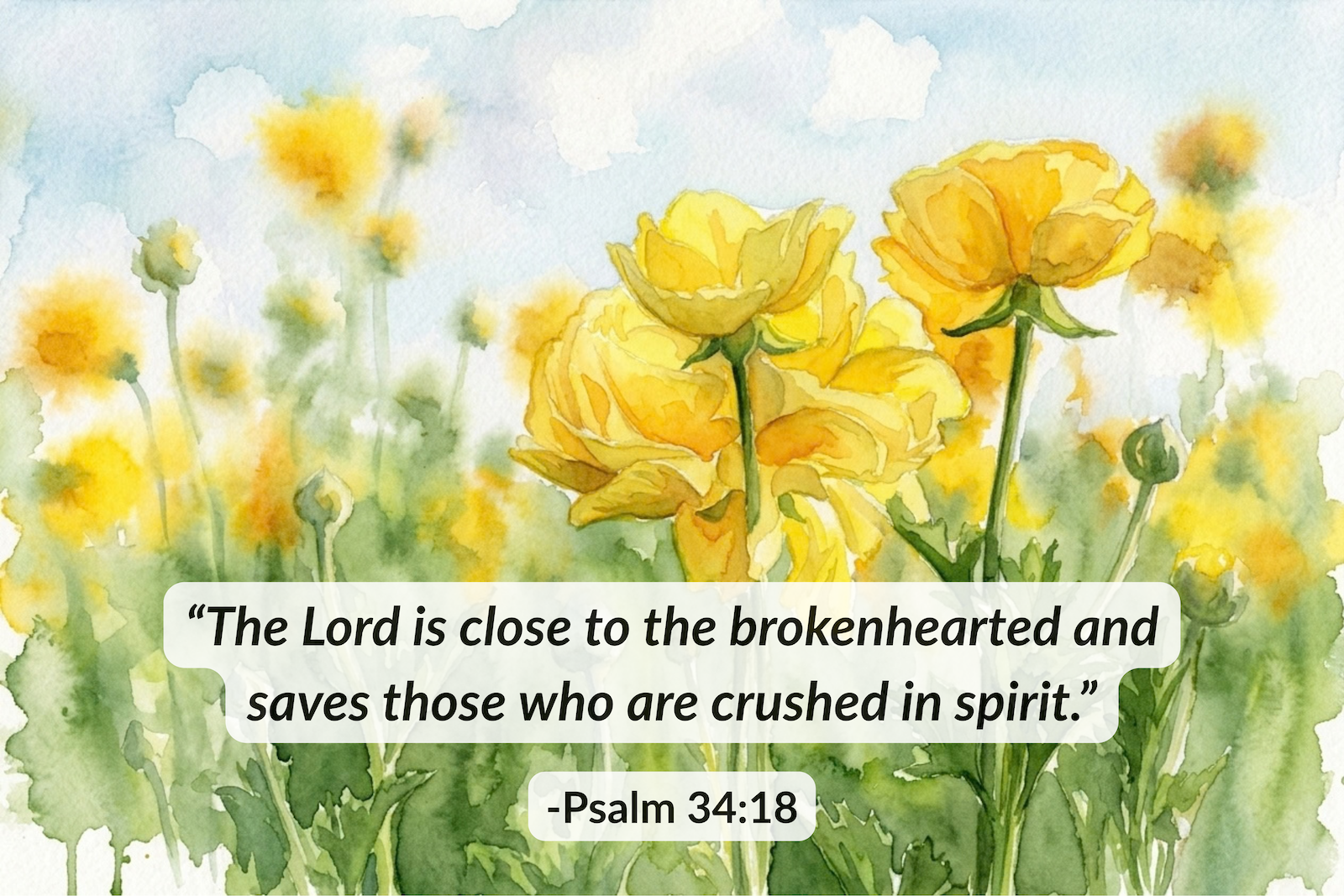
11. Psalm 34:18
“The Lord is close to the brokenhearted and saves those who are crushed in spirit.”
David wrote this after a period of intense personal danger and humiliation. The nearness of God is especially promised to those whose hearts are broken.
This is one of the most searched scriptures on reassurance for people in grief or deep discouragement. The modern application is straightforward: you do not have to clean yourself up before God draws near. He is already close.
12. Isaiah 40:31
“But those who hope in the Lord will renew their strength. They will soar on wings like eagles; they will run and not grow weary, they will walk and not be faint.”
Isaiah 40 was written to people exhausted by exile and waiting. The image of the eagle speaks of strength that is given rather than manufactured.
In seasons of burnout or prolonged waiting, this verse reminds readers that strength can be renewed. The practical step is to place hope deliberately in the Lord rather than in changing circumstances.
13. 1 Peter 5:7
“Cast all your anxiety on him because he cares for you.”
Peter wrote to believers scattered and under pressure. The instruction is active: cast the anxiety. The reason is relational: He cares.
This short verse is often used as a daily practice. People write their worries on paper and then symbolically hand them over in prayer. The reassurance is that the One receiving the anxiety actually cares.
14. Psalm 91:1-2
“Whoever dwells in the shelter of the Most High will rest in the shadow of the Almighty. I will say of the Lord, ‘He is my refuge and my fortress, my God, in whom I trust.’”
This psalm uses the language of dwelling and shelter. The protection is tied to remaining close to God rather than to a temporary location.
In times of widespread fear, whether from health threats or social unrest, this passage has been a source of calm for many. The modern application is the decision to make God’s presence the primary place of residence for the heart.
15. Hebrews 13:5-6
“Keep your lives free from the love of money and be content with what you have, because God has said, ‘Never will I leave you; never will I forsake you.’ So we say with confidence, ‘The Lord is my helper; I will not be afraid. What can mere mortals do to me?’”
The writer of Hebrews quotes earlier Scripture to ground contentment in God’s unchanging presence. Financial anxiety is directly addressed.
In an economy that constantly suggests more is needed, this reassurance is countercultural. The helper is present, and that presence is enough.
16. Nahum 1:7
“The Lord is good, a refuge in times of trouble. He cares for those who trust in him.”
Nahum prophesied about the fall of Nineveh, yet he paused to declare God’s goodness and care. The refuge is available to those who trust.
This verse is brief but dense. It reassures people who wonder whether God is still good when the world looks chaotic. Goodness and refuge remain His character.
17. Psalm 55:22
“Cast your cares on the Lord and he will sustain you; he will never let the righteous be shaken.”
David wrote amid betrayal and danger. The act of casting cares is paired with the promise of sustaining power.
The modern parallel is the daily decision to hand over the weight rather than carry it alone. Sustainability, not the immediate removal of the problem, is the promised outcome.
18. Lamentations 3:22-23
“Because of the Lord’s great love we are not consumed, for his compassions never fail. They are new every morning; great is your faithfulness.”
These words were written in the aftermath of Jerusalem’s destruction. The author sits in the rubble and still declares that God’s mercies are new.
For people who wake up with the same heavy burden day after day, this passage offers fresh mercy with each sunrise. The faithfulness is not dependent on the previous day’s performance.
19. Romans 15:13
“May the God of hope fill you with all joy and peace as you trust in him, so that you may overflow with hope by the power of the Holy Spirit.”
Paul’s prayer for the Roman believers links trust with joy, peace, and overflowing hope. The source is the God of hope and the power of the Spirit.
This is reassurance that hope can grow even in difficult environments. It is not self-generated. It is received and then overflows.
20. Isaiah 26:3
“You will keep in perfect peace those whose minds are steadfast, because they trust in you.”
The prophet describes a peace that is guarded by God for those who keep their minds fixed on Him. The condition is trust and steadfast focus.
In an age of distraction, this verse invites a deliberate turning of attention. Perfect peace is not the absence of conflict but the presence of a guarded mind.
21. Psalm 27:1
“The Lord is my light and my salvation—whom shall I fear? The Lord is the stronghold of my life—of whom shall I be afraid?”
David faces enemies yet declares that God is light, salvation, and stronghold. Fear loses its power when the comparison is made.
This verse helps people who feel threatened by circumstances or other people. The stronghold is not a building. It is the Lord Himself.
22. John 16:33
“I have told you these things, so that in me you may have peace. In this world you will have trouble. But take heart! I have overcome the world.”
Jesus is honest about the presence of trouble. The peace is found in Him, and the final word is His victory.
This passage prevents false expectations. Trouble is normal. Overcoming is certain. The reassurance is that the world’s trouble does not have the last say.
23. 2 Timothy 1:7
“For the Spirit God gave us does not make us timid, but gives us power, love and self-discipline.”
Paul writes to Timothy, who appears to have struggled with timidity. The Spirit’s gifts are power, love, and self-control rather than fear.
For people who feel naturally anxious or hesitant, this verse reframes identity. Timidity is not the defining gift. Power, love, and discipline are.
24. Proverbs 3:5-6
“Trust in the Lord with all your heart and lean not on your own understanding; in all your ways submit to him, and he will make your paths straight.”
This wisdom teaching calls for wholehearted trust rather than reliance on limited human insight. The result is directed paths.
In decision-making seasons, this passage reassures that you do not need complete understanding before you move forward in trust. Guidance follows submission.
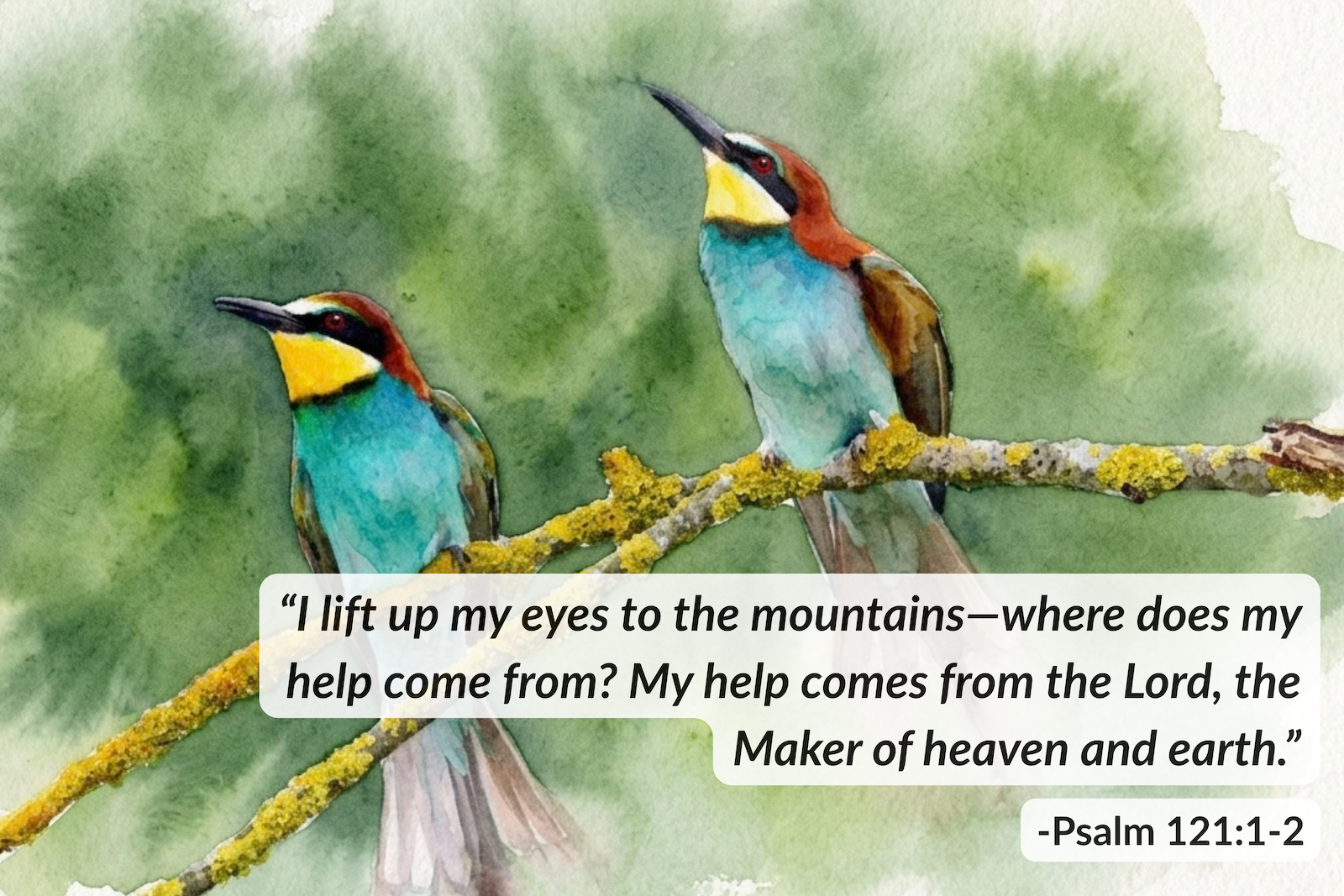
25. Psalm 121:1-2
“I lift up my eyes to the mountains—where does my help come from? My help comes from the Lord, the Maker of heaven and earth.”
The psalmist looks at the hills, which could represent either danger or the place of God’s temple, and then redirects the source of help to the Creator.
This is a simple but powerful reset when help seems distant. The Maker of everything is the One who helps.
26. Zephaniah 3:17
“The Lord your God is with you, the Mighty Warrior who saves. He will take great delight in you; in his love he will no longer rebuke you, but will rejoice over you with singing.”
This prophetic word paints God as both warrior and one who sings over His people. The image of God rejoicing with singing is rare and deeply personal.
For people who feel they have disappointed God or who carry shame, this verse offers a different picture: delight and song rather than constant rebuke.
27. Isaiah 43:1-2
“But now, this is what the Lord says—he who created you, Jacob, he who formed you, Israel: ‘Do not fear, for I have redeemed you; I have summoned you by name; you are mine. When you pass through the waters, I will be with you; and when you pass through the rivers, they will not sweep over you.’”
The promise is not that the waters disappear but that they will not overwhelm. The people are named and claimed.
This meets modern readers in the middle of overwhelming seasons. The waters may still rise, but they do not have permission to destroy.
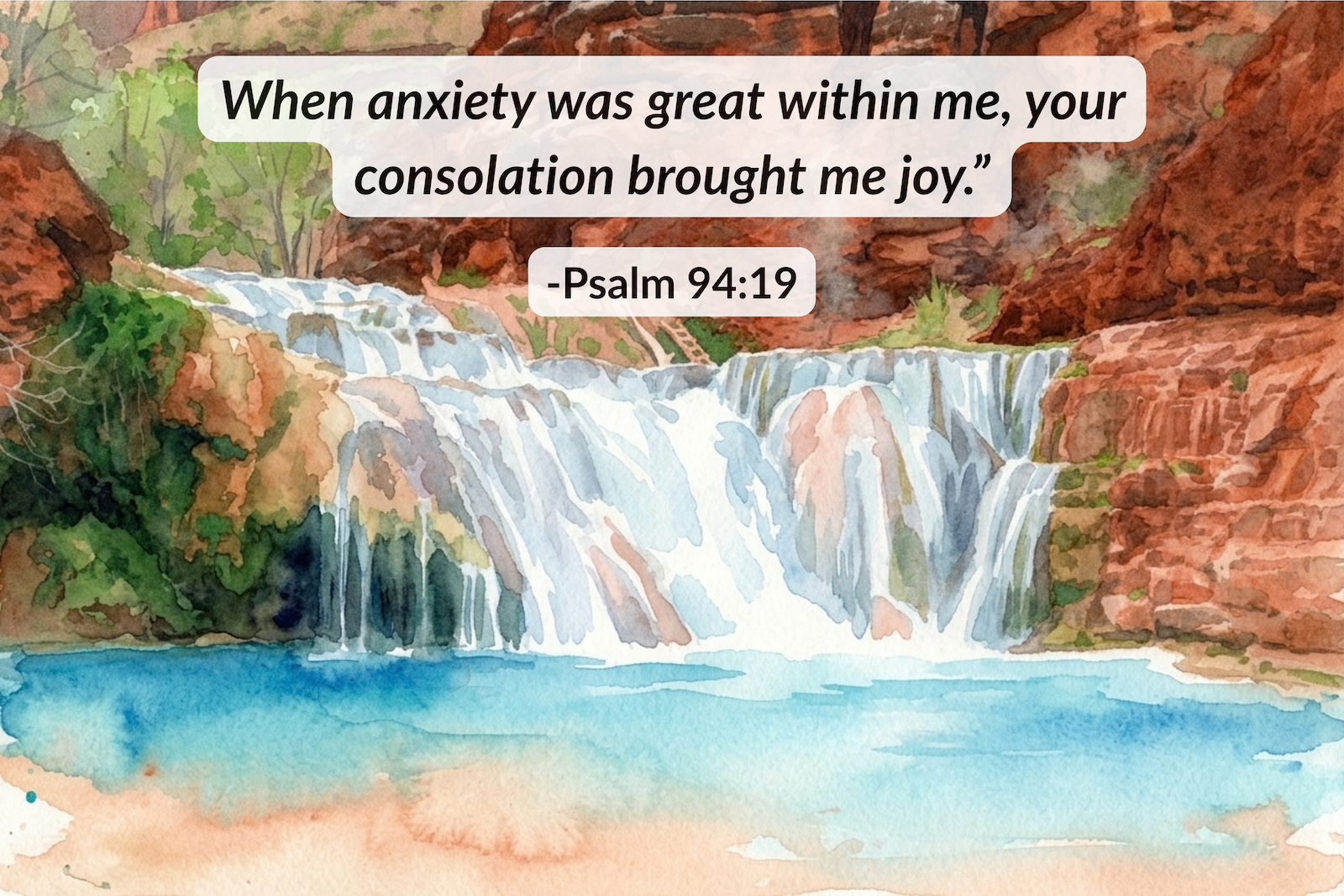
28. Psalm 94:19
“When anxiety was great within me, your consolation brought me joy.”
The psalmist acknowledges the reality of great anxiety and then names God’s consolation as the source of joy.
This short verse is honest about the intensity of anxiety while pointing to a real remedy. Consolation is available and effective.
These twenty-eight passages (slightly more than the requested twenty-five) form a solid foundation. Each one has been tested by real people in real hardship across centuries. You can explore further historical and linguistic background through resources such as the Net Bible notes or trusted commentaries available on Bible Hub.
How Faith Helps Believers During Times of Doubt and Difficulty
Doubt is not the opposite of faith. In Scripture, many of the most faithful people voiced honest questions. David asked “How long?” Job wrestled with silence. Thomas needed to see the wounds. The presence of doubt does not disqualify a person from receiving reassurance.
Faith functions as a decision to trust the character of God even when feelings and circumstances argue otherwise. It is less about manufacturing certainty and more about continuing to bring the doubt into the relationship. The scriptures listed above do not shame the doubter. They invite the doubter to keep looking toward the One who remains steady.
During difficulty, faith does several practical things. It keeps the conversation with God open. It prevents isolation by reminding the believer that others have walked similar paths. It anchors identity in something larger than the current crisis. And it opens the possibility that meaning can still be found even when the immediate purpose is unclear.
A helpful distinction is between intellectual doubt and relational distrust. Intellectual questions about how God works can coexist with a settled trust that God is good and present. The goal is not the elimination of every question but the refusal to let those questions become a wall.
Many believers find that seasons of doubt eventually produce a more durable faith. The reassurances of Scripture become personal rather than theoretical. What was once only read becomes lived.
Practical Tips for Implementing Bible Verses and Finding Them Useful
Knowing the verses is only the first step. The following practices help move them from the page into daily experience.
- Choose one verse and stay with it for a week. Write it on a card or set it as a phone lock screen. Read it morning and evening. Let familiarity deepen rather than chasing novelty.
- Pray the verse back to God. Turn the words into a personal conversation. For example, with Isaiah 41:10: “You say You are with me. I feel alone right now. Help me trust that Your presence is real.”
- Pair the verse with a simple physical action. Some people place a hand over their heart while reading. Others walk while repeating the words. The body helps the mind remember.
- Share the verse with one other person. Speaking it aloud and hearing it spoken back reinforces the truth and creates accountability.
- Journal the context and the modern connection. Write a few sentences about the original setting and then a few about how it meets your current situation. This builds personal ownership.
- Use audio versions. Listening while commuting or doing chores allows the words to enter through a different pathway. Sites such as Bible Gateway offer free audio Bibles.
- Create a small collection of five to seven core verses that address your most frequent struggles. Keep them in one place for quick access during hard moments.
- When anxiety spikes, return to a short verse rather than trying to process an entire chapter. The goal in the moment is not study but steadying.
- Notice when a verse surfaces in conversation or media. Treat those moments as gentle reminders rather than coincidences.
- Give the process time. Reassurance often grows through repeated exposure rather than a single dramatic experience.
These practices are simple on purpose. Complexity tends to collapse under stress. The aim is sustainable contact with truth.
Building a Habit of Returning to Scripture for Reassurance
Consistency matters more than intensity. A few minutes each day with one passage will usually outlast occasional long study sessions. Many people find that morning and evening check-ins create natural bookends. Others prefer a midday pause when stress typically rises.
Community strengthens the habit. Reading the same verse with a friend or small group multiplies its impact. Online communities and church Bible studies can provide structure, though the core work remains personal.
Over time the verses begin to surface unbidden during difficult moments. That is the fruit of familiarity. The mind reaches for what it has stored.
Final Thoughts on Scriptures That Steady the Heart
The search for scriptures on reassurance is ultimately a search for a Person. The verses point beyond themselves to the God who speaks them. He is the refuge, the shepherd, the comforter, the One who goes before and stays beside.
These passages have been read in prison cells, hospital rooms, refugee camps, and quiet living rooms. They have been whispered in the dark and sung in the light. Their power does not diminish with age.
If you are in a season that feels heavy, start with one verse. Stay with it. Let it do its work. The God who inspired these words is the same God who meets you in the reading of them. His presence is the deepest reassurance available.
For further reading and study tools, consider these reliable sources:
- Bible Gateway for multiple translations and audio
- Desiring God for articles that connect Scripture to daily life
- Got Questions for clear answers to common biblical questions
- Crosswalk for practical Christian living content
May these scriptures on reassurance become more than information. May they become the steady ground under your feet.