
Fruits of the Spirit for Kids: A Fun, Faith-Filled Way to Teach Children God’s Character
If you’re planning a Sunday school lesson or looking for a bible lesson that truly sticks with your class, teaching the fruits of the spirit to children is one of the most powerful things you can do. This single passage from Galatians packs in nine beautiful character traits that God wants every believer — kids included — to grow in. Whether you’re building out a full school curriculum, prepping a one-time Sunday school lesson, or homeschooling your own spirit kids, this guide will help you teach the concept in a way that’s simple, memorable, and fun.
What Are the Fruits of the Spirit?
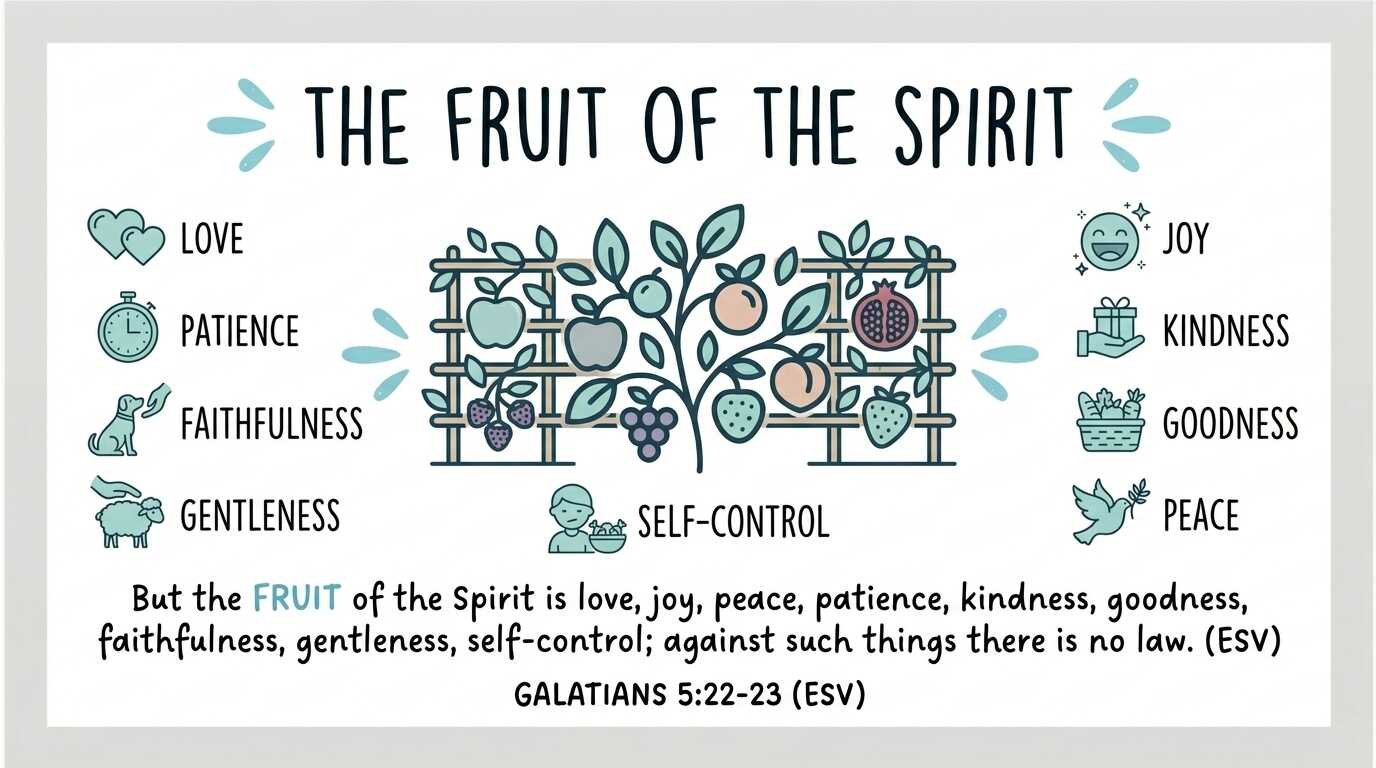
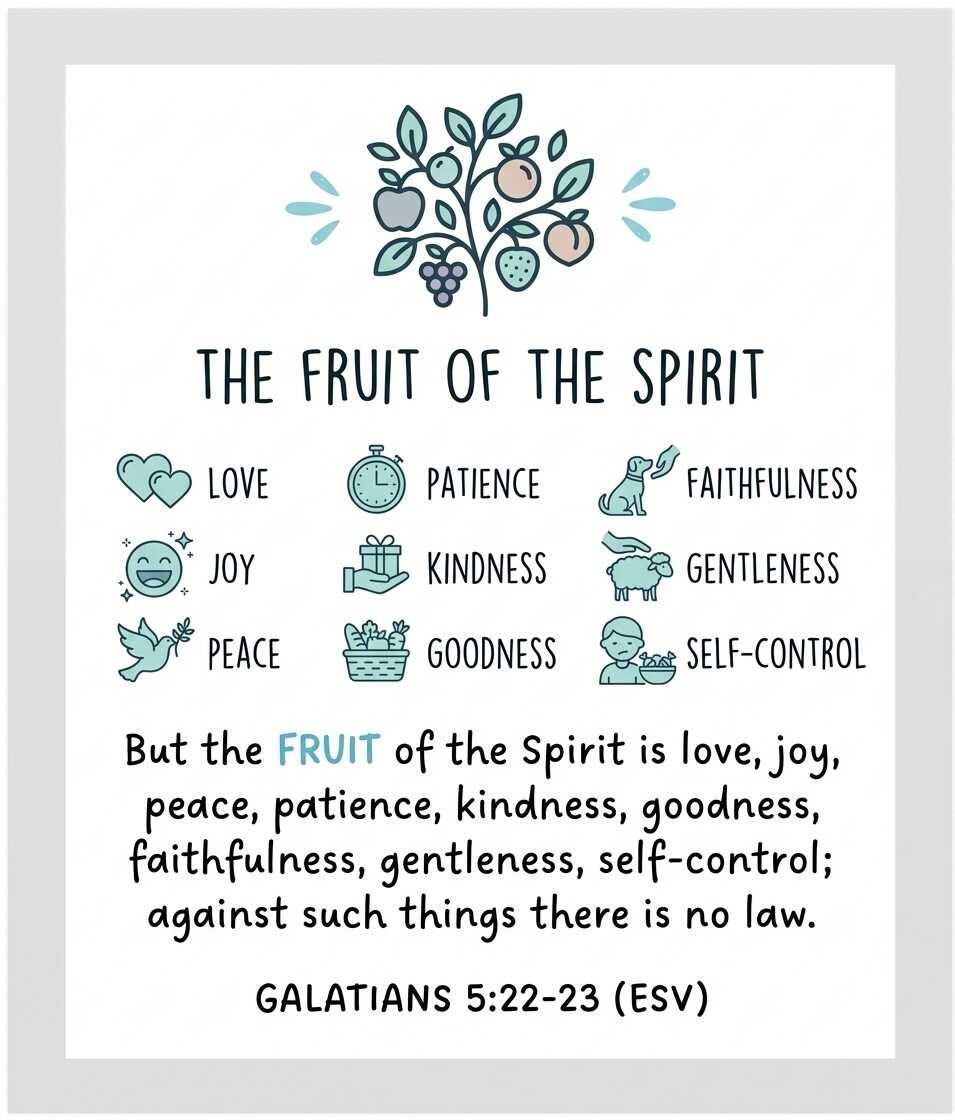
The fruits of the spirit come from Galatians 5:22-23 (ESV), where the Apostle Jesus Christ’s follower Paul describes the character that grows in someone who follows God. The verse says the Holy Spirit produces: love, joy, peace, patience, kindness, goodness, faithfulness, gentleness, and self-control.
That’s a lot of big words for little learners! Breaking them down one at a time — or grouping them in twos and threes like love joy, joy peace, peace patience kindness, patience kindness, and goodness faithfulness — makes the lesson far more digestible for young minds.
Why Teach Fruits of the Spirit to Kids?
Children learn best through repetition, stories, and hands-on activities. The fruit metaphor itself is kid-friendly: just like an apple tree naturally grows apples, a person who has the Holy Spirit living in them will naturally bear fruit in the form of good character. It’s not about being perfect — it’s about growing, little by little, like a plant.
Teaching this concept early helps children:
- Understand what godly character looks like in everyday life
- Learn to recognize love, patience, and kindness in themselves and others
- Build a foundation for lifelong faith and bible study
- See that spiritual growth is a process, not an instant transformation
Sunday School Lesson Ideas That Work
When planning your sunday school lesson, keep it simple, visual, and interactive. Here are a few tried-and-true ideas:
1. Fruit Tree Craft
Give each child a paper tree outline and nine paper fruits, one for each fruit of the spirit. As you go through bible stories and examples of each trait, have kids glue a fruit onto their tree. By the end of the lesson, they’ll have a full “spirit tree” to take home and remember what they learned.
2. Fruits of the Spirit Coloring Pages
Coloring pages are a classic Sunday school tool for a reason — they keep hands busy while ears stay tuned to the lesson. Print out free coloring sheets featuring each fruit alongside its definition, or design your own with simple illustrations kids can decorate while you talk through the meaning of each trait.
3. Real-Life Scenario Role-Play
Give small groups of children a short scenario (a friend breaks a toy, a sibling won’t share, someone cuts in line) and ask them to act out a response that shows one of the fruits, like patience or kindness. This turns an abstract concept into something they can actually practice.
4. Memory Verse Challenge
Turn Galatians 5:22-23 into a simple song, chant, or hand-motion routine. Repetition set to rhythm helps even young children memorize scripture without realizing they’re studying.
Building a Full Bible Lesson Around Each Fruit
If you have more time — say, a nine-week series — consider spending one week on each fruit rather than covering all nine at once. This approach lets you go deeper into bible stories that illustrate each trait:
- Love — the Good Samaritan
- Joy — Mary’s song of praise
- Peace — Jesus calming the storm
- Patience — Joseph’s years in Egypt
- Kindness — Ruth and Boaz
- Goodness — David sparing Saul’s life
- Faithfulness — Daniel in the lion’s den
- Gentleness — Jesus with the children
- Self-Control — Daniel refusing the king’s food
Each story gives children a concrete example of what it looks like to live out these traits, making the fruit far easier to recognize and imitate.
Tips for Ministry Leaders and Parents
Whether you serve in ministry at a church or you’re teaching your own kids at home, here are a few practical tips:
- Keep it visual. Kids remember pictures and objects far better than words alone.
- Repeat often. Revisit the fruits throughout the year, not just in a single lesson.
- Celebrate growth. Point out when you see a child showing kindness or patience — it reinforces that the Holy Spirit is actively working in their life.
- Make it a habit, not a one-time event. Consider weaving the fruits of the spirit into your regular school curriculum or family devotion time so the lessons compound over weeks and months.
- Use free resources. There are tons of free printable lessons, coloring pages, and activity sheets online designed specifically to teach kids this passage in an age-appropriate way.
Sunday School and Children’s Ministry Resources:
If you’re ready to dig deeper or need ready-made materials for your next lesson, these free and low-cost resources are great places to start:
- Galatians 5:22-23 on BibleGateway — read the passage in multiple translations, including the NIV, NLT, and The Message.
- Ministry-to-Children.com: Fruit of the Spirit Index — a large hub of free lessons, coloring pages, crafts, object lessons, and a word search built specifically for kids’ ministry.
- Sermons4Kids.com: Fruit of the Spirit Resources — free preschool and elementary-level lesson plans with printables for children’s church and Sunday school.
- The Sunday School Store: 9-Lesson Fruit of the Spirit Curriculum — a more in-depth, teacher-friendly curriculum if you want to spend a full nine weeks on the topic, one fruit per week.
Final Thoughts
Teaching children about the fruits of the spirit isn’t about a single perfect lesson — it’s about planting seeds that grow over a lifetime. Every craft, every coloring page, every bible study discussion is another small step in helping kids understand what it means to walk with God and reflect His character in how they treat others.
With a little creativity and consistency, your Sunday school class or homeschool bible lesson can become a place where children don’t just learn the definitions of love, joy, peace, patience, kindness, goodness, faithfulness, gentleness, and self-control — they start living them out, one fruit at a time.





One Comment