Angels as Described in the Bible: Who They Are, What They Do, and Why They Matter Today
Few subjects in Scripture attract as much curiosity, and as much confusion, as angels. Greeting cards show them as chubby babies with wings. Movies turn them into glowing sages or reluctant heroes. Some people wear angel pins for protection, and others avoid the subject completely because it feels too mystical.
The Bible gives a different picture from all of these. Angels appear in the very first book and the very last one. They show up at burning bushes, in lions’ dens, at empty tombs, and inside prison cells. They are sometimes terrifying, sometimes gentle, and nearly always pointing away from themselves and toward God.
This guide walks through angels as described in the Bible, one passage at a time. For each passage, you will find the verse, the surrounding context, and a look at what it means for life today. Later sections cover how angels help during hard seasons and how to think about guardian angels without stretching the text further than it goes.

Key Takeaways
- The Hebrew and Greek words for angel both mean “messenger,” and that job description explains most of what angels do in Scripture.
- The Bible describes several kinds of heavenly beings, including cherubim, seraphim, and archangels.
- Only two angels are named in the Protestant Bible: Michael and Gabriel.
- Angels serve God and care for God’s people, but they are never to be worshiped.
- Scripture supports the idea that angels help believers in real, practical ways, especially in danger and weakness.
- The Bible gives a few hints about guardian angels but does not offer a detailed doctrine, so humility is the right posture.
What the Bible Means by the Word “Angel”
Before looking at any specific verse, it helps to understand the word itself. In the Old Testament, the Hebrew word is mal’ak, which simply means messenger. You can see the Hebrew entry at Blue Letter Bible to check how often it appears and how translators handle it. In the New Testament, the Greek word is angelos, which carries the same meaning, and you can look that up as well on the Greek lexicon page.
This matters because “angel” describes a role before it describes a species. In a few places, the same word is used for human messengers. When Scripture talks about heavenly angels, the emphasis falls on what they do: they carry messages, carry out God’s instructions, and serve his purposes.
That is a helpful correction to popular ideas. Angels in the Bible are not independent spiritual helpers we can summon or negotiate with. They are servants of God, and they act under his direction. Once you keep that in mind, many passages that seem strange start to make sense.
If you want a wider historical and religious overview of how different traditions have understood angels, the Encyclopaedia Britannica entry on angels is a reliable starting point. This article stays focused on what the Bible itself says.

Where Angels Come From: Created Beings, Not Divine Ones
One of the first things Scripture establishes is that angels are created. They are not gods, and they are not former humans. Psalm 148:2-5 invites them into praise, and the psalm ends by saying that everything mentioned “was created” at God’s command. In the New Testament, Colossians 1:16 says that by Christ “were all things created, that are in heaven, and that are in earth, visible and invisible, whether they be thrones, or dominions, or principalities, or powers.”
Background: Paul wrote Colossians to a church dealing with teaching that elevated spiritual beings and treated Jesus as one among many intermediaries. His answer was direct. Whatever unseen powers exist, Christ made them, and Christ is above them.
Modern connection: Most of us are not tempted to worship angels in an ancient sense, but we do live in a culture that finds “spirituality” appealing while staying vague about God. The Bible pushes back on that vagueness. It says the spiritual world is real, and it also says the spiritual world has a Creator who deserves our attention more than any of the beings he made.
There is also something quietly encouraging here. If angels are created and bounded, then nothing unseen is larger than God. That is worth remembering when the unseen part of life feels heavy or threatening.
The Different Kinds of Heavenly Beings in Scripture
The Bible does not hand us an organizational chart of heaven, and readers should be wary of any source that claims to give one in detail. Scripture does, however, describe several types of heavenly beings. Here are the main ones.
Cherubim
The first mention of cherubim comes right after Adam and Eve are driven out of Eden. Genesis 3:24 says God placed “at the east of the garden of Eden Cherubims, and a flaming sword which turned every way, to keep the way of the tree of life.”
Background: The cherubim here are guardians. They stand at the boundary between a holy place and a world now marked by sin. Later, images of cherubim appear over the ark of the covenant and woven into the tabernacle curtains, which points to their association with God’s presence. Ezekiel gives the most vivid and strange descriptions of them in Ezekiel 10, where they appear with wings, wheels, and multiple faces.
You will notice these beings look nothing like the winged toddlers in art history. In Scripture, cherubim are powerful and awe-inspiring. For more on how the term developed, see Britannica’s article on cherubim.
Modern connection: Genesis 3:24 reminds us that access to God is not casual. The way back into his presence is a gift, and in the Christian understanding it comes through Christ. When we feel numb about faith, the picture of guardians at the gate can recover a sense of how significant it is to be welcomed in.
Seraphim
Seraphim show up in one famous scene. In Isaiah 6:2-3, Isaiah sees the Lord on a throne and describes beings above it, each with six wings. They call to one another, “Holy, holy, holy, is the LORD of hosts: the whole earth is full of his glory.”
Background: Isaiah received this vision in the year King Uzziah died, a time of national uncertainty. The seraphim cover their faces and feet with their wings, which shows reverence even from the most exalted creatures. One of them then touches Isaiah’s lips with a burning coal and tells him his guilt is taken away. That detail is easy to miss. The seraph carries out cleansing, but the forgiveness belongs to God.
The word seraph is related to the Hebrew for “burning,” which may explain the fiery imagery. Britannica has a short entry on the seraph if you want to explore how the term has been used.
Modern connection: Isaiah’s first response to seeing God’s holiness was not excitement. It was honest self-awareness. Many of us want closeness with God but skip the part where we admit our need. This passage shows that the path to being useful to God starts with being forgiven by him. Isaiah’s famous “Here am I; send me” comes only after the burning coal.
Archangels
The term archangel appears very rarely. 1 Thessalonians 4:16 mentions “the voice of the archangel” in connection with Christ’s return, and Jude 1:9 calls Michael “the archangel.” The word means a chief or ruling angel. The Bible does not tell us how many there are, so it is best not to claim more than the text allows.

The Two Named Angels: Michael and Gabriel
Only two angels are given names in the Protestant Bible. Some traditions also honor Raphael, who appears in the Book of Tobit, but that book is not part of the Protestant canon. Since this article draws on the Bible as most Protestant readers know it, we will focus on Michael and Gabriel.
Gabriel: The Messenger of Big Announcements
Gabriel first appears in the book of Daniel. In Daniel 8:16, a voice calls out, “Gabriel, make this man to understand the vision.” Later, in Daniel 9:21-23, Gabriel arrives while Daniel is praying and tells him that an answer was given the moment he began to plead.
Background: Daniel was living in exile in Babylon, far from home, wondering whether God’s promises to Israel still stood. Gabriel came with clarity at the moment Daniel needed it.
Gabriel then reappears centuries later in the New Testament. In Luke 1:19, he tells Zechariah, “I am Gabriel, that stand in the presence of God,” and he announces the birth of John the Baptist. In Luke 1:26-38, he goes to a young woman in Nazareth named Mary and tells her she will bear the Son of God.
Modern connection: Two things stand out. First, Gabriel’s message to Daniel shows that heaven responds to prayer quickly, even when the visible answer takes time. Second, Gabriel’s first words to Mary were “Fear not,” and that phrase runs through almost every angel encounter in the Bible. God’s messengers rarely arrive to increase anxiety. Even when they bring surprising or disruptive news, the first thing they address is fear.
Michael: The Defender
Michael is described as a warrior figure. In Daniel 10:12-13, an angel tells Daniel that his prayer was heard from the first day, but the messenger was delayed for twenty-one days by resistance until “Michael, one of the chief princes, came to help me.”
Background: This passage pulls back the curtain on spiritual conflict happening behind earthly events. Daniel had been fasting and praying for three weeks. From his seat on earth, nothing seemed to be happening. The text reveals that something was happening, just out of sight.
In Jude 1:9, Michael is shown disputing with the devil over the body of Moses, and even there he does not rely on his own authority. He says, “The Lord rebuke thee.” Then in Revelation 12:7, “Michael and his angels fought against the dragon.”
Modern connection: Daniel 10 is one of the most practical passages for anyone in a long stretch of waiting. It does not promise that delays always have a spiritual explanation, and we should be careful not to read every difficulty that way. What it does show is that an unanswered prayer is not the same as an ignored prayer. Daniel kept praying without seeing anything, and he was heard the entire time.
The Angel of the LORD
A separate and fascinating category is the figure called “the angel of the LORD.” This messenger appears throughout the Old Testament and often speaks as though he is God himself.
In Genesis 16:7-13, the angel of the LORD finds Hagar in the wilderness after she has fled from Sarai. She is pregnant, alone, and running out of options. The angel speaks to her, tells her to return, and promises that her descendants will be too many to count. Hagar responds by naming God “Thou God seest me.”
Background: Hagar was an Egyptian servant with almost no social power. She had been treated harshly, and she ran into the desert. This is one of the few places in the Old Testament where a person gives God a name, and it happens to a woman on the margins.
In Exodus 3:2, “the angel of the LORD appeared unto him in a flame of fire out of the midst of a bush.” A few verses later, the text says God himself is speaking from the bush. Scholars and pastors have discussed for centuries whether this figure is an angel representing God or a pre-incarnate appearance of Christ. Christians hold different views on this, and it is fair to say the Bible leaves some mystery here.
Modern connection: Whatever position you take on the identity question, the pattern is consistent. The angel of the LORD shows up where people are lost, overlooked, or overwhelmed, and he brings God’s presence and direction with him. Hagar’s discovery that “God sees me” is one of the most comforting truths in Scripture for anyone who feels invisible.

Angels in the Old Testament: Rescue, Provision, and Protection
The Old Testament is full of stories where angels step in at critical moments. A few of them show the range of what angels do.
Rescue in Sodom
In Genesis 19:1-22, two angels arrive in Sodom and are hosted by Lot. When the city turns violent, the angels pull Lot inside, strike the crowd with blindness, and urge Lot’s family to flee. Verse 16 says the angels took hold of the hands of Lot, his wife, and their daughters, “the LORD being merciful unto him.”
Background: The story is hard to read because of the wickedness described. Even so, the angels’ actions toward Lot’s household are gentle in one respect. They physically lead people out. They do not simply give directions from a distance.
Modern connection: There is something humbling here. Lot lingered. He hesitated even when told to leave. The angels took his hand anyway. Many of us have looked back on a hard stretch and realized we were carried through it by kindness we did not fully recognize at the time.
The Voice That Stopped Abraham
In Genesis 22:11-12, as Abraham lifts a knife over Isaac, “the angel of the LORD called unto him out of heaven, and said, Abraham, Abraham… Lay not thine hand upon the lad.” Abraham looks up and finds a ram caught in a thicket.
Background: This is the climax of a test of trust that began when God asked Abraham to offer his son. The angel’s interruption confirms that God never intended the sacrifice to be completed, and the ram is provided as a substitute. Christians have long read this as pointing toward God’s later provision in Christ.
Modern connection: The angel spoke at the last possible moment, not the first. People often assume that if God were paying attention, he would step in earlier. This story shows that timing which feels late to us can still be exactly on time.
Food for a Burned-Out Prophet
In 1 Kings 19:5-8, Elijah has just seen a major victory over the prophets of Baal, and then he collapses into despair when Queen Jezebel threatens his life. He runs into the wilderness, sits under a tree, and asks to die. Instead of a lecture, he gets a touch, a cake baked on coals, and a jar of water. The angel lets him sleep, then wakes him and feeds him again.
Background: Elijah was exhausted in every way. The text gives no rebuke. God addressed his body first.
Modern connection: This might be the most practical angel passage in the Bible. Elijah’s next step was not a breakthrough or a new revelation. It was rest and a meal. If you are worn down, this story gives you permission to start with the basics. Sleep, food, and quiet are not unspiritual. Sometimes they are exactly how care arrives.
The Lions’ Den
In Daniel 6:22, Daniel tells King Darius, “My God hath sent his angel, and hath shut the lions’ mouths, that they have not hurt me: forasmuch as before him innocency was found in me.”
Background: Daniel had been thrown into the den because of a law designed to trap him for his faithfulness. He spent the night with hungry lions and came out unhurt.
Modern connection: Daniel’s rescue did not come because he avoided the den. It came inside it. Angels in the Bible more often meet people in the middle of danger than remove them from danger beforehand. That is worth holding onto when life puts you in a place you did not choose.
The Army You Cannot See
Perhaps the most striking scene is in 2 Kings 6:15-17. Elisha’s servant wakes up to find an enemy army surrounding the city. Elisha tells him, “Fear not: for they that be with us are more than they that be with them.” Then he prays that the servant’s eyes would be opened, and the young man sees the hills full of horses and chariots of fire.
Background: The servant was not foolish. He saw a real threat with real weapons. What he lacked was the ability to see what Elisha already knew.
Modern connection: This story gives words to a common experience. We are often looking only at the visible problem. The passage does not say the problem is imaginary. It says our view is incomplete.
Angels in the Life of Jesus
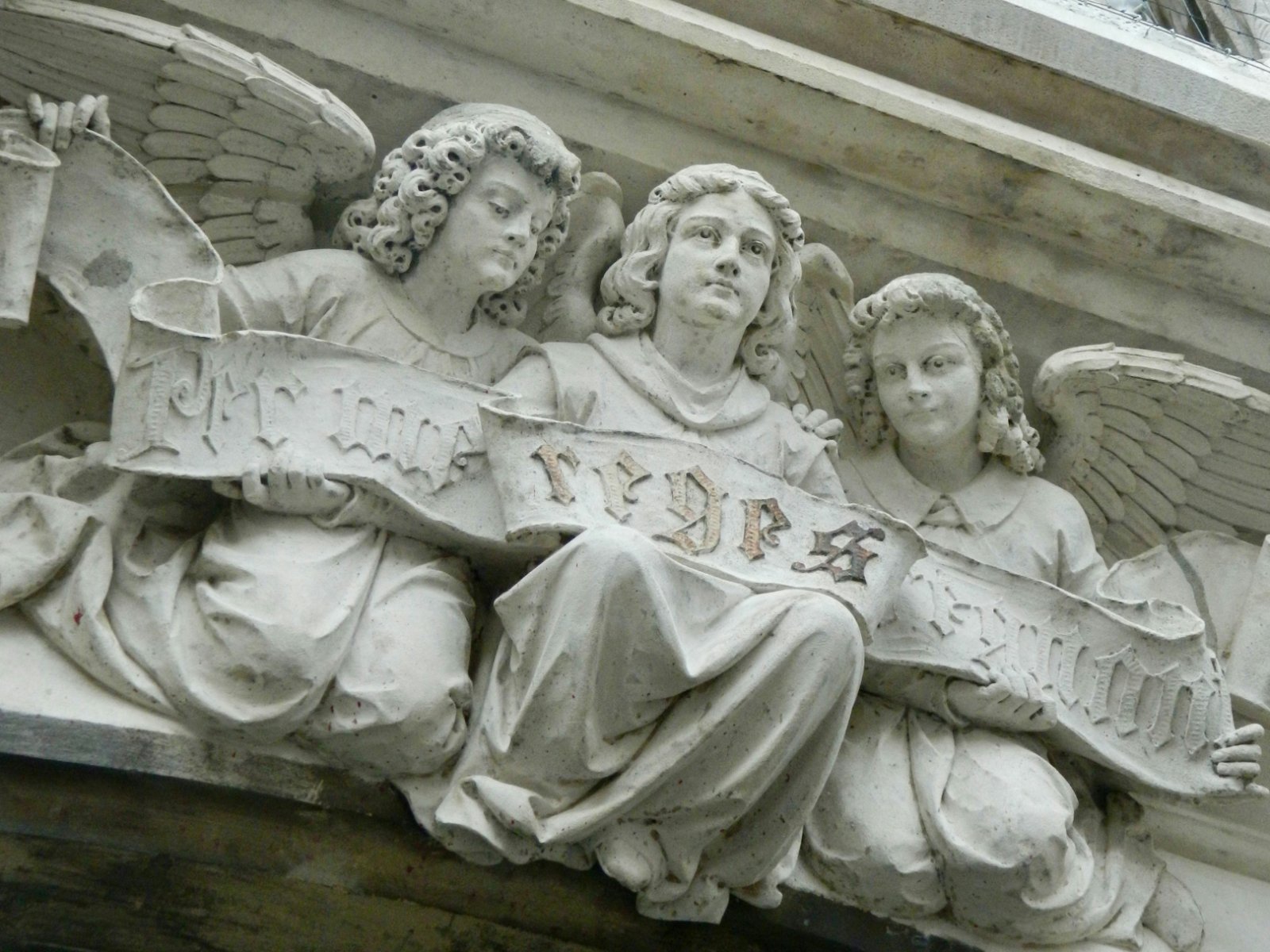
The New Testament opens and closes the earthly life of Jesus with angels, and they appear at several key points in between.
His birth. In Matthew 1:20, an angel speaks to Joseph in a dream and tells him not to fear taking Mary as his wife. In Luke 2:8-14, an angel appears to shepherds at night and says, “Fear not: for, behold, I bring you good tidings of great joy, which shall be to all people.” A crowd of angels then praises God.
The shepherds were among the least respected workers in that society, and yet the announcement went to them first. Modern connection: the good news is not reserved for the well-connected or the well-behaved. It reaches ordinary people at work in the dark.
His temptation. After forty days in the wilderness, Matthew 4:11 says the devil left him “and, behold, angels came and ministered unto him.” Even Jesus received care after a period of intense difficulty. If that was true for him, we should not be embarrassed to need support after our own hard seasons.
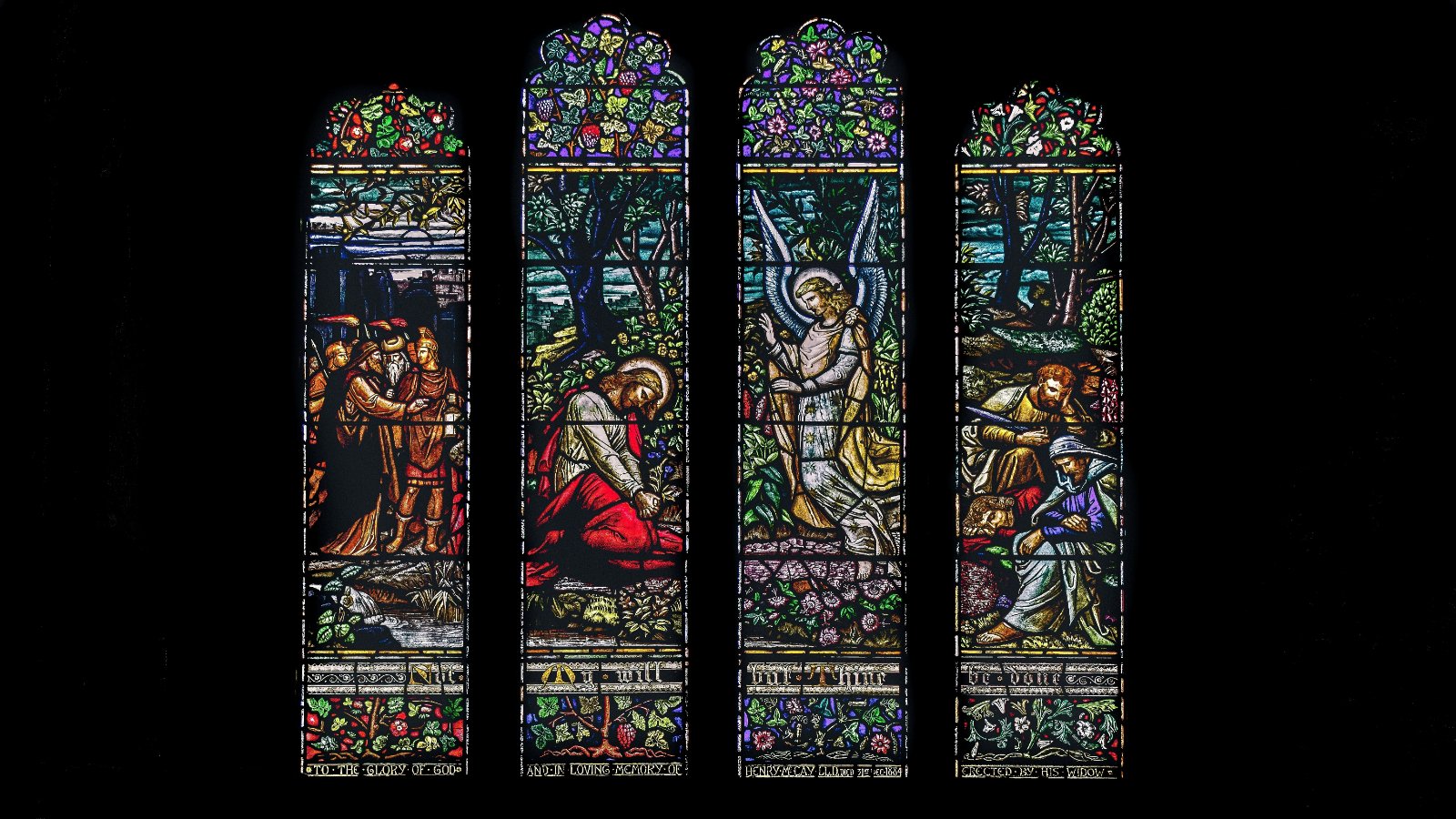
His anguish. In Luke 22:43, during his prayer in Gethsemane, “there appeared an angel unto him from heaven, strengthening him.” The angel did not remove the cup. The angel strengthened him to face it. That distinction matters for anyone praying about something that will not go away. Sometimes help looks like the strength to continue, not an exit.
His resurrection. In Matthew 28:2-7, an angel rolls back the stone and tells the women at the tomb, “He is not here: for he is risen.” The message once again begins with reassurance and ends with instruction to go and tell others.
Angels in the Early Church
The book of Acts continues the pattern. In Acts 5:19-20, an angel opens prison doors at night and tells the apostles to go back and keep teaching in the temple.
The best-known story is in Acts 12:5-11. Peter is chained between two soldiers, expecting execution the next day. An angel wakes him with a tap on the side, the chains fall off, and the two walk past guards and through an iron gate that opens by itself. When Peter reaches the house where believers are praying for him, the servant girl Rhoda is so excited that she forgets to open the door. The group tells her she must be mistaken. In verse 15, they say, “It is his angel.”
Background: Luke, the author of Acts, includes the humor without softening it. The church was praying earnestly, and then seemed surprised when the prayer was answered.
Modern connection: This story is refreshingly honest about faith. Most of us pray with a mix of belief and doubt. Acts 12 suggests that God works with the faith we actually have, not the faith we wish we had.
The phrase “It is his angel” is also one of the few hints in the Bible about the idea of personal angels, which we will come back to in the guardian angels section.

What Angels Are Not: Important Boundaries
A responsible reading of the Bible has to include warnings, and Scripture is clear about several.
Angels are not to be worshiped.
In Revelation 22:8-9, John is so overwhelmed by what he sees that he falls at the feet of the angel who showed him. The angel immediately says, “See thou do it not: for I am thy fellowservant… worship God.” Paul also cautions in Colossians 2:18 against “worshipping of angels.”
Angels are not higher than Christ.
The whole first chapter of Hebrews is built around this point. The author quotes Old Testament passages to show that the Son is superior to angels in every way.
Angels are not always trustworthy in appearance.
Galatians 1:8 says that even if “an angel from heaven” preaches something different from the gospel, that message should be rejected. 2 Corinthians 11:14 adds that “Satan himself is transformed into an angel of light.”
Not all angels are good.
Scripture also speaks of fallen angels, including in 2 Peter 2:4 and Matthew 25:41.
Modern connection: These warnings matter because much of today’s angel content sits outside biblical boundaries. Practices that involve summoning angels, using them for fortune telling, or treating them as spirit guides are not found in Scripture. The Bible’s approach is to trust God and let him send whatever help he chooses. A useful test is this: does an angel story lead you closer to God and consistent with what he has revealed, or does it draw attention to the messenger?
How Angels Help Us During Challenging Times
If angels are real and active, what does that mean when life is difficult? Hebrews 1:14 gives the summary statement: “Are they not all ministering spirits, sent forth to minister for them who shall be heirs of salvation?” You can read the full passage in context on Bible Gateway.
Pulling together the passages we have already seen, Scripture points to several ways angels help in hard seasons.
They Bring Reassurance
Almost every angelic appearance begins with some version of “Fear not.” That includes Gabriel with Mary, the angel with the shepherds, and the angel at the tomb. Anxiety is a normal human response to the unknown, and heaven’s first move is to address it. If you are facing something frightening, you can take that pattern to heart even without seeing anything supernatural. The instruction “do not be afraid” is one of the most repeated phrases in the Bible.
They Provide Practical Care
The angel who fed Elijah did not offer a sermon. He offered bread and water and let him sleep. When Jesus was worn from the wilderness, angels ministered to him. In hard seasons, care often comes in ordinary forms such as a meal from a neighbor, a text at the right moment, or a night of good rest. Christians can reasonably see God’s provision in those moments, and in some cases, angelic help may be involved in ways we cannot verify.
They Protect in Danger
Psalm 34:7 says, “The angel of the LORD encampeth round about them that fear him, and delivereth them.” Psalm 91:11-12 adds, “For he shall give his angels charge over thee, to keep thee in all thy ways. They shall bear thee up in their hands.”
Background: Psalm 91 is often quoted in crisis. It is worth remembering that Satan quoted this same psalm to tempt Jesus in Matthew 4:6, and Jesus replied that God should not be put to the test. The psalm describes God’s care for those who trust him. It does not give permission to take reckless risks and expect rescue.
Modern connection: Faithful people still get sick, lose jobs, and experience tragedy. The promise of protection in the Bible has to be read alongside the rest of Scripture, which includes martyrs, prisoners, and suffering saints. James was executed in the same chapter of Acts where Peter was freed. The Bible does not explain why one is spared and another is not. What it does insist on is that God is present and that no suffering is unseen.
They Deliver Messages and Direction
In moments of confusion, angels bring clarity. Gabriel gave Daniel understanding. An angel told Joseph what to do about Mary. Another told Philip where to go in Acts 8:26. Most of us will not receive direction in that dramatic way, but the underlying idea is helpful. God is not silent or absent when we do not know the next step, and he often guides through Scripture, wise people, and circumstances.
They Strengthen Rather Than Remove
Luke 22:43 is a key example. The angel in Gethsemane strengthened Jesus without changing what lay ahead. If you are praying for a situation to change and it does not, that does not mean help has not come. Strength to endure is a legitimate and often deeply needed form of help.
They Remind Us We Are Not Alone
Elisha’s servant saw a hillside of fire and chariots. Daniel learned that a battle had been going on for three weeks. In both cases, the main thing angels provided was perspective. When we feel isolated, those passages say that our sense of being alone is not the whole picture.
A note of care here: if you are dealing with grief, illness, depression, or crisis, spiritual comfort is valuable and it works best alongside practical support. Talk with a pastor, a counselor, or a doctor as appropriate. Reaching out for that kind of help is entirely consistent with faith.

How to Think About Guardian Angels
The idea of a personal guardian angel is popular, and people often ask whether the Bible teaches it. The honest answer is that the Bible offers a few hints but does not give a full doctrine, and Christians have held different views.
Here are the main passages people point to.
Matthew 18:10. Jesus says, “Take heed that ye despise not one of these little ones; for I say unto you, That in heaven their angels do always behold the face of my Father which is in heaven.” The context is Jesus’ teaching about children and the value of every person. Many readers take “their angels” to suggest that angels have a special connection to individuals, or at least to the vulnerable.
Acts 12:15. The believers say, “It is his angel,” when told Peter is at the door. This suggests that some people in the early church believed in a personal angel associated with an individual. Luke reports the statement without confirming or correcting it, so we should be careful about building too much on it.
Psalm 91:11 and Hebrews 1:14. These passages say that angels are given charge over God’s people and are sent to serve those who will inherit salvation. That is a general statement about angelic service. It does not say each believer has one specific angel assigned from birth.
So how should a thoughtful Christian hold this?
First, it is reasonable to believe that God uses angels to care for his people, because Scripture says so. Second, it is fine to leave open the question of whether each person has an assigned angel, because the Bible does not settle it. Third, and most importantly, our trust belongs with God, not with the idea of a particular angel. Jesus taught us to pray to the Father, and there is no biblical instruction to pray to angels or ask them for help.
A simple way to put it might be this. You do not have to know exactly how God protects you to trust that he does. Angels may be part of that care, and you can be thankful for it without needing every detail.
For parents, Matthew 18:10 can be a quiet comfort. It says heaven takes children seriously. That is a good reason to treat every child with dignity and to believe they are watched over.

Angels and Everyday Life: Hebrews 13:2
One more verse deserves attention, especially for modern readers. Hebrews 13:2 says, “Be not forgetful to entertain strangers: for thereby some have entertained angels unawares.”
Background: The author is looking back at stories like Abraham’s welcome of three visitors in Genesis 18 and Lot’s hospitality in Sodom. In the ancient world, welcoming travelers was a serious moral duty, and it was often risky.
Modern connection: The verse does not say that every stranger is an angel. It says hospitality is worth practicing because you do not always know what a kind act might mean. In practical terms, it invites us to treat newcomers, neighbors, and people in need with warmth. Whether or not any visitor turns out to be an angel, the practice shapes us into more generous people.
It is a quiet reminder that the way we interact with the unseen world begins with how we treat the person in front of us.
Frequently Asked Questions About Angels in the Bible
Do angels have wings?
Some do, according to Scripture. The seraphim in Isaiah 6 have six wings, and the cherubim in Ezekiel have wings as well. However, many angels in the Bible appear as ordinary men. Genesis 18 and 19 describe angels who look like travelers, and Hebrews 13:2 suggests people sometimes do not recognize them.
Are angels people who have died?
No. The Bible presents angels as a separate order of created beings. Jesus says in Matthew 22:30 that in the resurrection people are “as the angels of God in heaven,” which compares humans to angels, not identifies them.
How many angels are there?
The Bible does not give a number, but it uses very large expressions. Revelation 5:11 speaks of “ten thousand times ten thousand, and thousands of thousands.”
Do angels rejoice over anything in particular?
Yes. Luke 15:10 says, “There is joy in the presence of the angels of God over one sinner that repenteth.” Angels are pictured as caring about human repentance.
Can I pray to angels?
The Bible does not instruct believers to pray to angels. Prayer in Scripture is directed to God. Angels are servants who act at his direction.
Is it wrong to believe in guardian angels?
Not if the belief stays within what Scripture supports. There are biblical hints that angels care for individuals, especially vulnerable ones. What the Bible does not do is provide a detailed teaching about personal guardian angels, so humility is appropriate.
Where can I study angels further?
A good approach is to read the passages in context using a tool like Bible Gateway, check word meanings through Blue Letter Bible, and discuss questions with a pastor or trusted teacher. For a broader historical overview, the Britannica article on angels is helpful.
Bringing It All Together
When you follow angels through the Bible from Genesis to Revelation, a consistent picture emerges. They are real, created, powerful beings who serve God and, at his direction, serve people. They stand guard at Eden, sing in Isaiah’s vision, feed a weary prophet, shut lions’ mouths, announce the birth of Jesus, strengthen him in Gethsemane, and open prison doors for the early church.
They are also humble. Every time an angel is tempted to be the center of attention in Scripture, the story redirects to God. That is the safest and most useful way to think about them today. Angels are part of how God cares for his people, and they are one small piece of a much bigger story about his character.
If you are in a hard season right now, three ideas from these passages might be worth carrying with you. First, “fear not” is one of heaven’s most repeated messages. Second, help often arrives in ordinary forms such as rest, food, and kind people. Third, the unseen side of life is not empty, and you are not as alone as you feel.
Whatever you are facing, you can read these verses slowly, talk to God about what worries you, and lean on the community around you. The Bible’s angels are a reminder that heaven is closer to daily life than we often think.